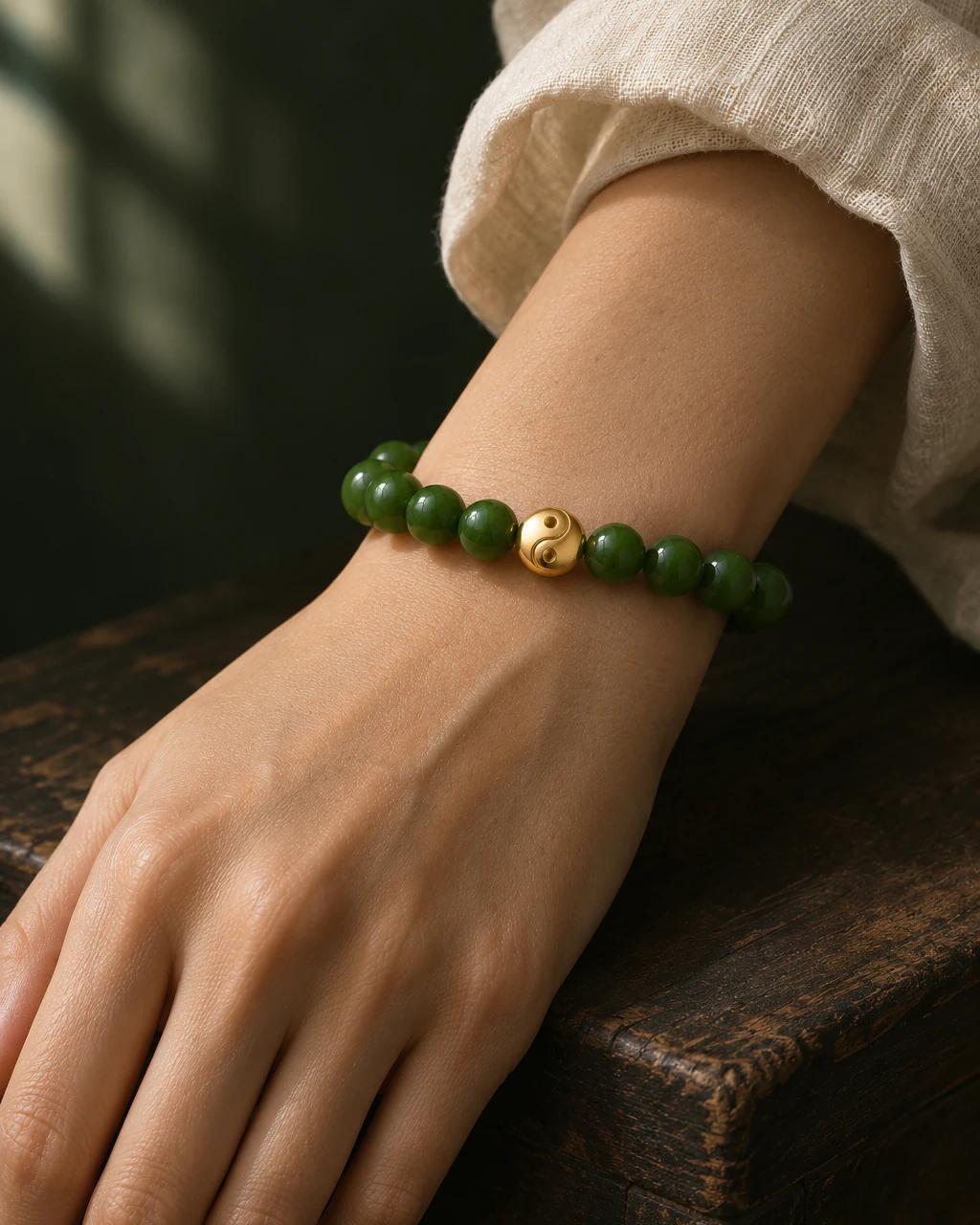
Signature
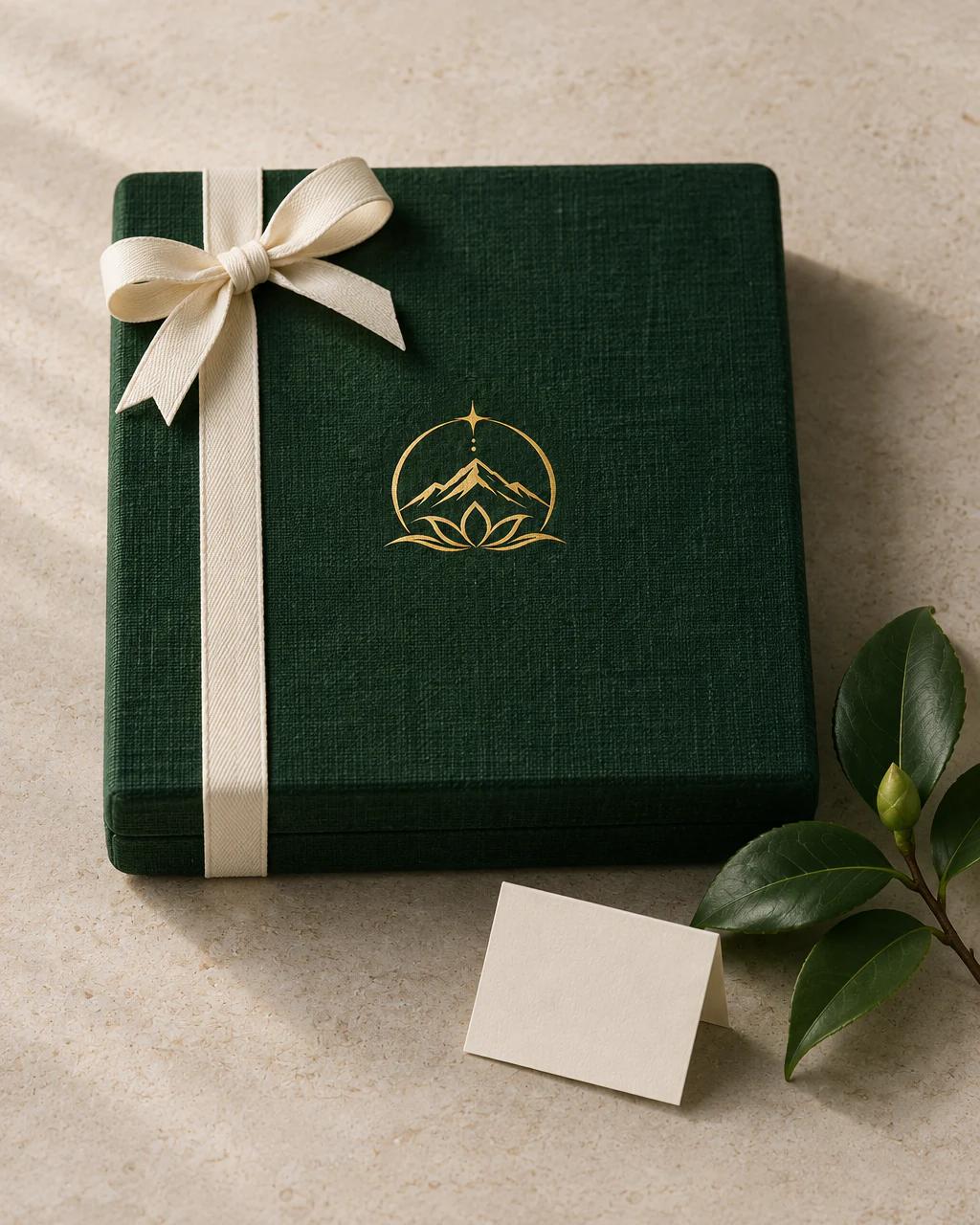
How it arrivesGift-boxed, with its story
How it arrives
Gift-boxed, with its story
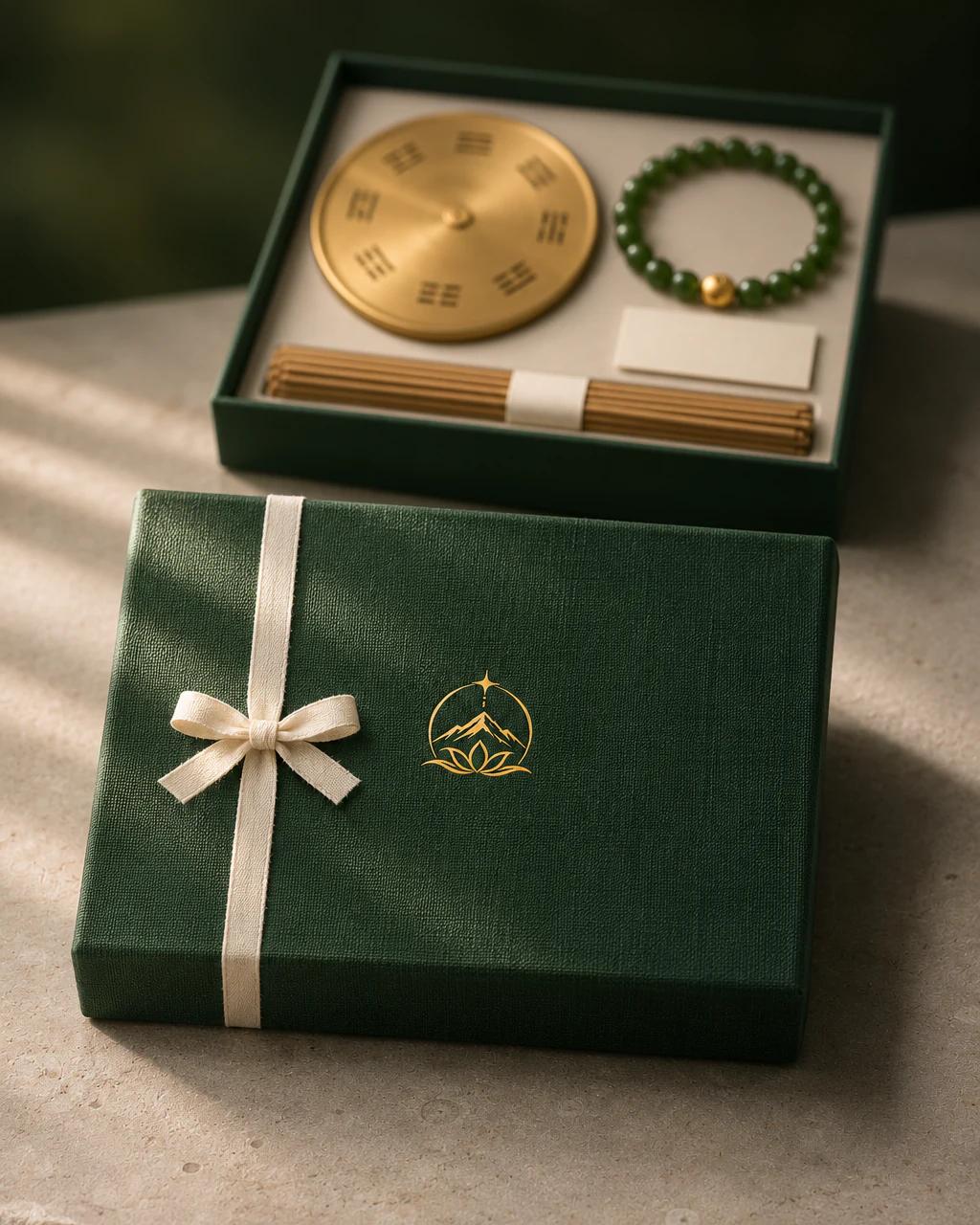
Every piece is packed in a linen-wrapped gift box with a blessing card that tells the story of its symbol.
$168
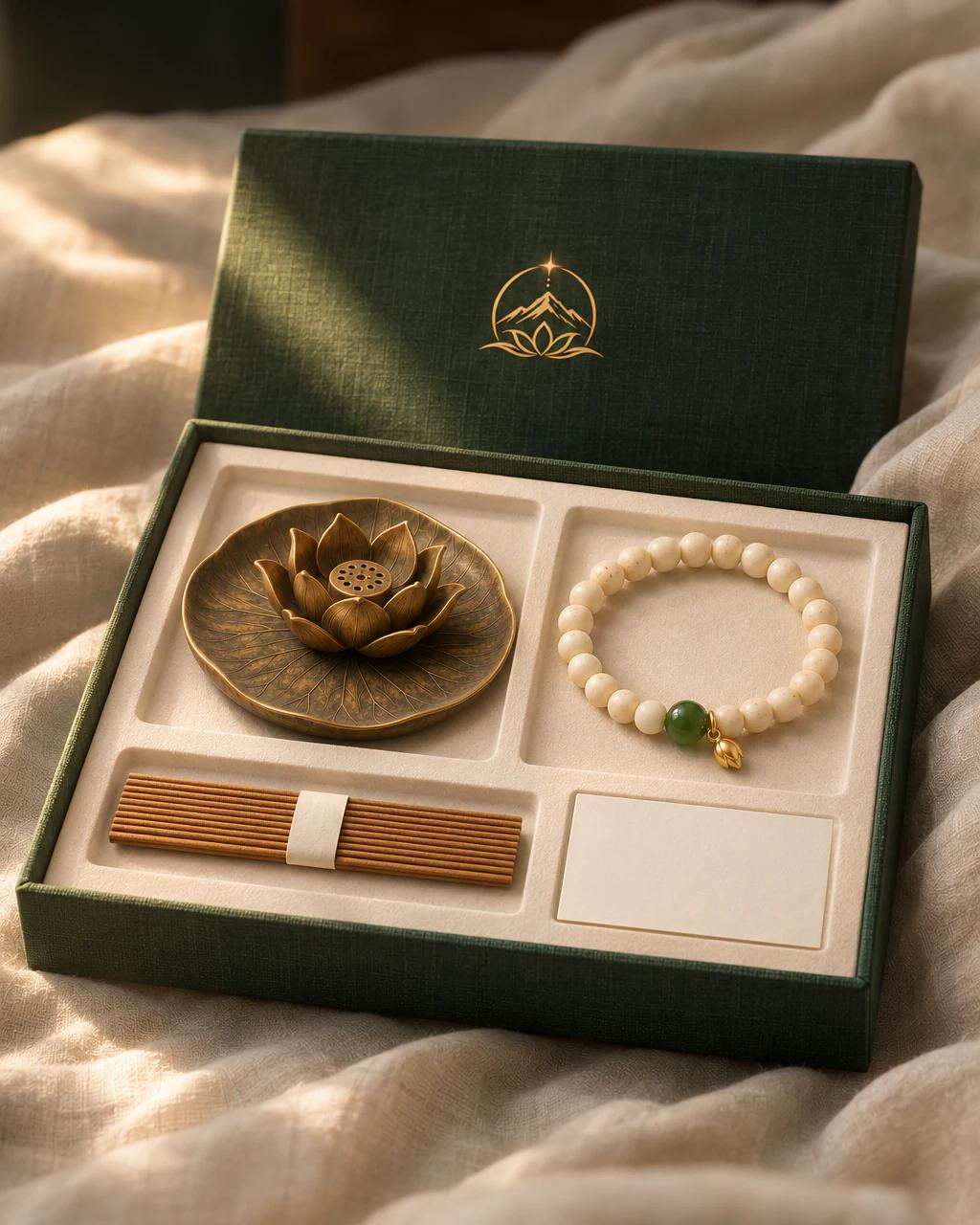
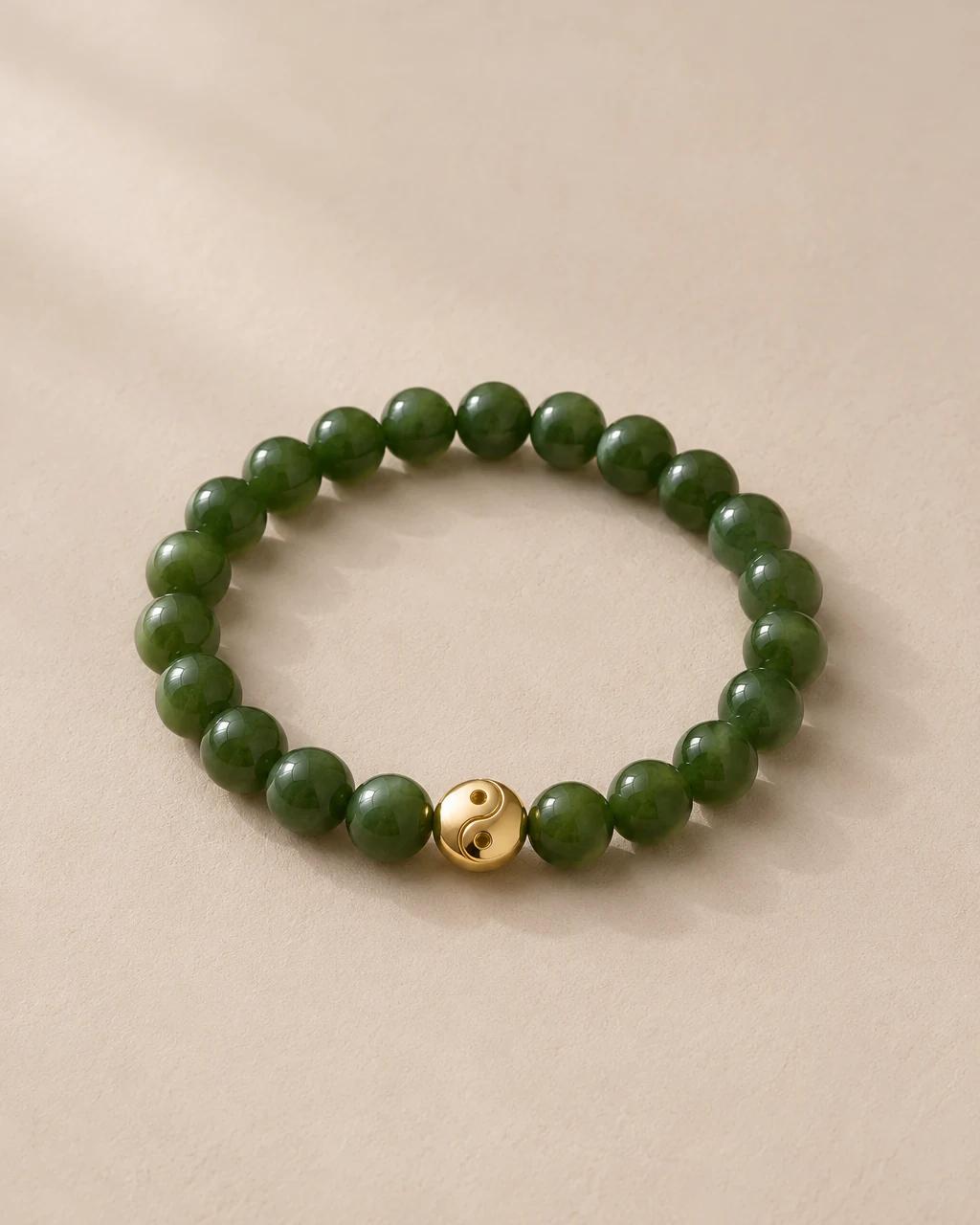
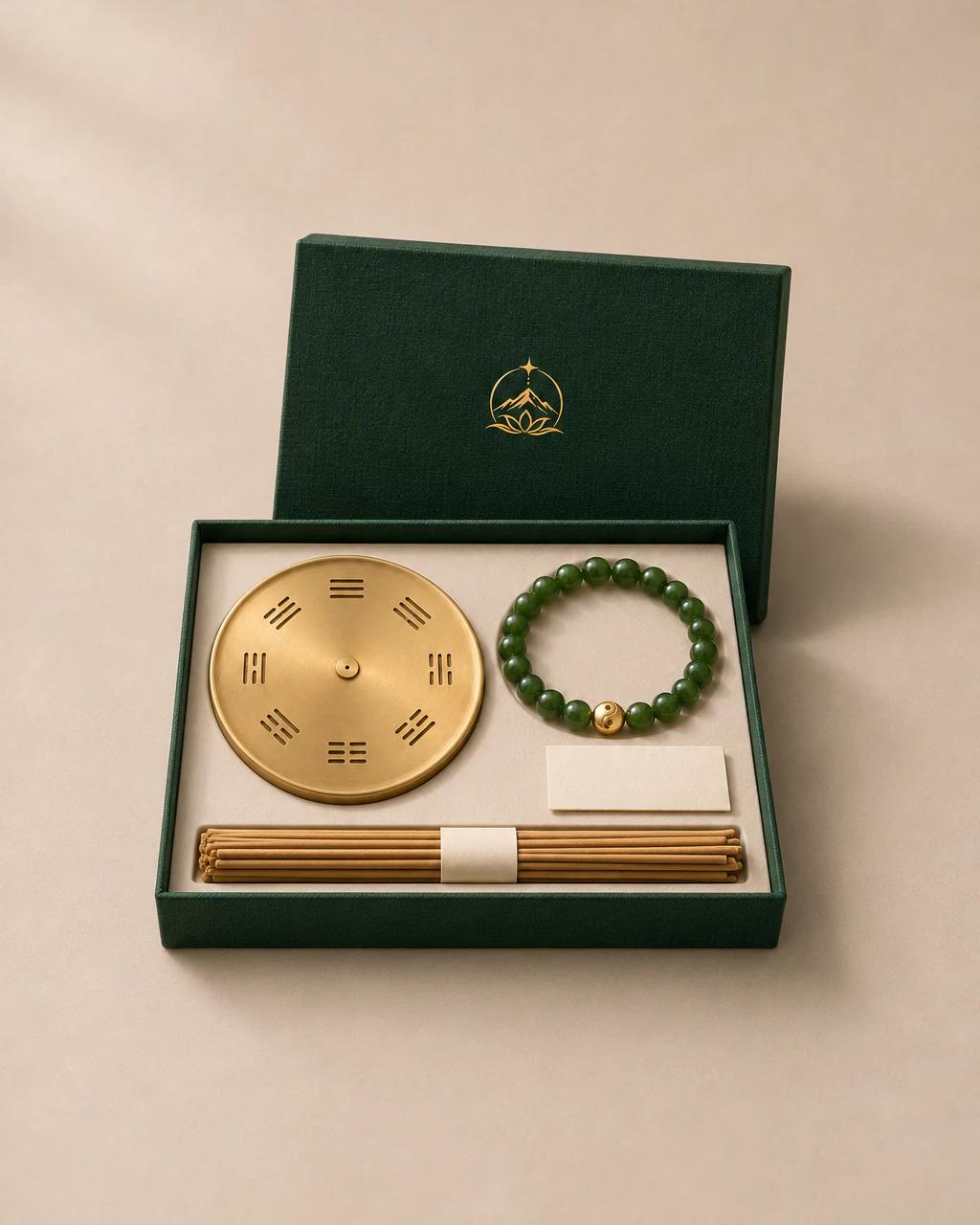
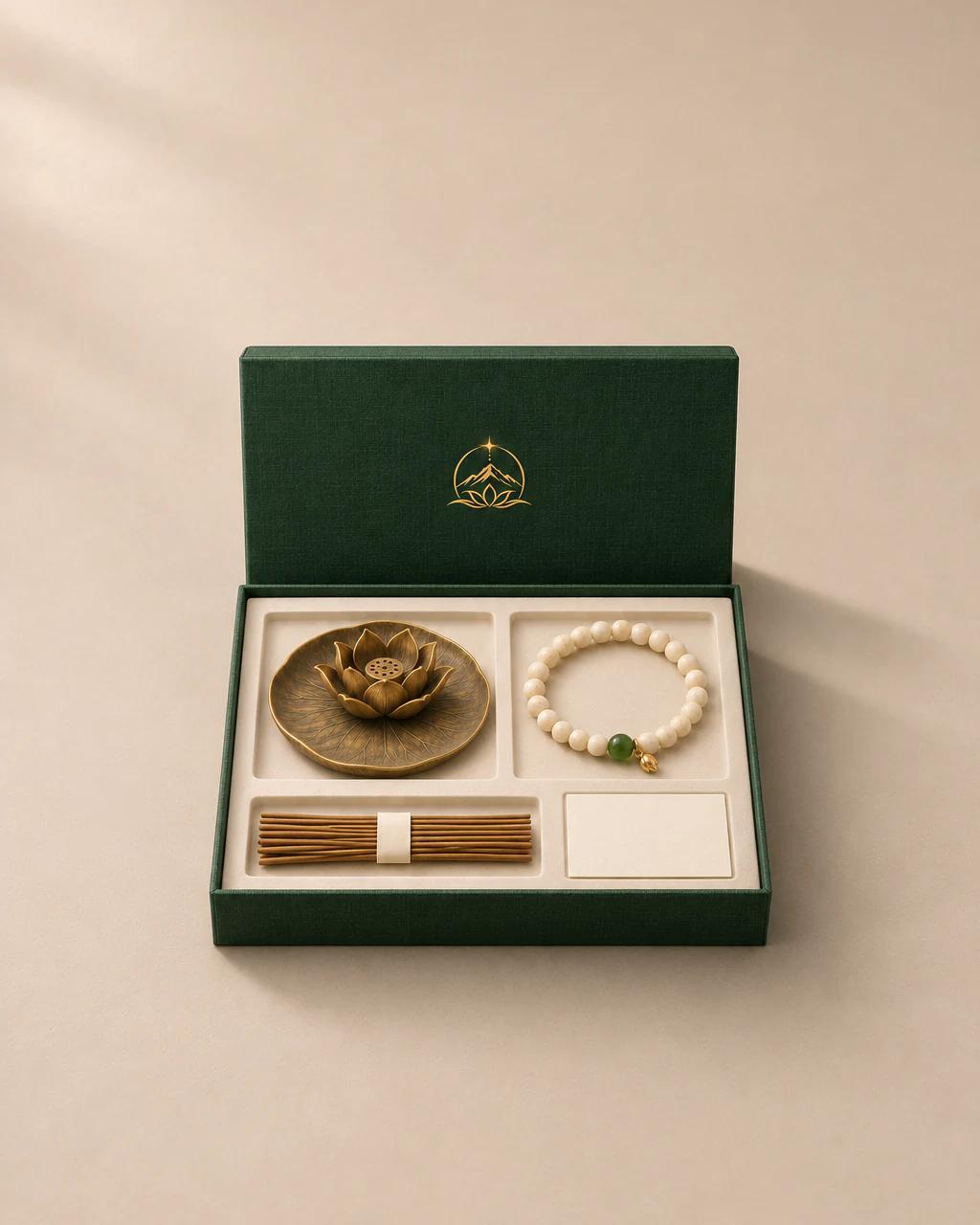
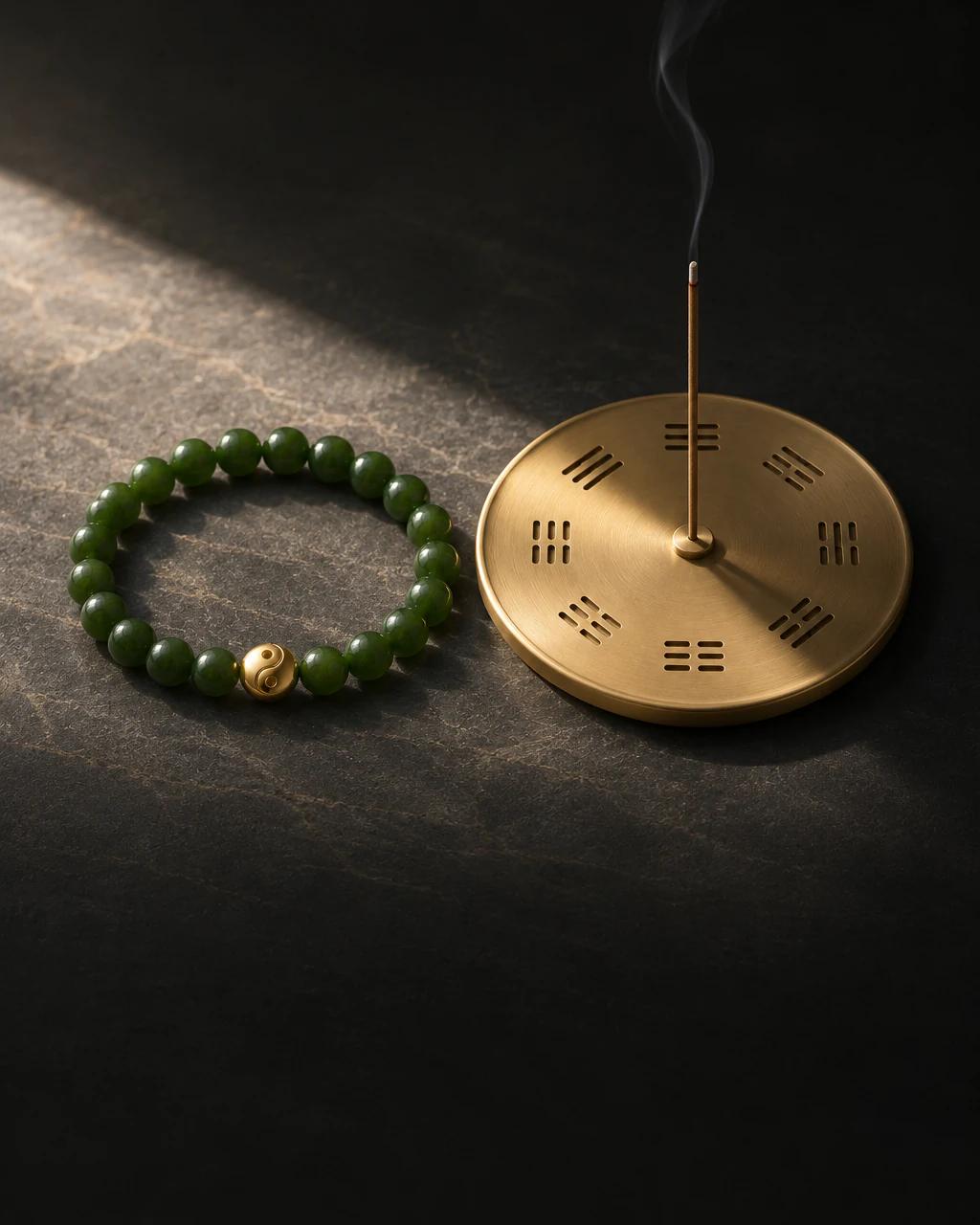
The Jade Taiji Bracelet and the Bagua Incense Plate in one linen-wrapped box, with twenty sticks of sandalwood: the yin-yang and its ring of eight trigrams.
A forest-green linen box with an ivory insert fitted to four things. On the left lies the Bagua Incense Plate, solid brass engraved with the eight trigrams. On the right, the Jade Taiji Bracelet: deep-green nephrite with one gold vermeil yin-yang bead. Along the front run twenty sticks of sandalwood incense in a paper band, and a blessing card sits beside the bracelet.
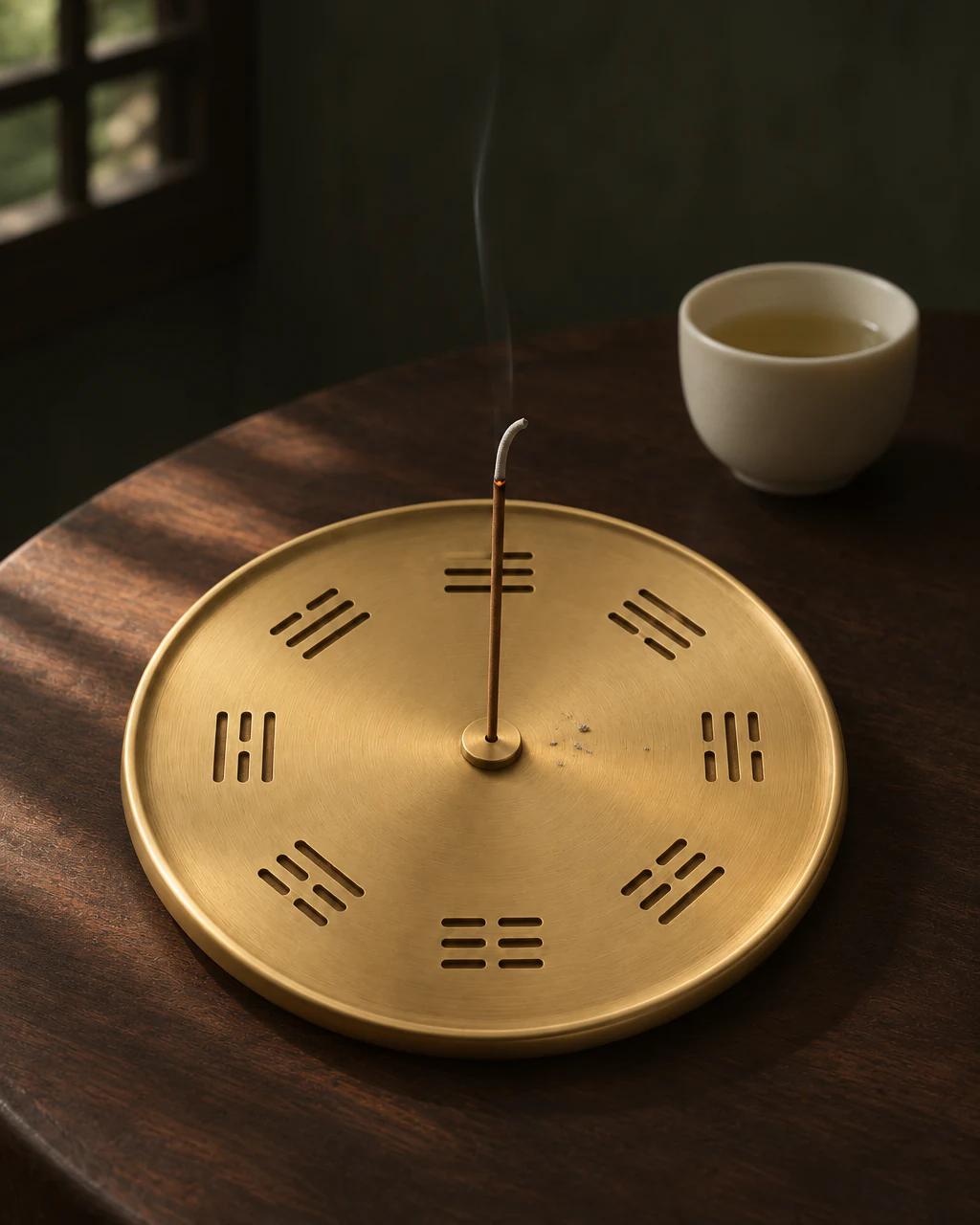
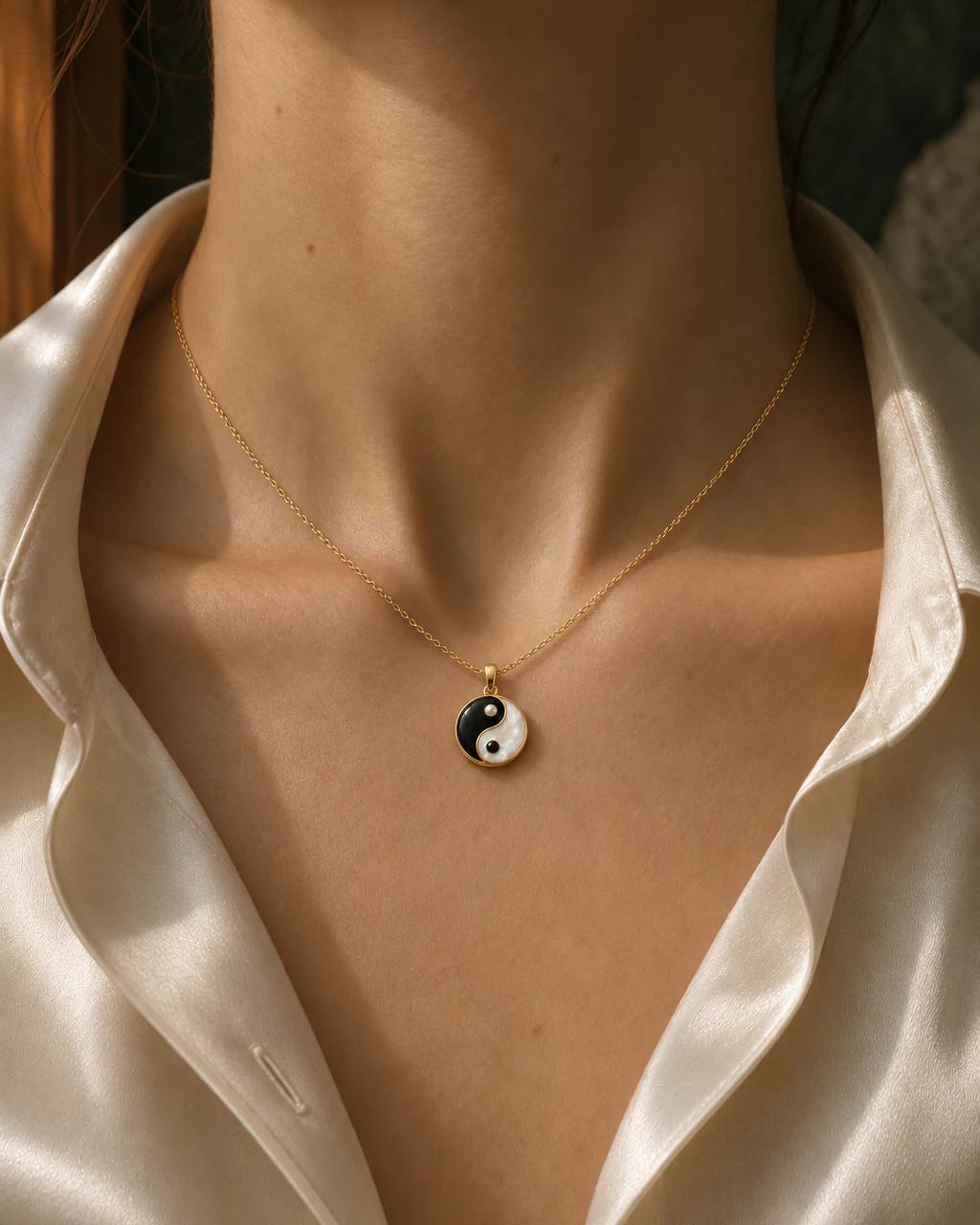
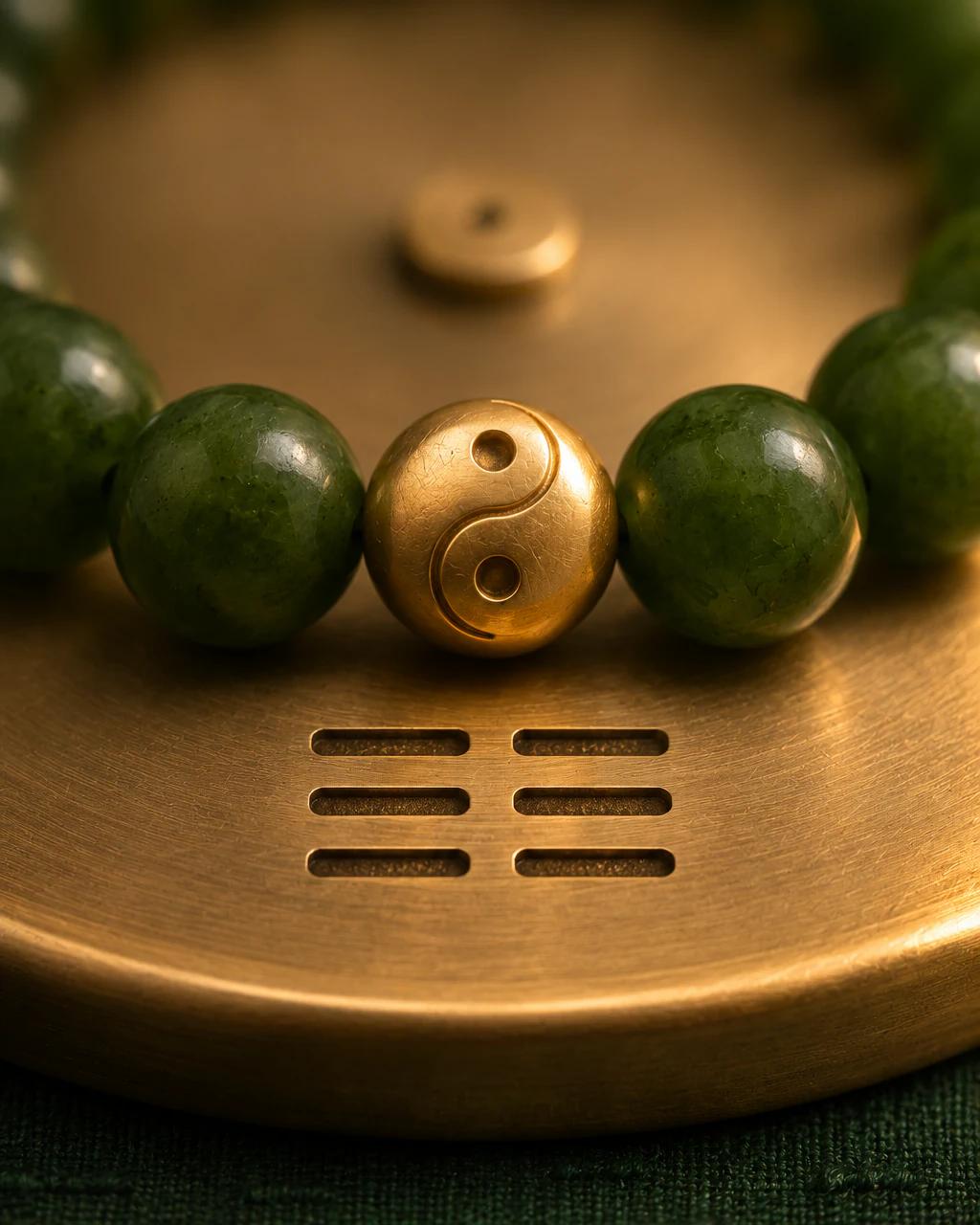
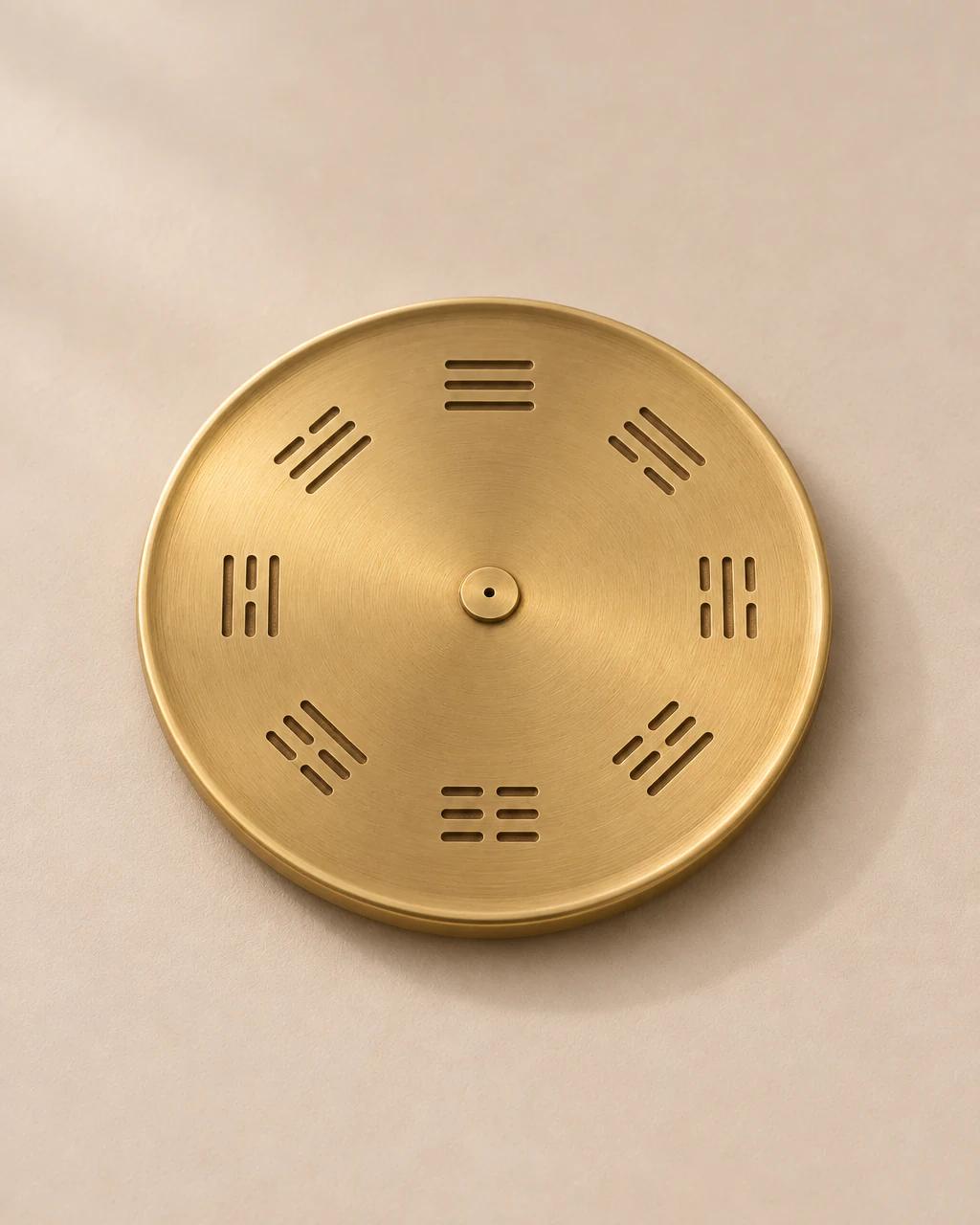
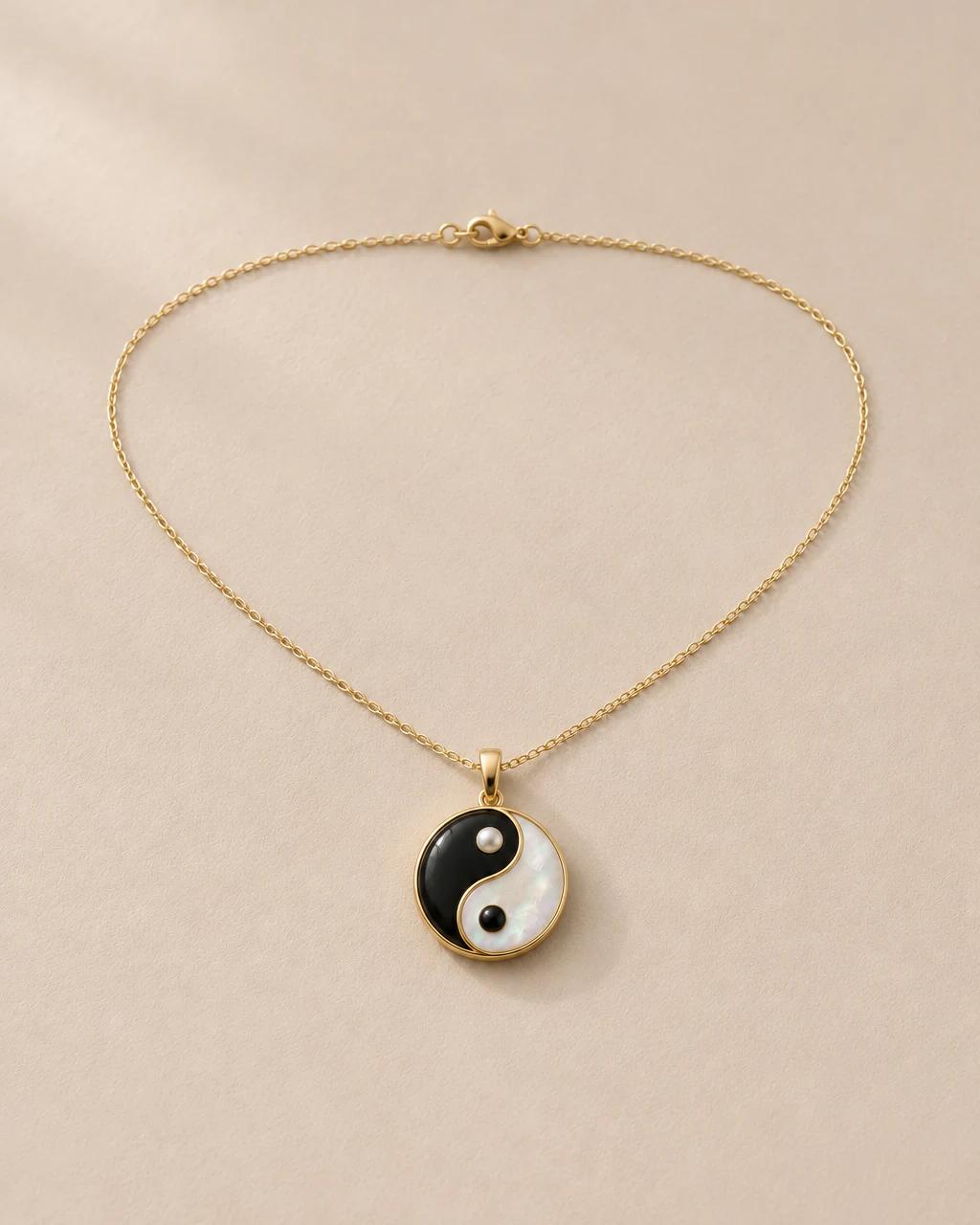
The two pieces come from one diagram. On the traditional chart the trigrams ring a small yin-yang at the center. Here the circle goes out on the wrist, and the ring stays at home, holding one stick at a time.
The lid is stamped with the house emblem, small, in gold foil. Choose the size of the bracelet; the set arrives ready to give.
The circle at the center of the eight
In Taoist thought the taiji, “the supreme ultimate,” is the single source from which yin and yang arise. A commentary to the Book of Changes sets out the sequence: the supreme ultimate gives rise to the two forces, the two to four images, and the four to the eight trigrams. The traditional diagram follows that order: the yin-yang at the center, the trigrams in a ring around it.
Materials
Dimensions
Stand one stick in the center of the plate, light it and blow out the flame so it smolders; a single stick was traditionally lit to mark a pause, and many sit quietly until it has burned down. The plate stays on a table or shelf, and the bracelet is worn.
Size
Measure your wrist, then add 1 cm for a close fit or 2 cm for a relaxed one.
Signature
Signature
The meaning
In Taoist thought the taiji, “the supreme ultimate,” is the single source from which yin and yang arise. A commentary to the Book of Changes sets out the sequence: the supreme ultimate gives rise to the two forces, the two to four images, and the four to the eight trigrams. The traditional diagram follows that order: the yin-yang at the center, the trigrams in a ring around it.
The bagua are those eight figures of three lines each, solid for yang and broken for yin, read as heaven, earth, thunder, wind, water, fire, mountain and lake. In the Earlier Heaven arrangement, which the plate follows, each faces its opposite across the circle. Many read the ring as a picture of change, and the circle at its center as the balance that change turns on.
Incense belongs to the same world. It has long been burned at Taoist altars and in the scholar's study, and one stick was an old measure of a pause. On this plate the stick stands where the yin-yang sits on the chart.
Collection 01
Yin and yang, the five elements, the eight trigrams.
The Taoist figures of balance — the taiji, the five elements and the eight trigrams — worked in jade, onyx and gold vermeil.
BalanceHarmonyInner strength