No. 10 / 18
palbeu
Tibetan: the endless knot
Himalayan
Endless Knot
Connection · Continuity · Devotion
One line woven through itself with no beginning and no end — everything bound to everything else.
Also in the shop
You may also like
Pieces that sit well beside it.
Signature
Limited edition
Meaning and tradition
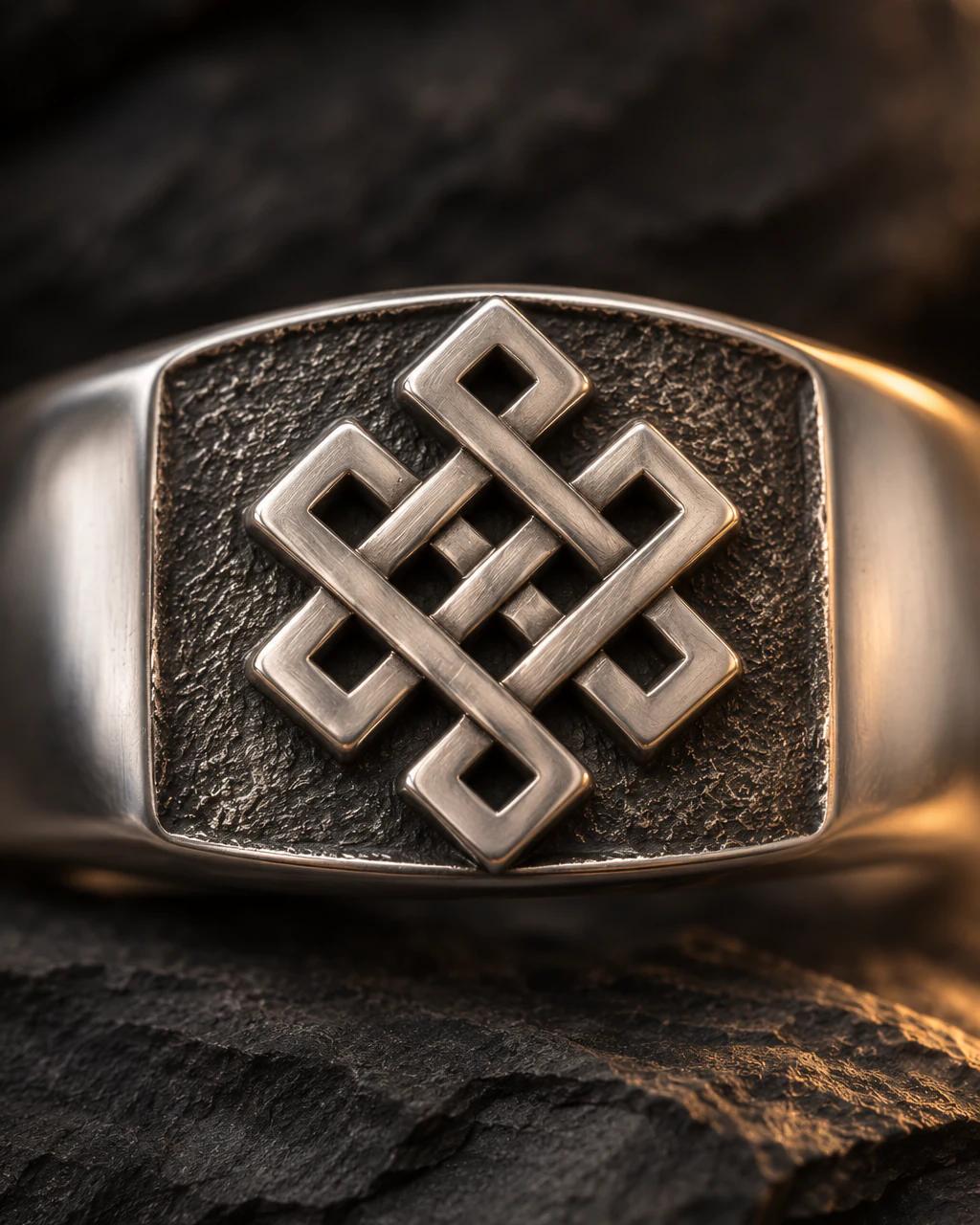
The endless knot is a closed pattern of one line that turns at right angles and weaves over and under itself, with no start and no end. It is one of the Eight Auspicious Symbols of Buddhism, a set that came to Tibet from India and also includes the lotus, the wheel and the pair of golden fish. Tibetans call it palbeu. In Chinese it is known as “the auspicious knot” or “the long coil”.
It carries several readings. The commonest is interdependence: each crossing is held in place by the others, so nothing in the pattern stands alone. Because the line never ends, it also stands for the unbroken wisdom and compassion of the Buddha and, in everyday use, for long life and lasting affection. One reading takes the two directions of the weave as wisdom and compassion, bound together.
Across the Himalaya the knot is sewn onto door curtains and tents, carved on furniture and drawn on letters and gifts. Placed on a gift, it is understood to tie giver and receiver in a fortunate connection. In China the same form became one of the basic knots of decorative cord work, tied in red and hung at the New Year.
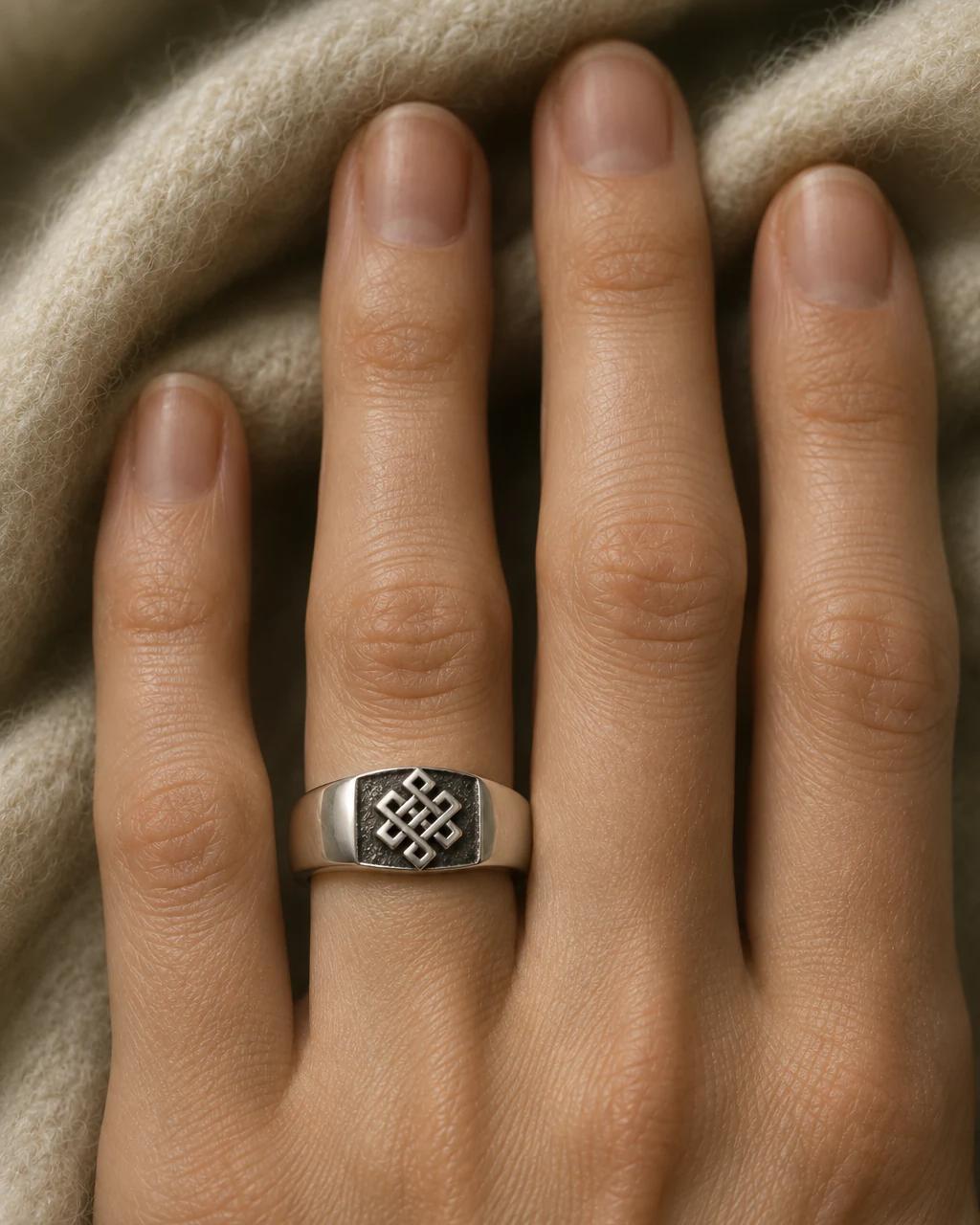
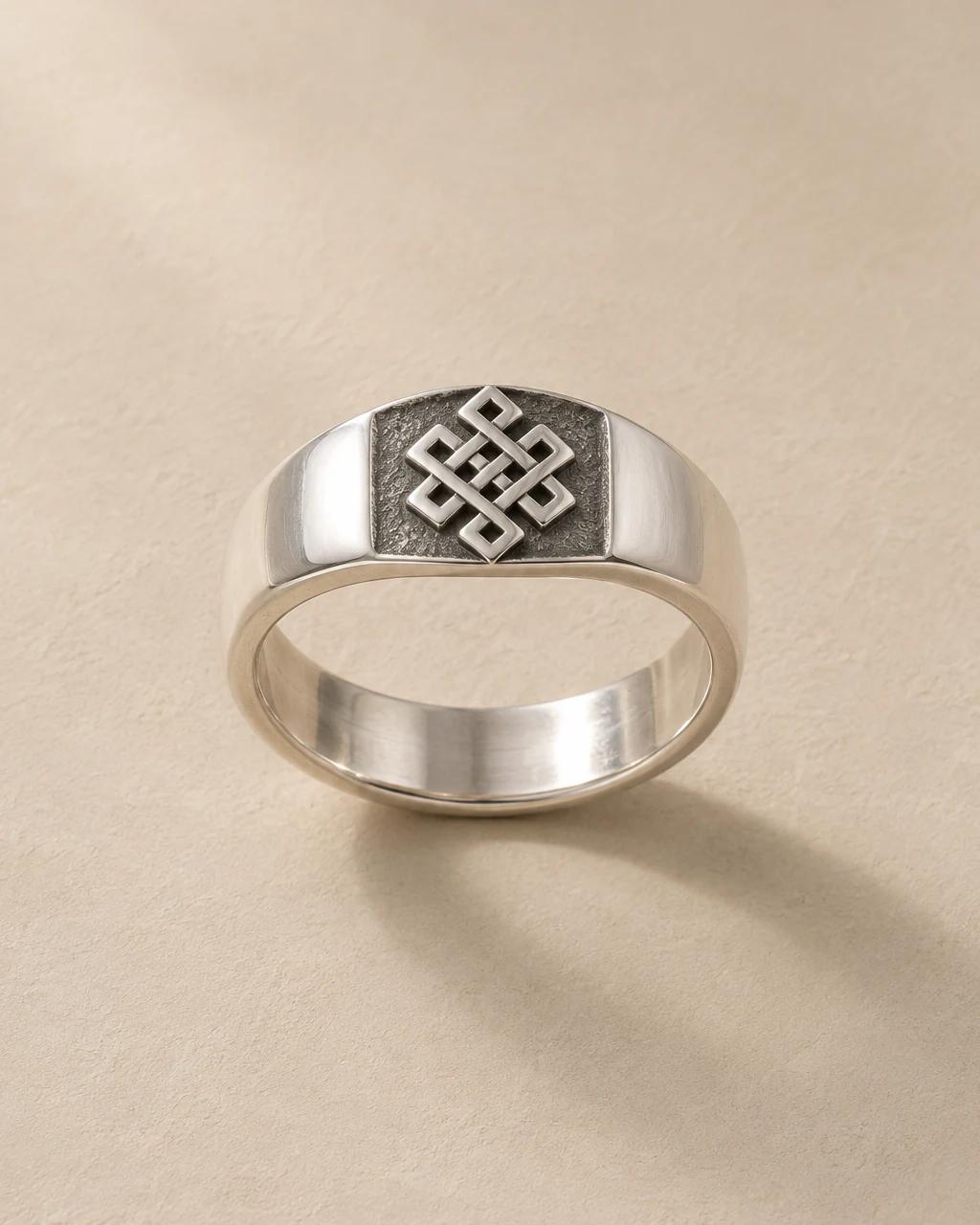
Our Endless Knot Ring raises the knot in sterling silver on a darkened ground, so that the single line can be followed all the way around. In the Himalayan collection it sits beside the dorje.
Also in the shop
You may also like
Signature
Limited edition