No. 15 / 18
Jade
Sacred nature
Jade
Virtue · Protection · Longevity
The stone of heaven: worked in China for some eight thousand years, prized above gold, and traditionally worn against the skin as a guardian.
Signature
Signature
New
Signature
Meaning and tradition
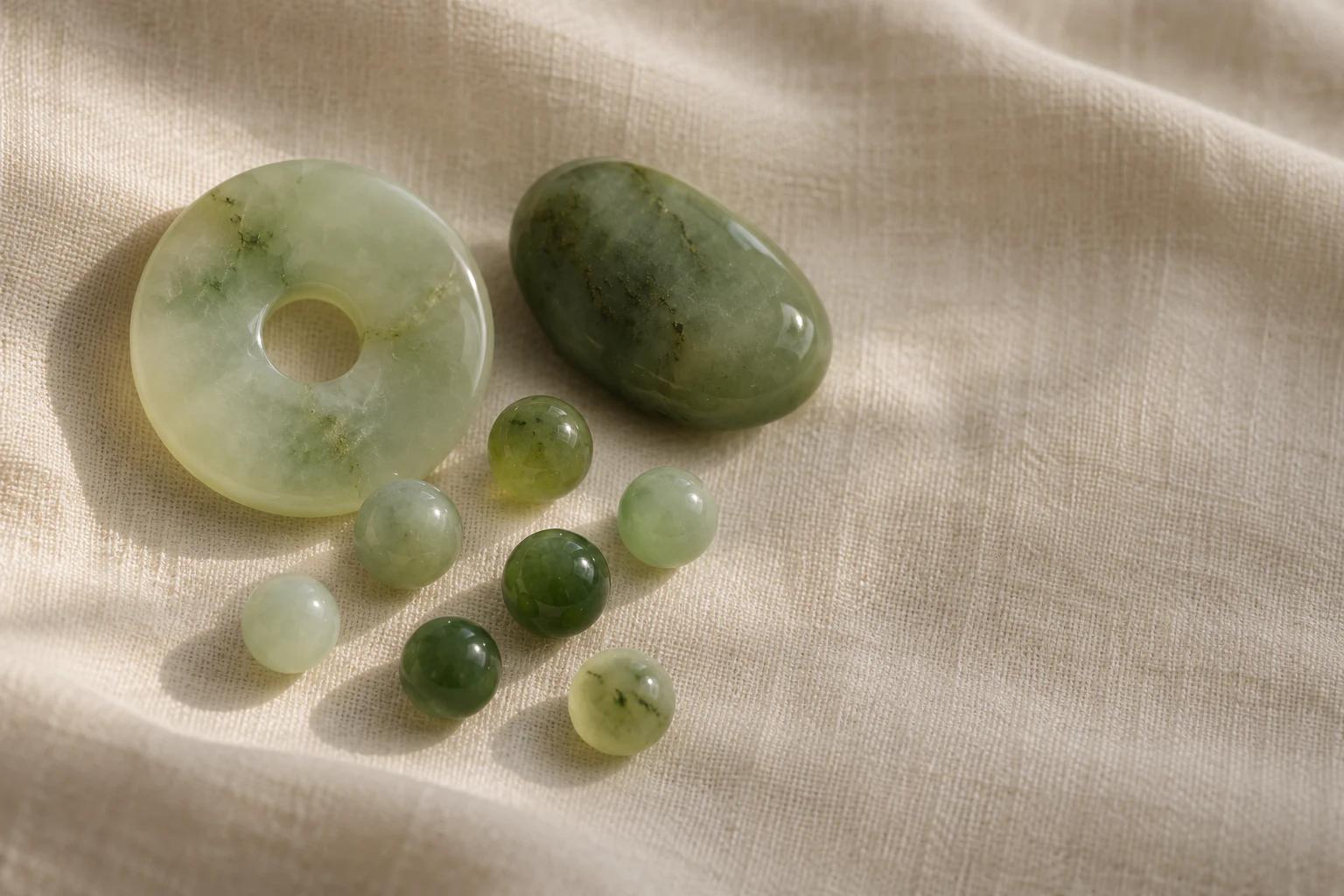
Jade is not one stone but two. Nephrite and jadeite are different minerals that look and feel alike, told apart by mineralogists only in 1863. Nephrite is the classical jade of China: tough, fine-grained, with a soft waxy luster, in white, celadon and spinach green. It has been worked there for about eight thousand years. Jadeite, brighter and glassier, reached China in quantity from Burma only in the eighteenth century.
Jade was traditionally not cut with a blade but ground slowly with abrasive sand, and that labor is part of its standing. The Book of Rites has Confucius compare jade to the virtues of a good person: its warm luster is kindness, its fine close grain is intelligence, its edges that do not cut are justice, and its flaws, which it does not hide, are honesty. A proverb puts it shortly: gold has a price, jade is beyond price.
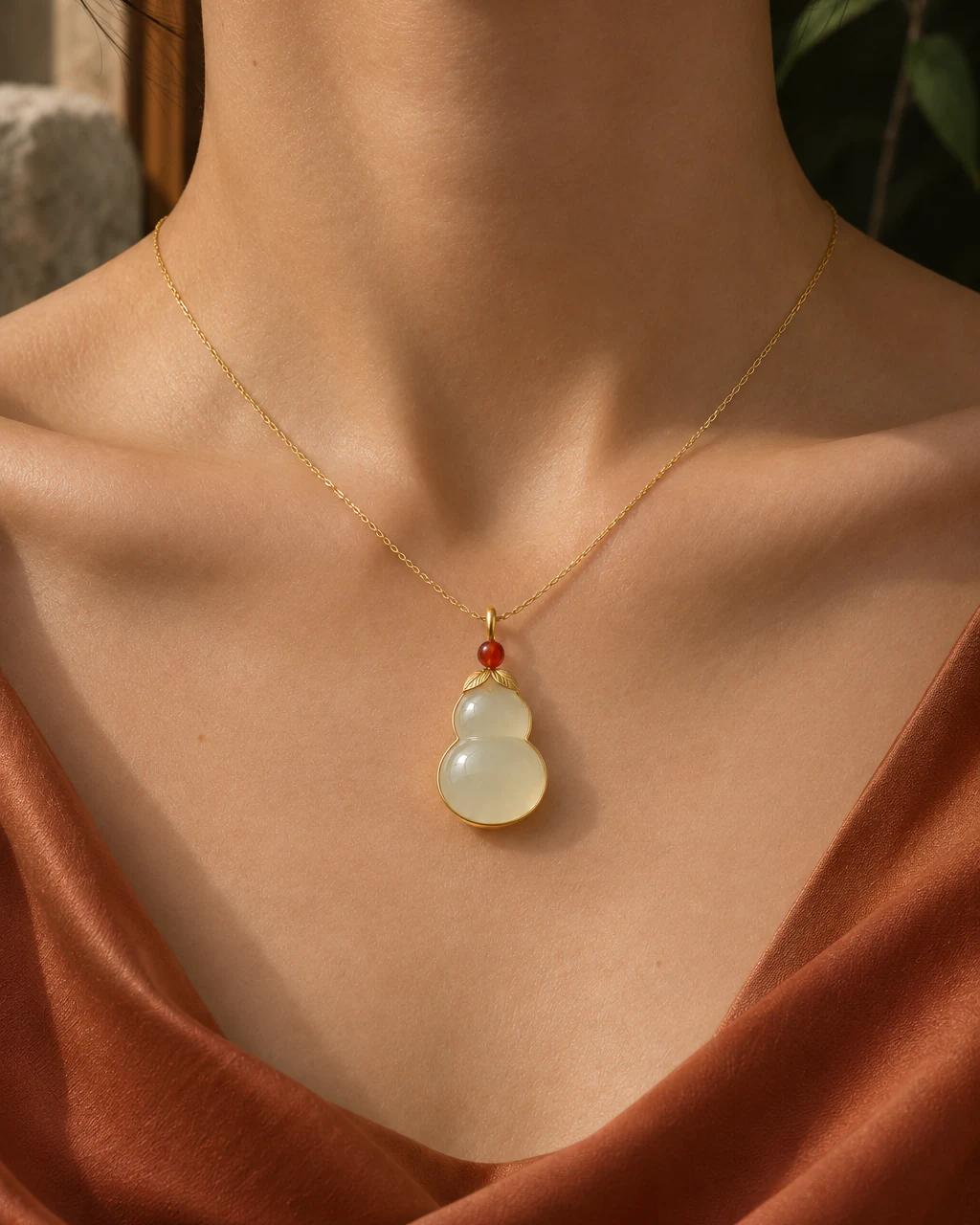
By tradition jade is worn against the skin and kept on. A bangle may be worn for decades and handed from mother to daughter. Jade is said to grow more lustrous with wear, and a piece that cracks is said to have taken a blow meant for its owner. Princes of the Han dynasty were buried in suits of jade plaques, in the belief that the stone preserved the body.
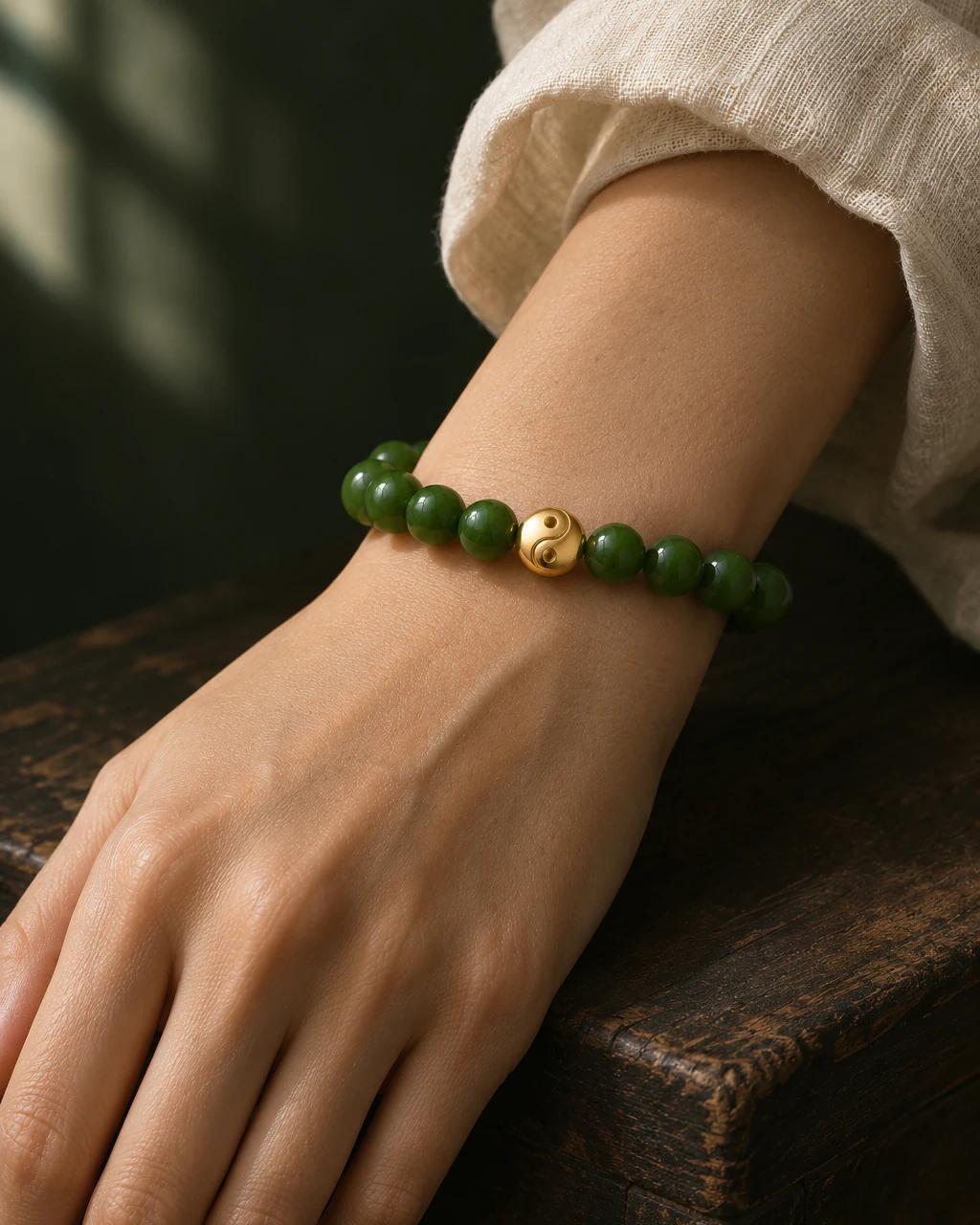
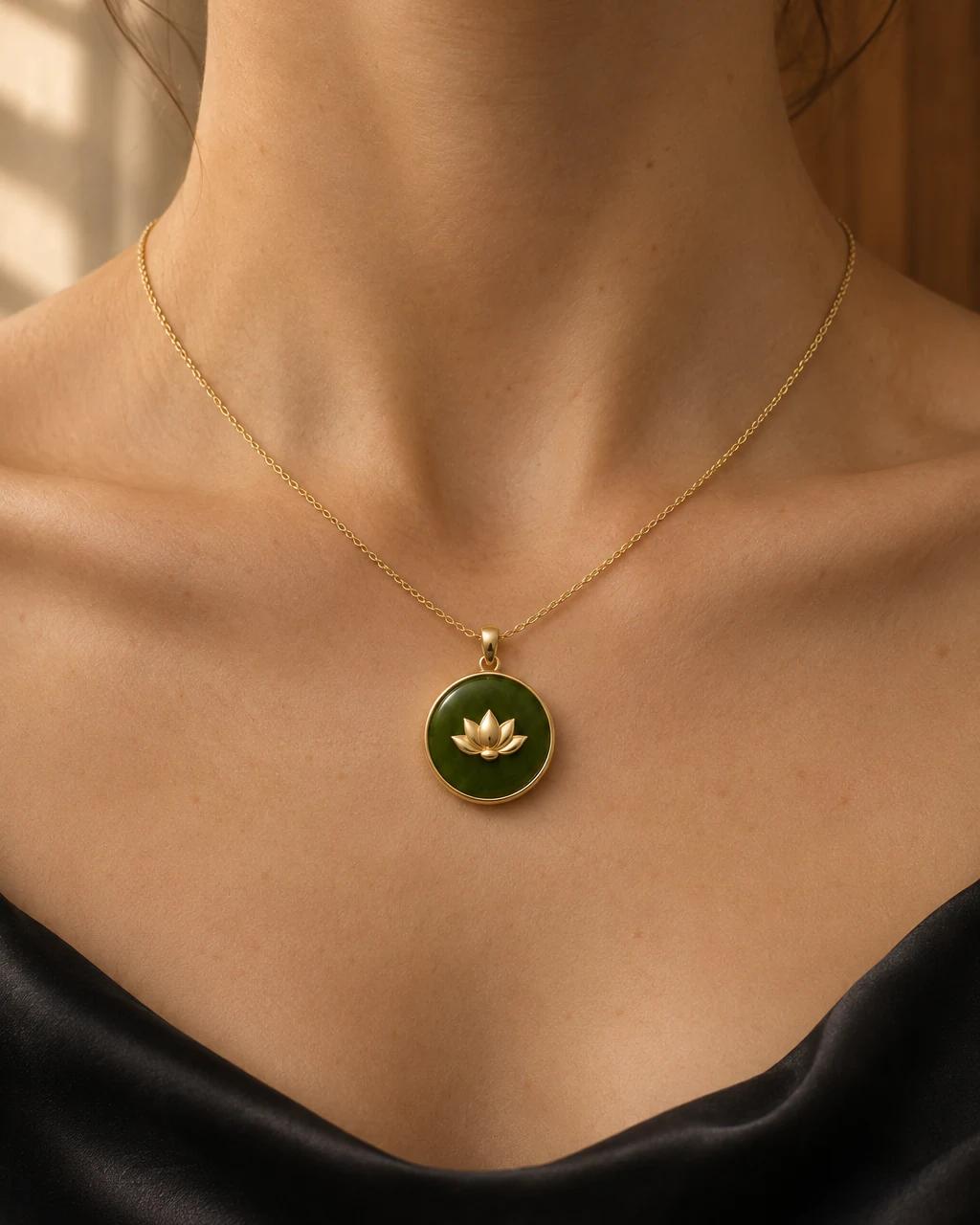
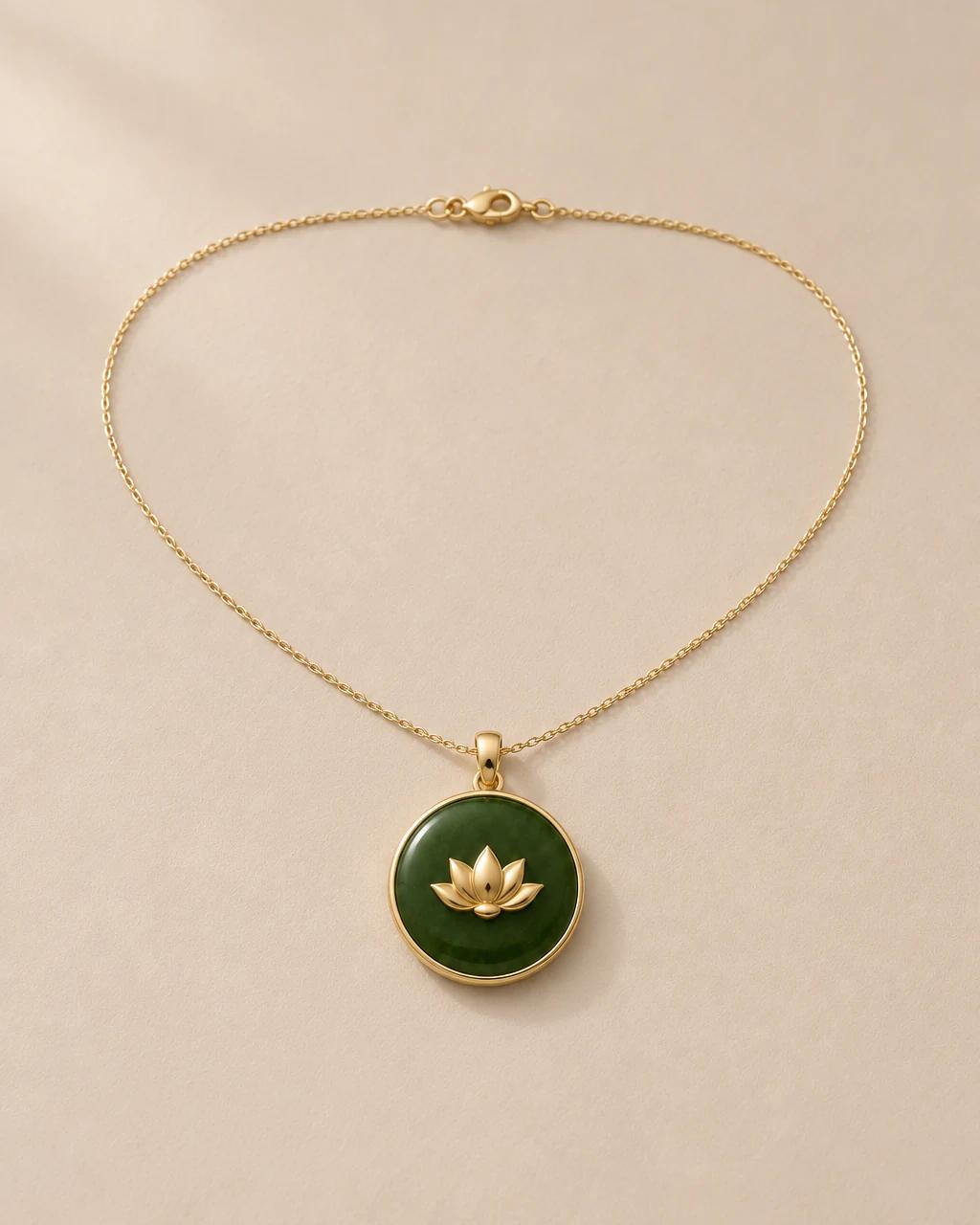
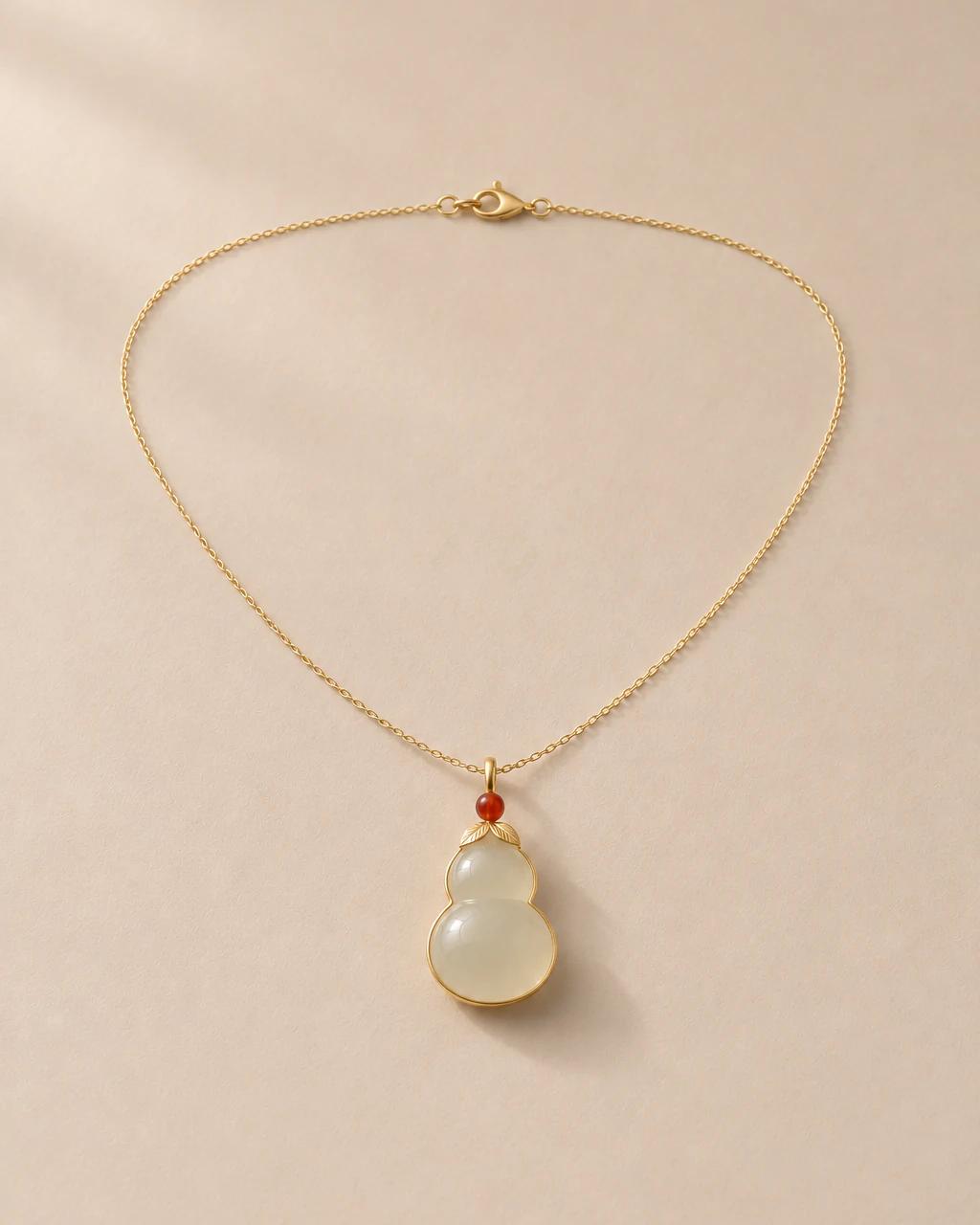
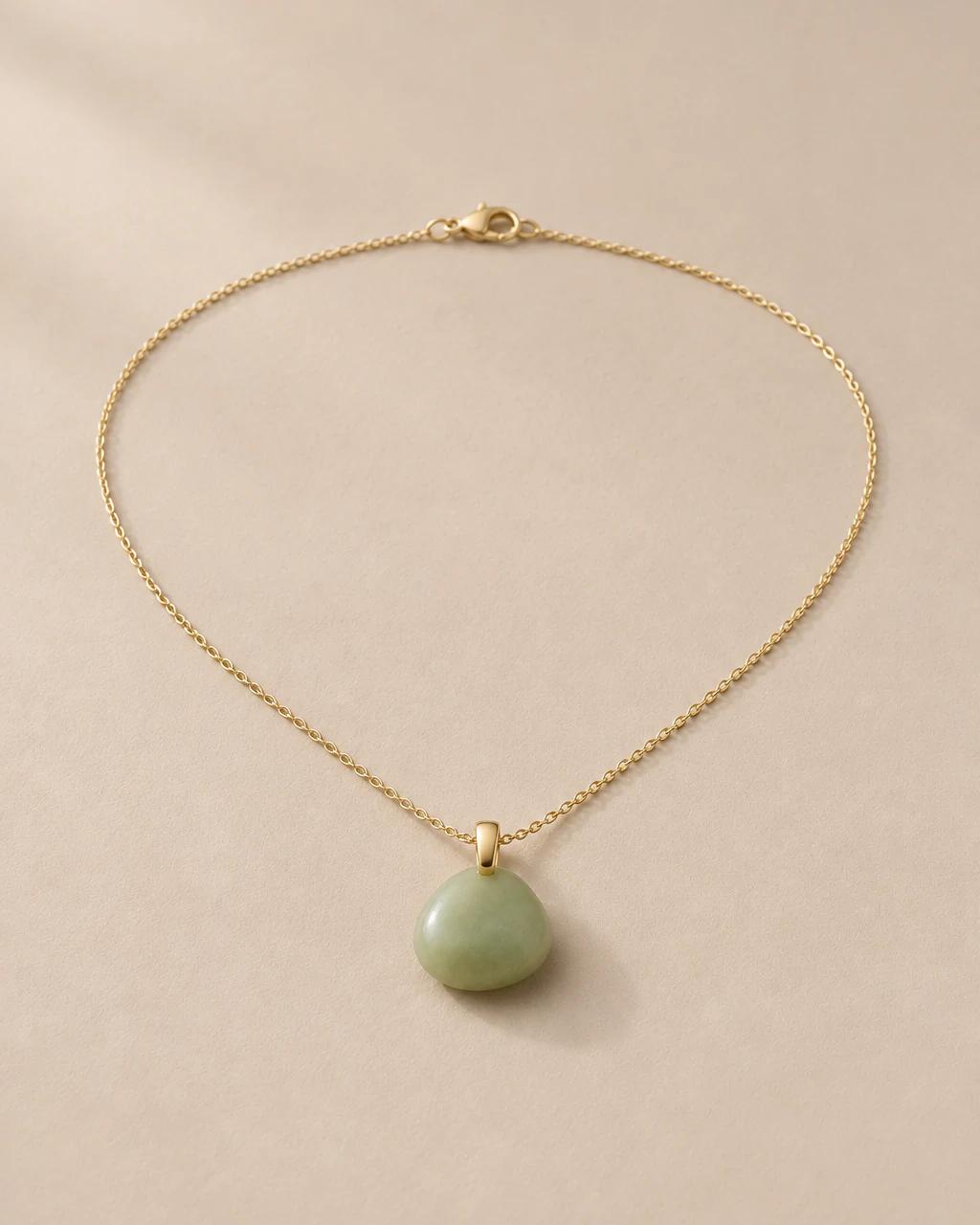
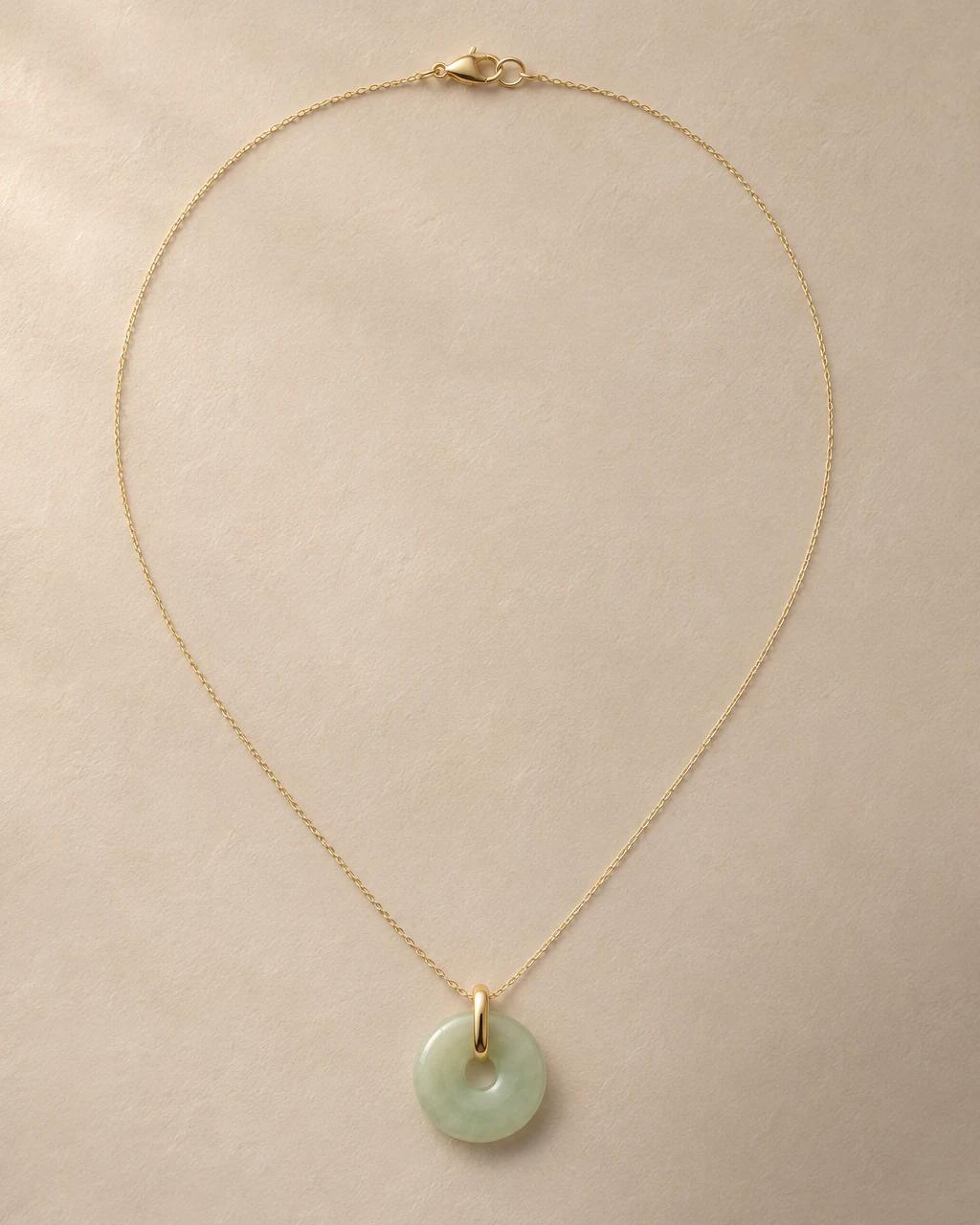
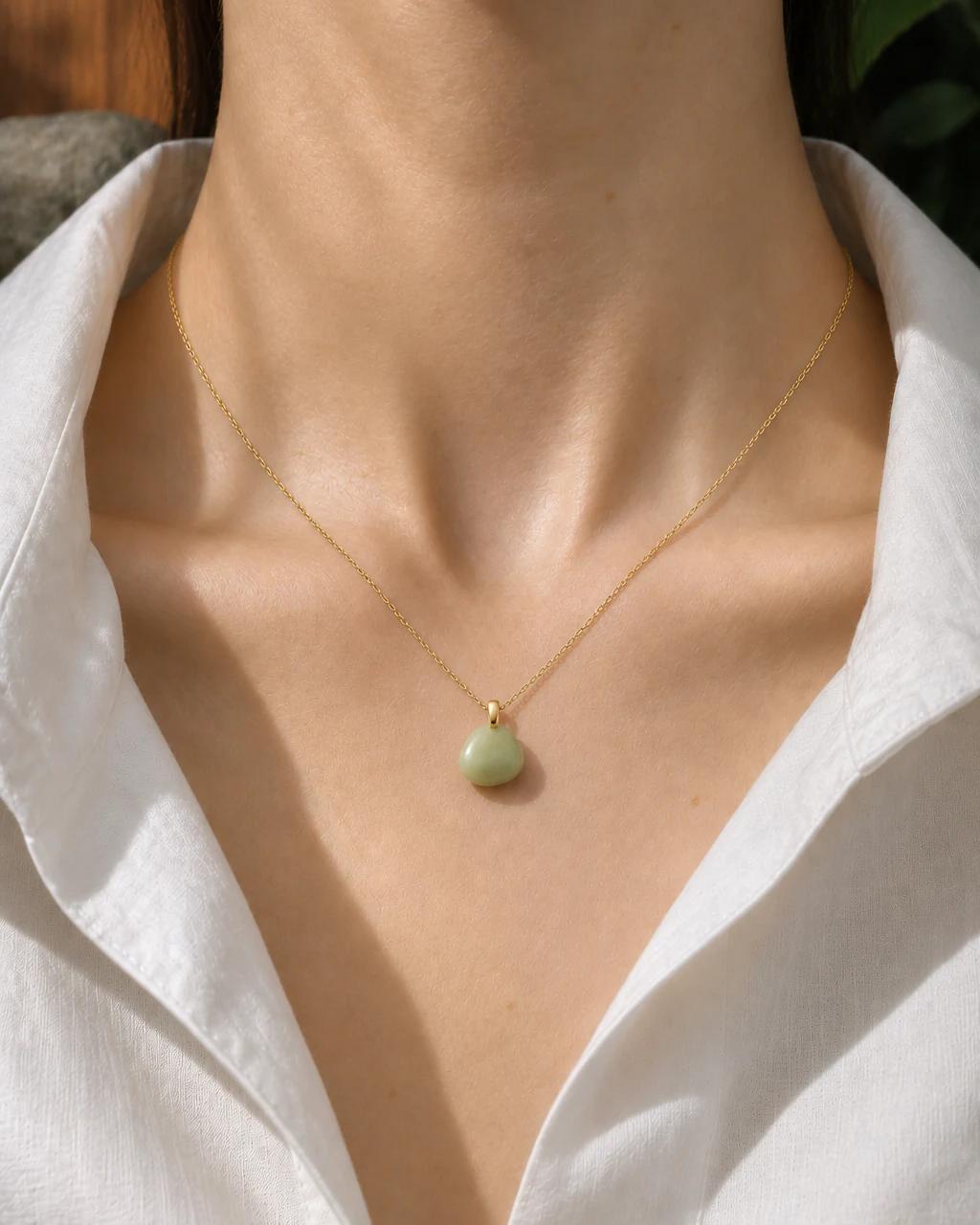
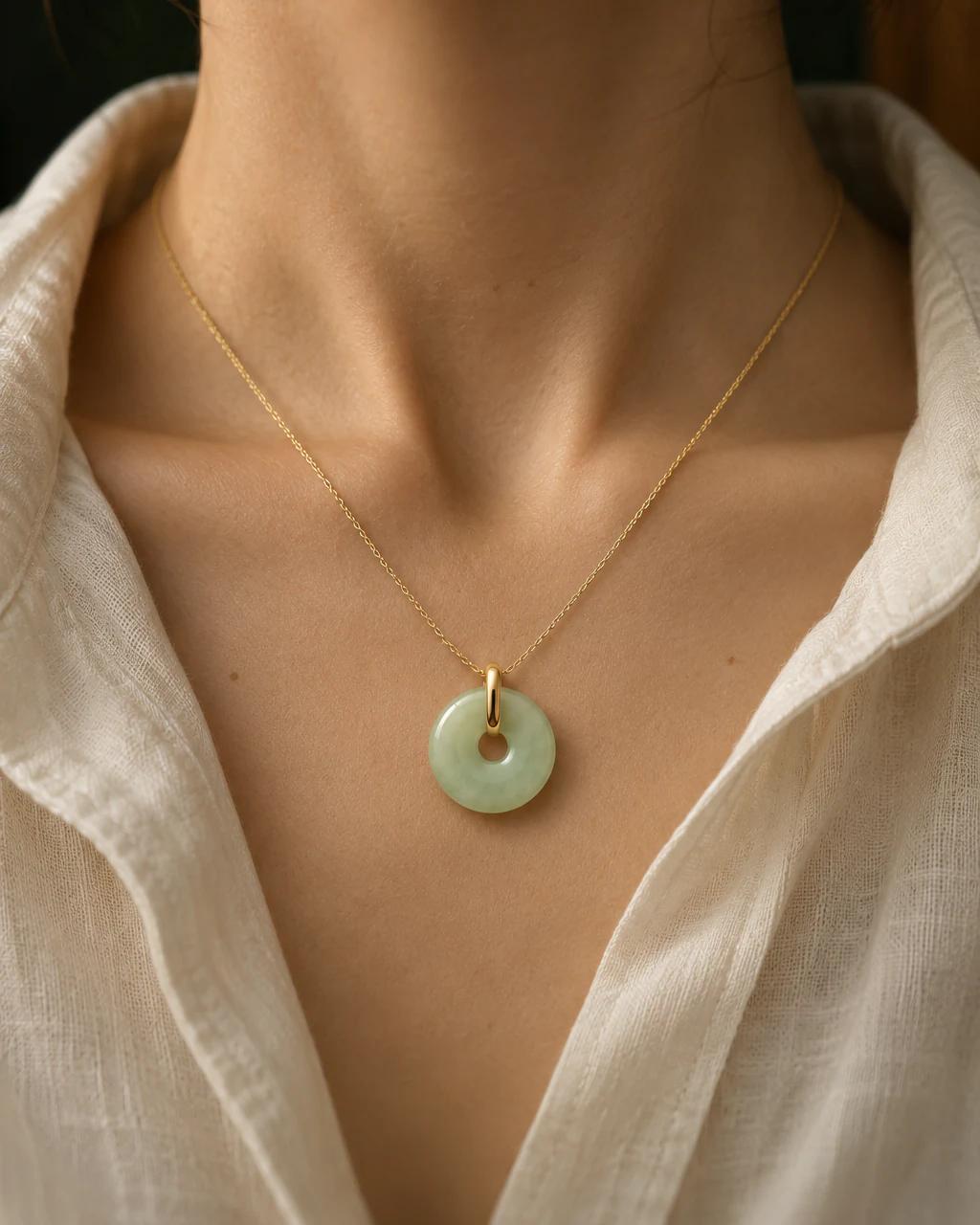
Several of our pieces are nephrite. The Jade Pebble Necklace is the plainest, a celadon pebble on a gold chain; the Lotus Jade Pendant sets a gold lotus on dark green stone. For jade in one of its oldest forms, see the ping an kou.
Also in the shop
You may also like
From the journal
Further reading
The Sacred nature tradition
Related symbols
- Crystal & StoneClarity · Grounding · Strength4 pieces
- Sacred MountainStillness · Pilgrimage · Perspective2 pieces