No. 02 / 18
bāguà
the eight trigrams
Taoist
Bagua
Order · Protection · Insight
Eight three-line figures that map heaven, earth and everything moving between them.
Also in the shop
You may also like
Pieces that sit well beside them.
Signature
Meaning and tradition
The bagua is a set of eight figures, each made of three stacked lines. A line is either solid or broken, and three lines allow exactly eight combinations. Tradition credits them to the legendary sage Fu Xi. Doubled, they form the sixty-four hexagrams of the Book of Changes, the divination text whose oldest layer dates to the Western Zhou, close to three thousand years ago.
A solid line is yang and a broken line is yin. Each trigram has a name and an image in nature: heaven, earth, thunder, wind, water, fire, mountain and lake. Three solid lines are heaven and three broken lines are earth; the other six lie between. The eight are set in a ring in one of two orders. The Earlier Heaven arrangement places opposites face to face, with heaven above and earth below. The Later Heaven arrangement, linked by tradition to King Wen of Zhou, follows the compass and the seasons, with fire in the south and water in the north.
In feng shui the Later Heaven order is used to read the directions of a house. The Earlier Heaven order is the one usually seen on the bagua mirror, a small octagonal mirror hung outside above a door and said to turn ill fortune away. By custom it faces outward, never into a room. The trigrams also appear on Taoist ritual robes.
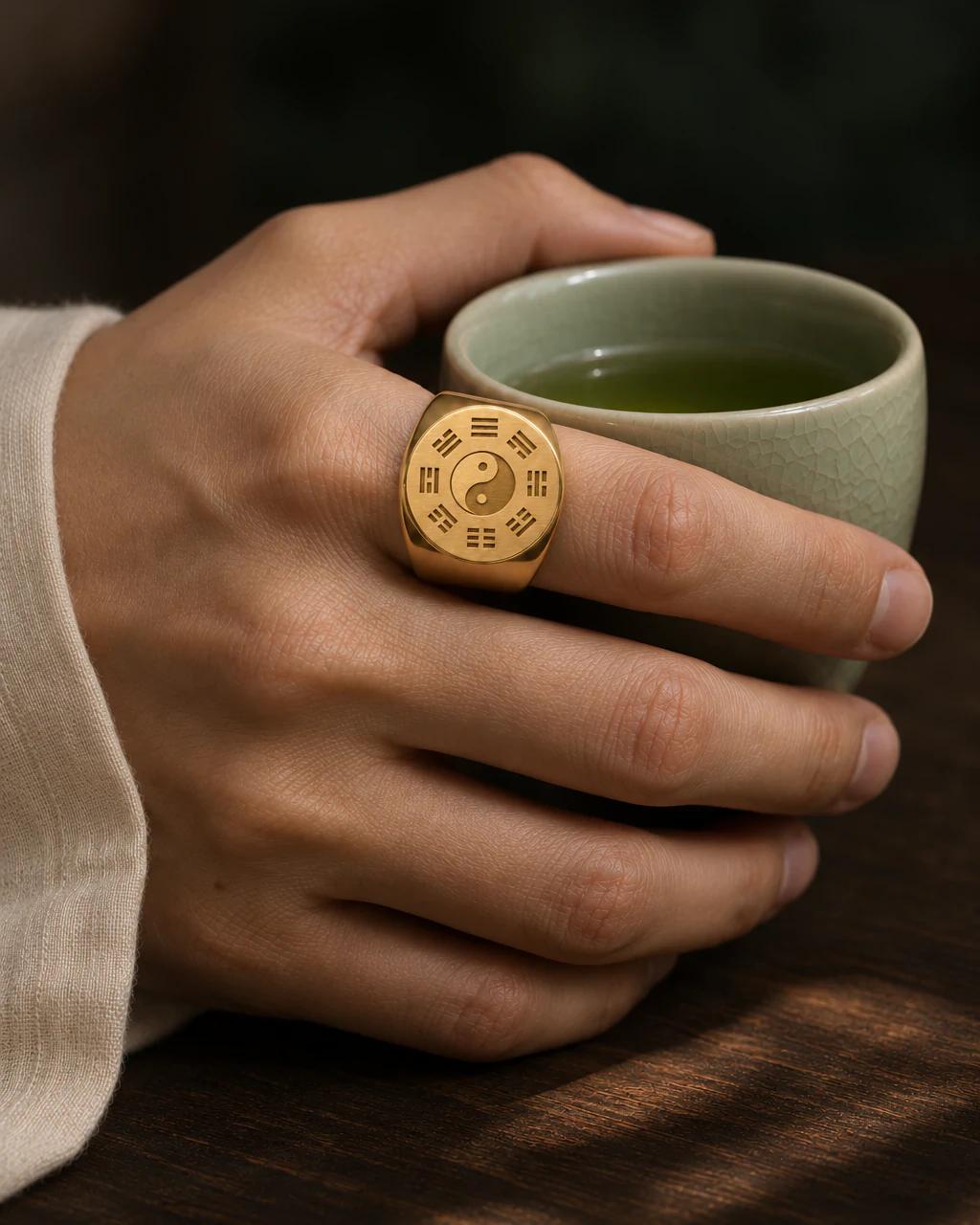
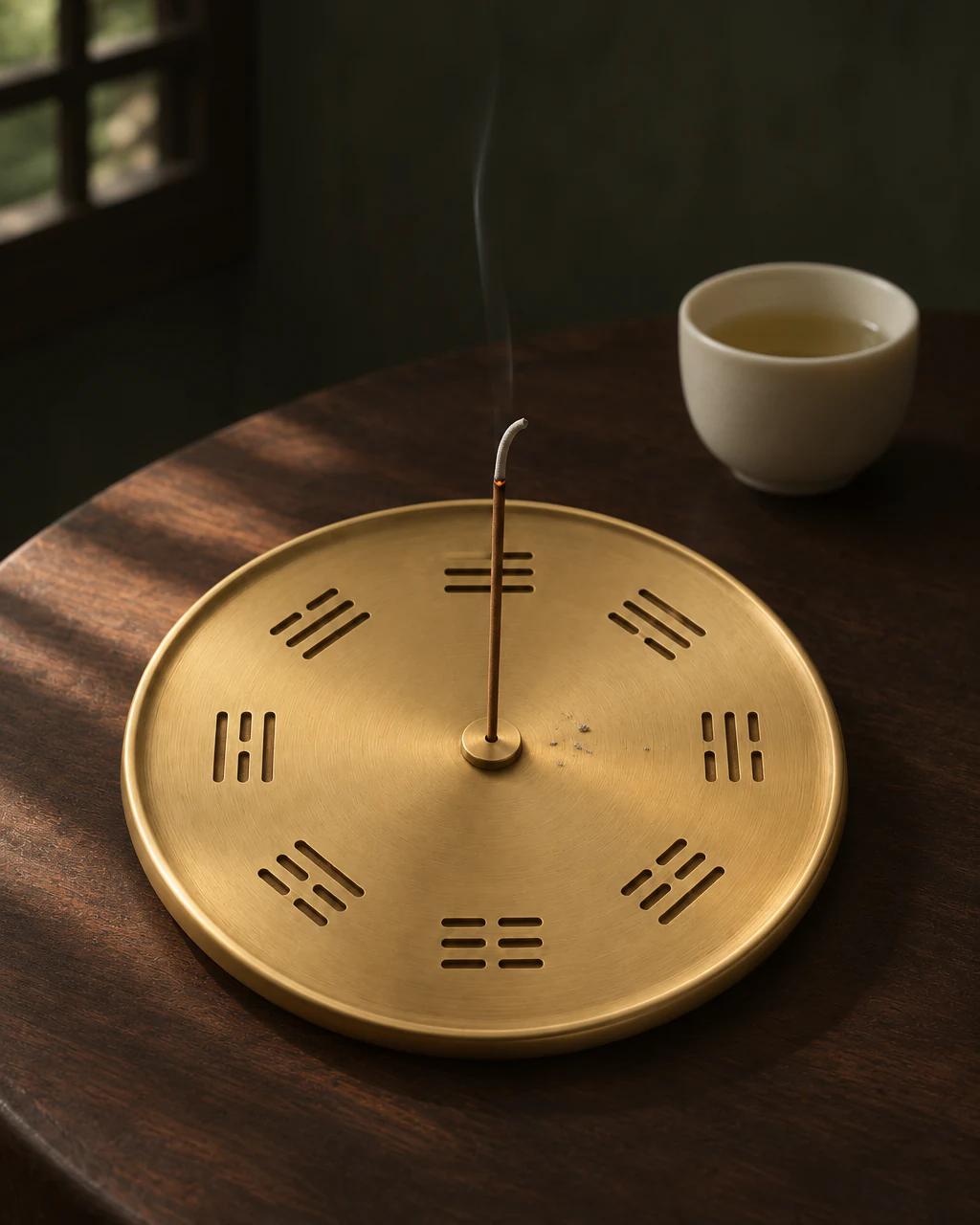
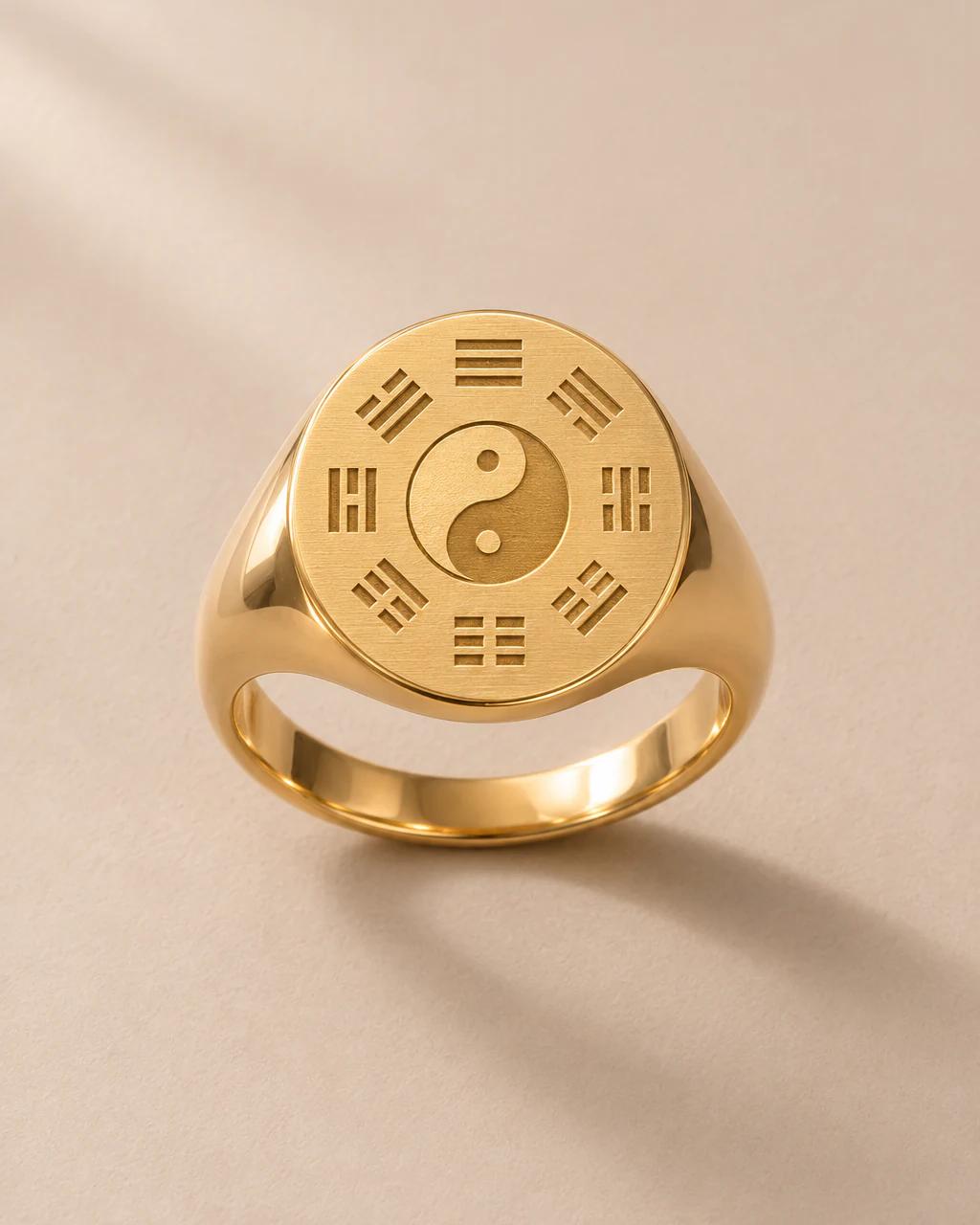
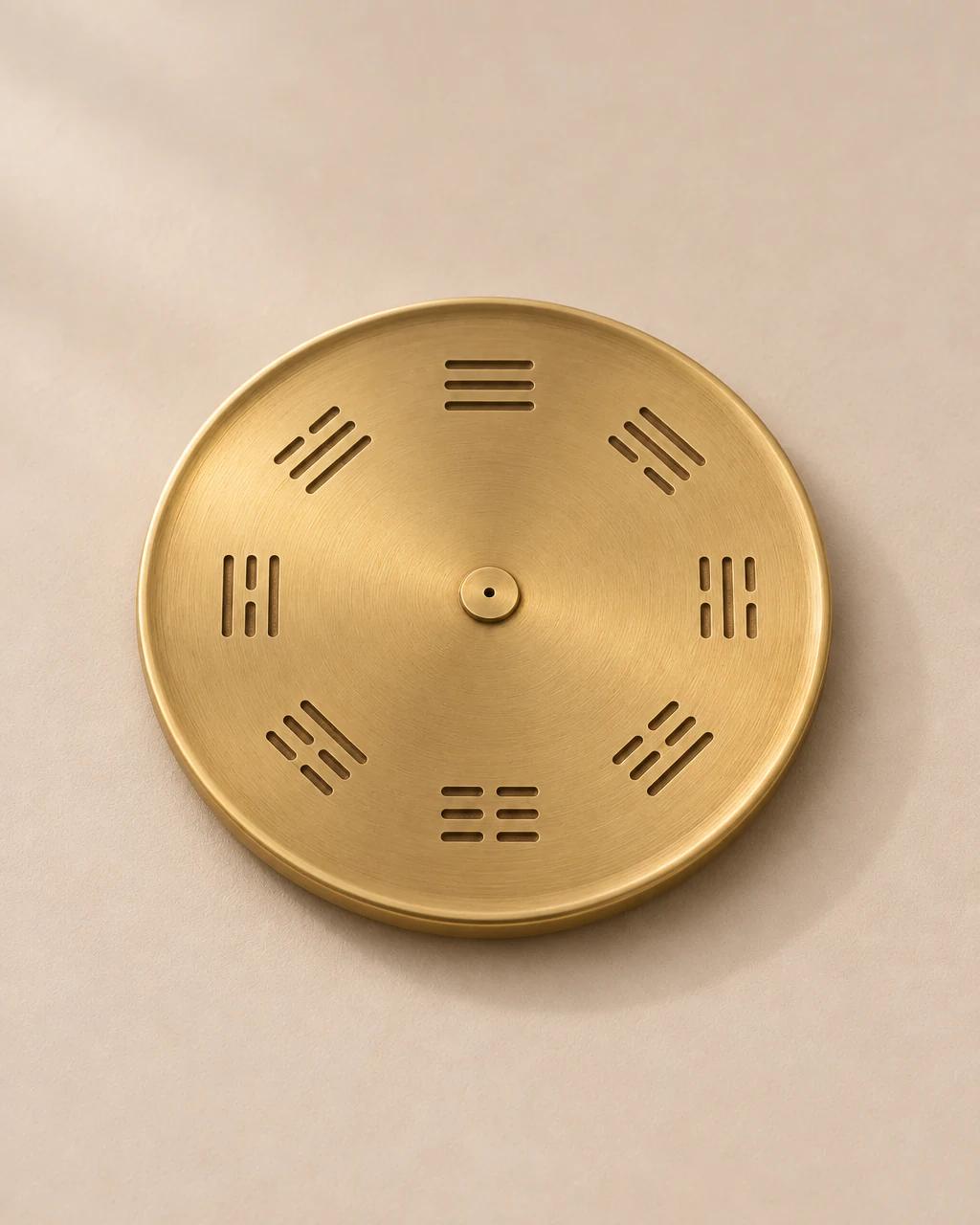
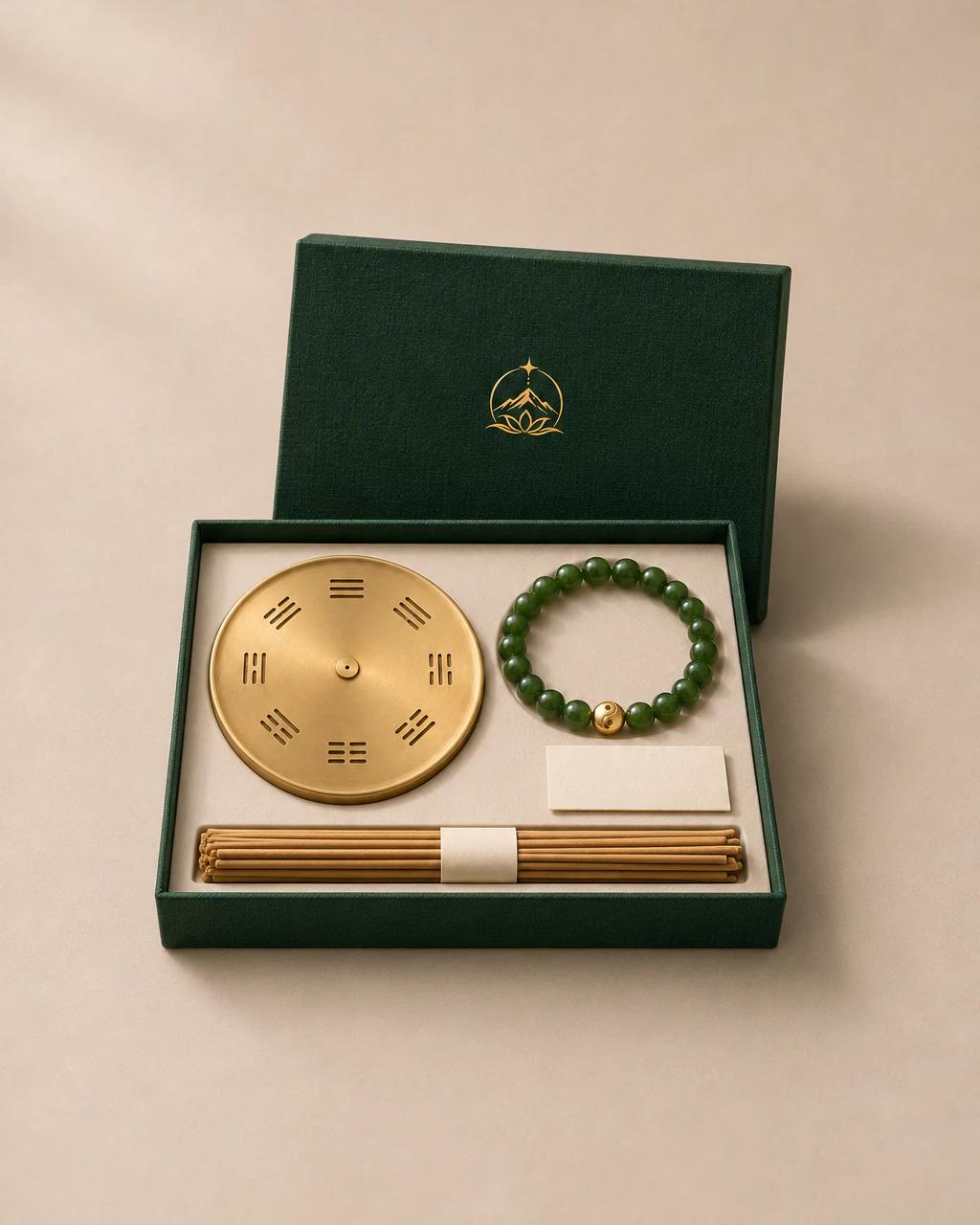
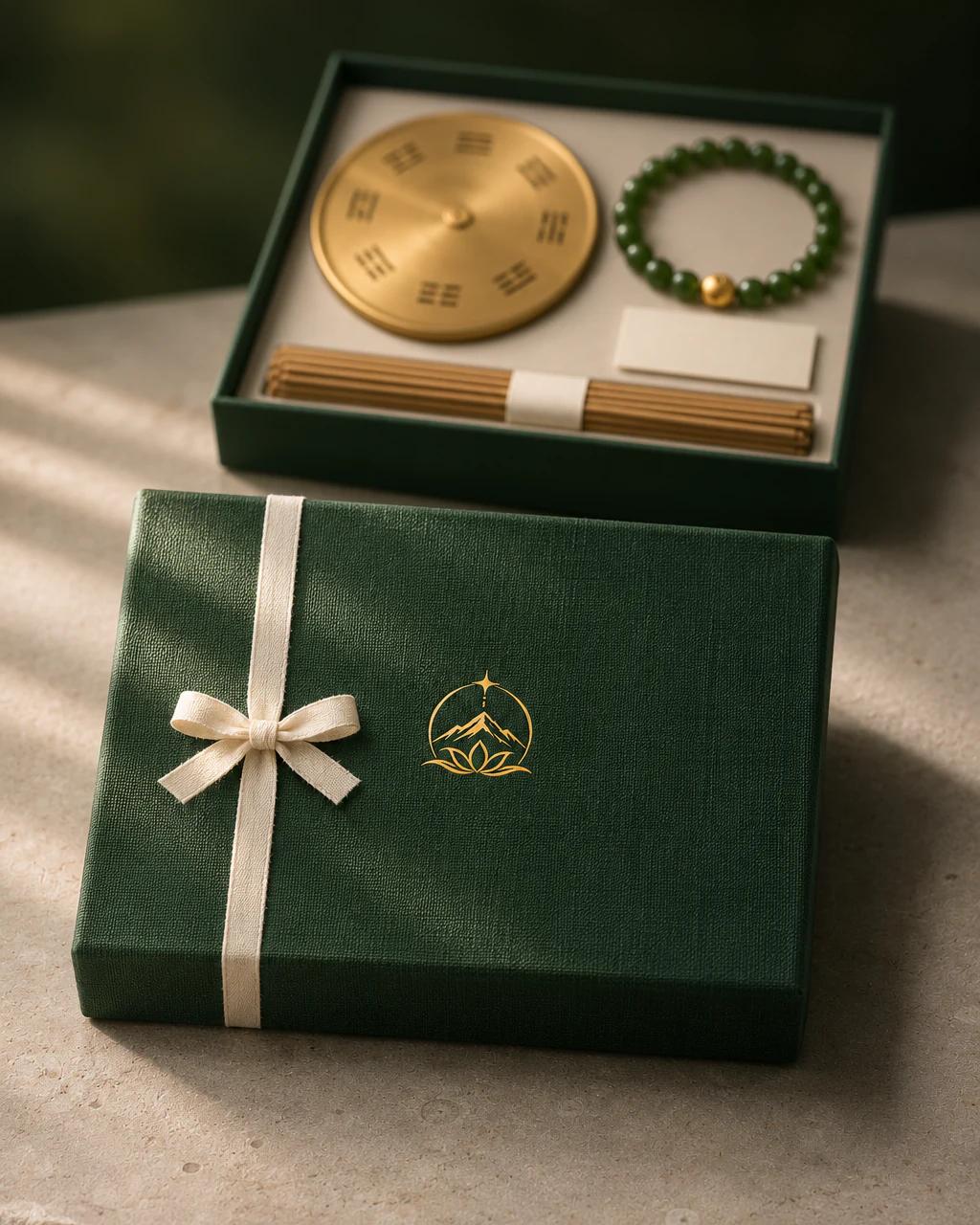
Our Bagua Signet Ring engraves the eight trigrams around a small taiji, from which they are said to unfold. The Bagua Incense Plate sets the same ring in brass around a single stick of incense.
Also in the shop
You may also like
Signature
Signature

From the journal
Further reading
The Taoist tradition