No. 05 / 18
bodhi
Sanskrit: awakening
Buddhist
Bodhi Seed
Practice · Patience · Awakening
Hard seeds strung into malas for counting mantra and breath, named for the tree under which the Buddha awoke, though not gathered from it.
Also in the shop
You may also like
Pieces that sit well beside them.

Signature
Meaning and tradition
Bodhi means awakening. The Bodhi tree is the sacred fig, Ficus religiosa, under which the Buddha is said to have awakened at Bodh Gaya in what is now Bihar, India. Bodhi seeds are the beads strung into Buddhist malas. Despite the name, they do not come from that tree, whose fruit is a small soft fig. The name is devotional, and it covers the hard seeds of several unrelated plants.
Among them are rudraksha, the ridged seeds of Elaeocarpus trees; the speckled “star and moon” seeds of a rattan palm; and the smooth ivory-white seeds of Corypha palms, sold as white bodhi. What they share is hardness and the name. A short sutra on prayer beads, translated into Chinese in the Tang dynasty, ranks bodhi seed above pearl, coral and crystal. Seeds darken and take a polish from the hand, and an old mala is valued for it.
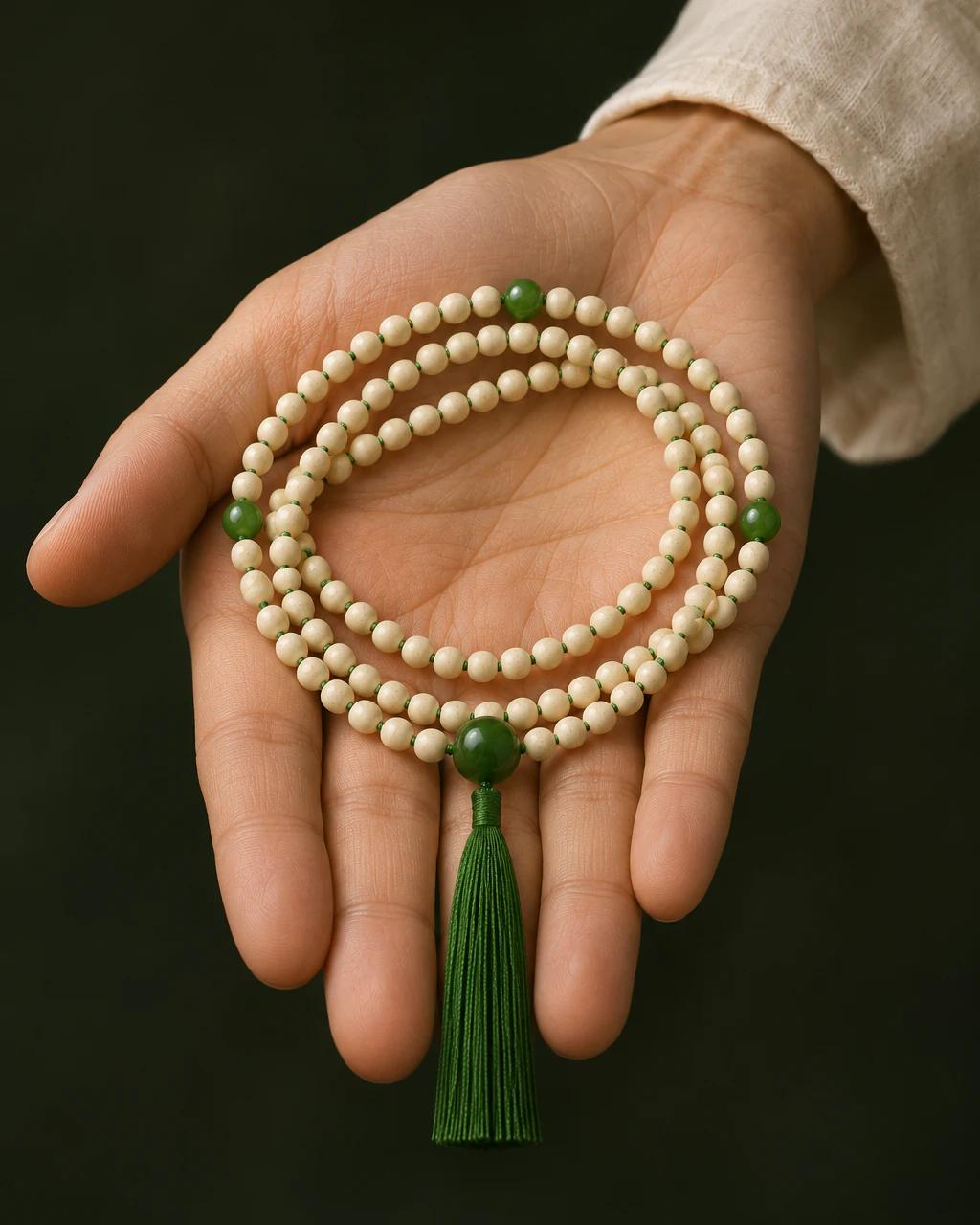
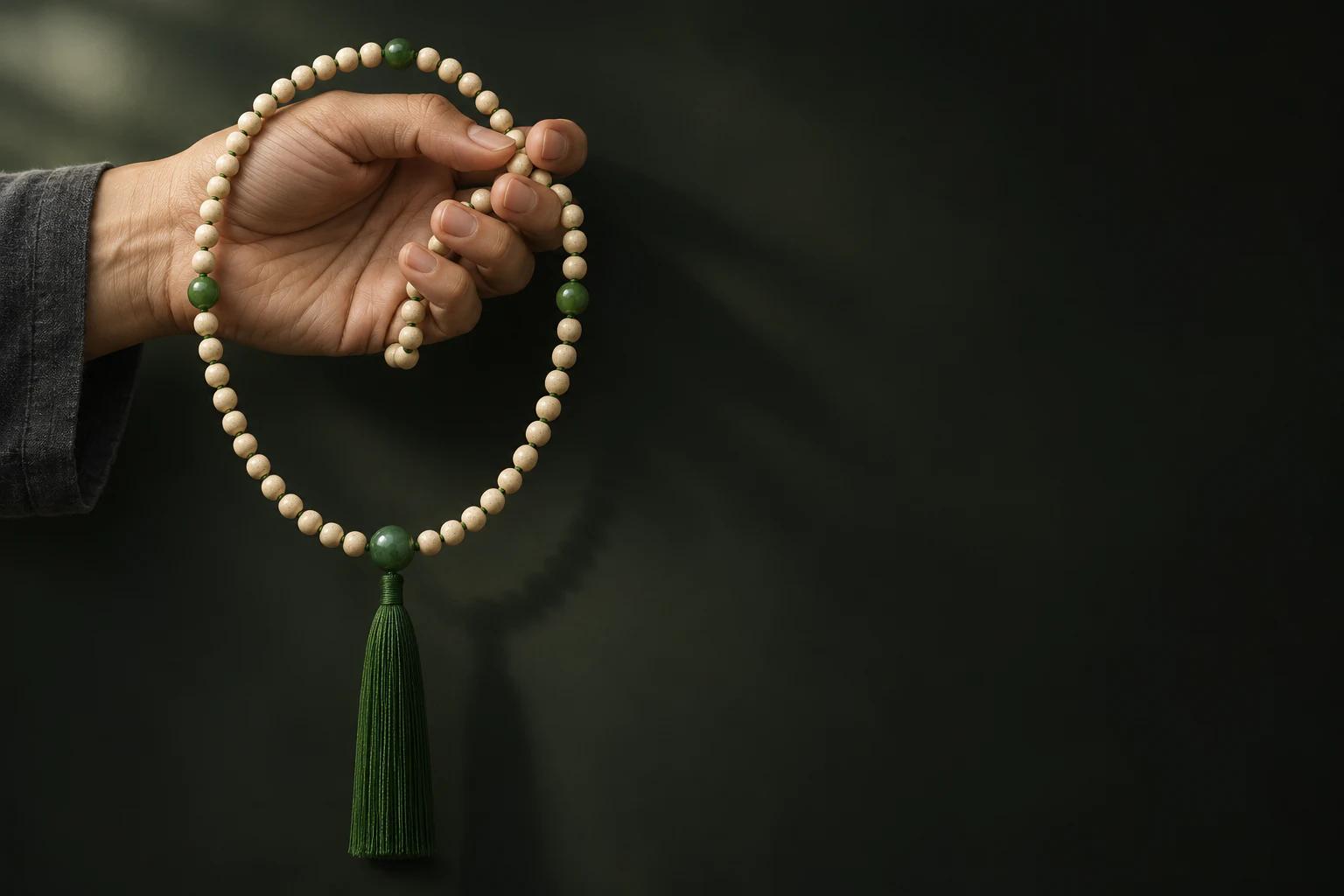
A full mala has 108 beads and one larger guru bead. The number is explained in several ways; one tradition counts 108 afflictions to be set down. One bead is passed between thumb and finger for each recitation or each breath. By custom the guru bead is not crossed: on reaching it, the mala is turned and counted back the other way. Shorter strands are worn at the wrist.
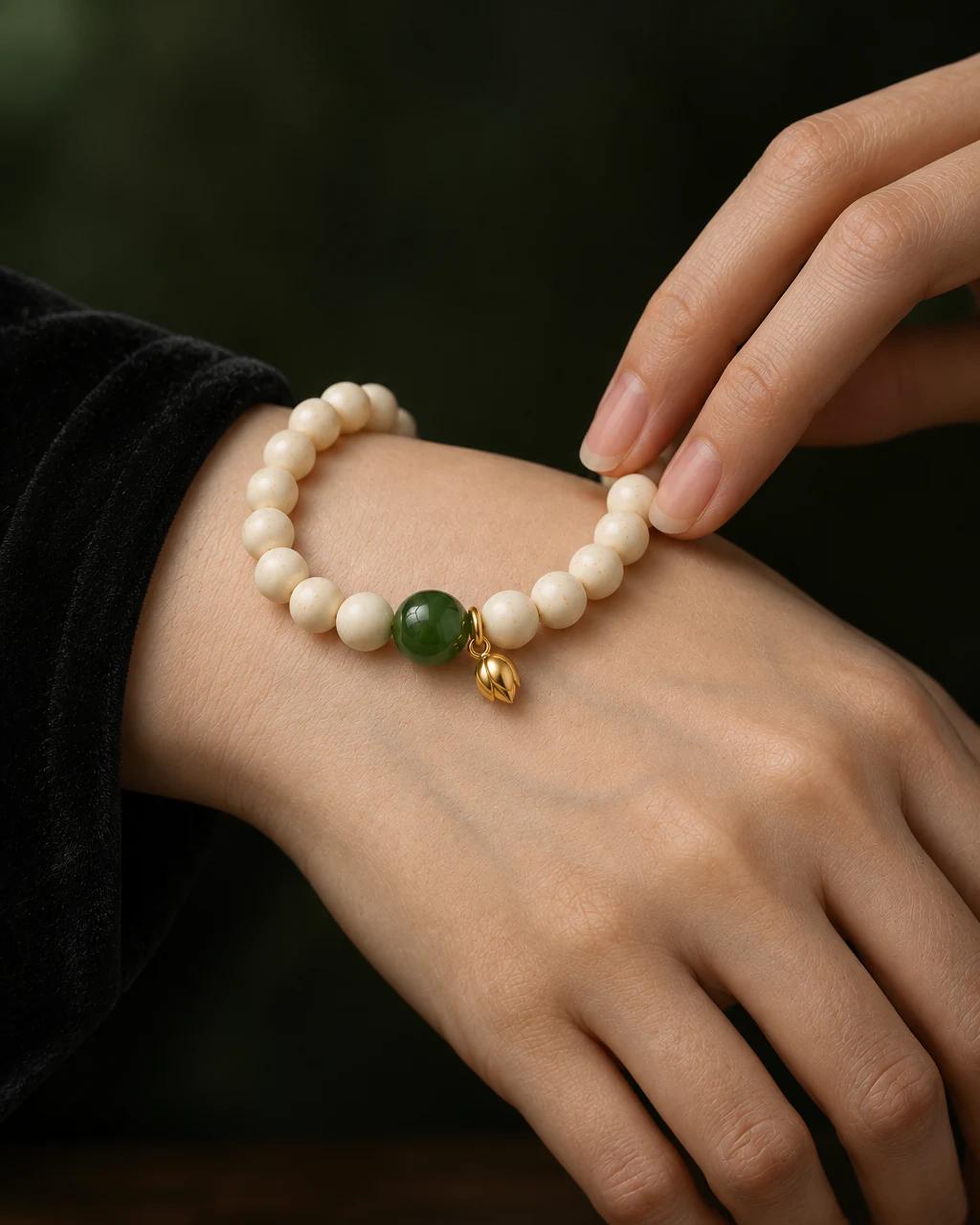
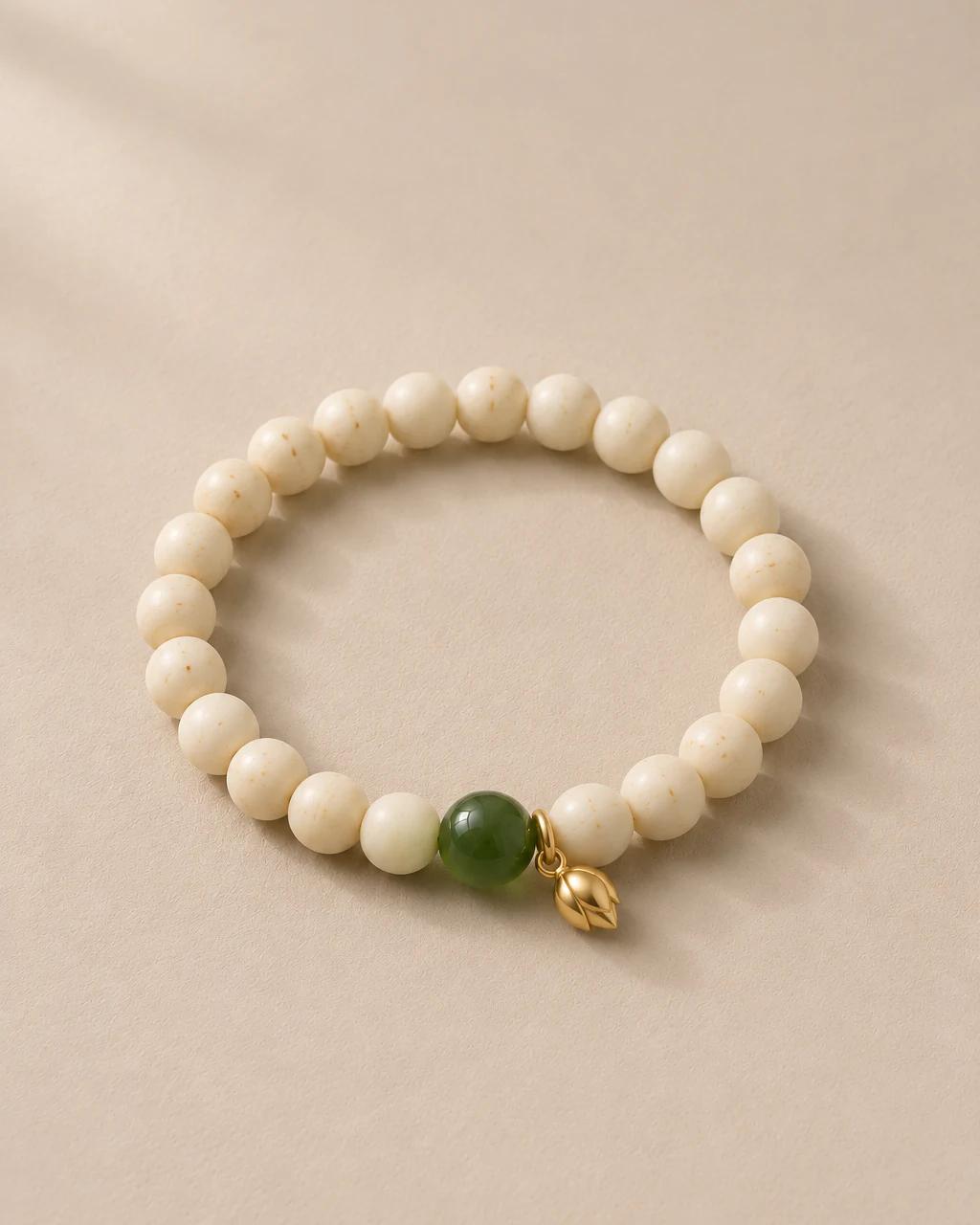
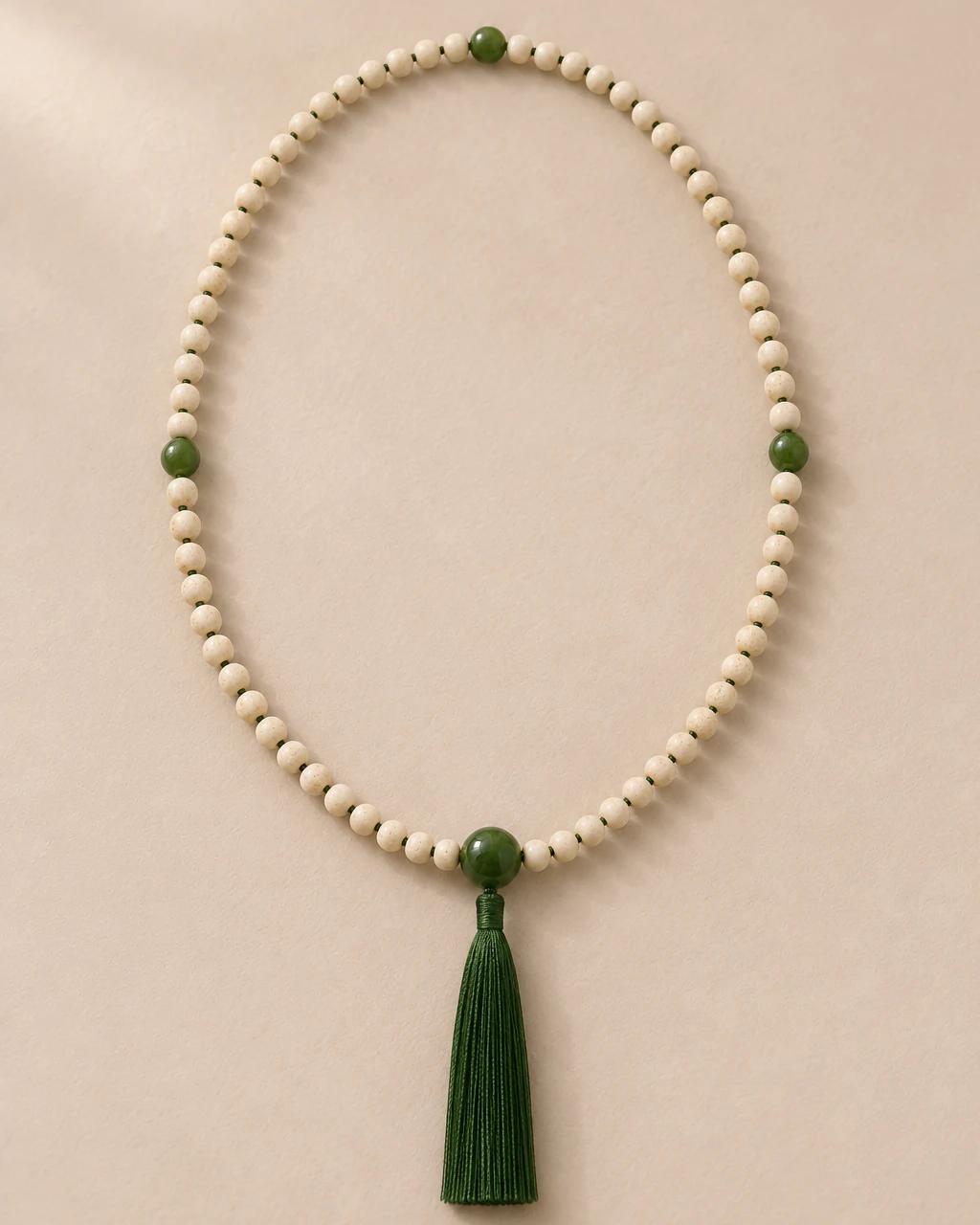
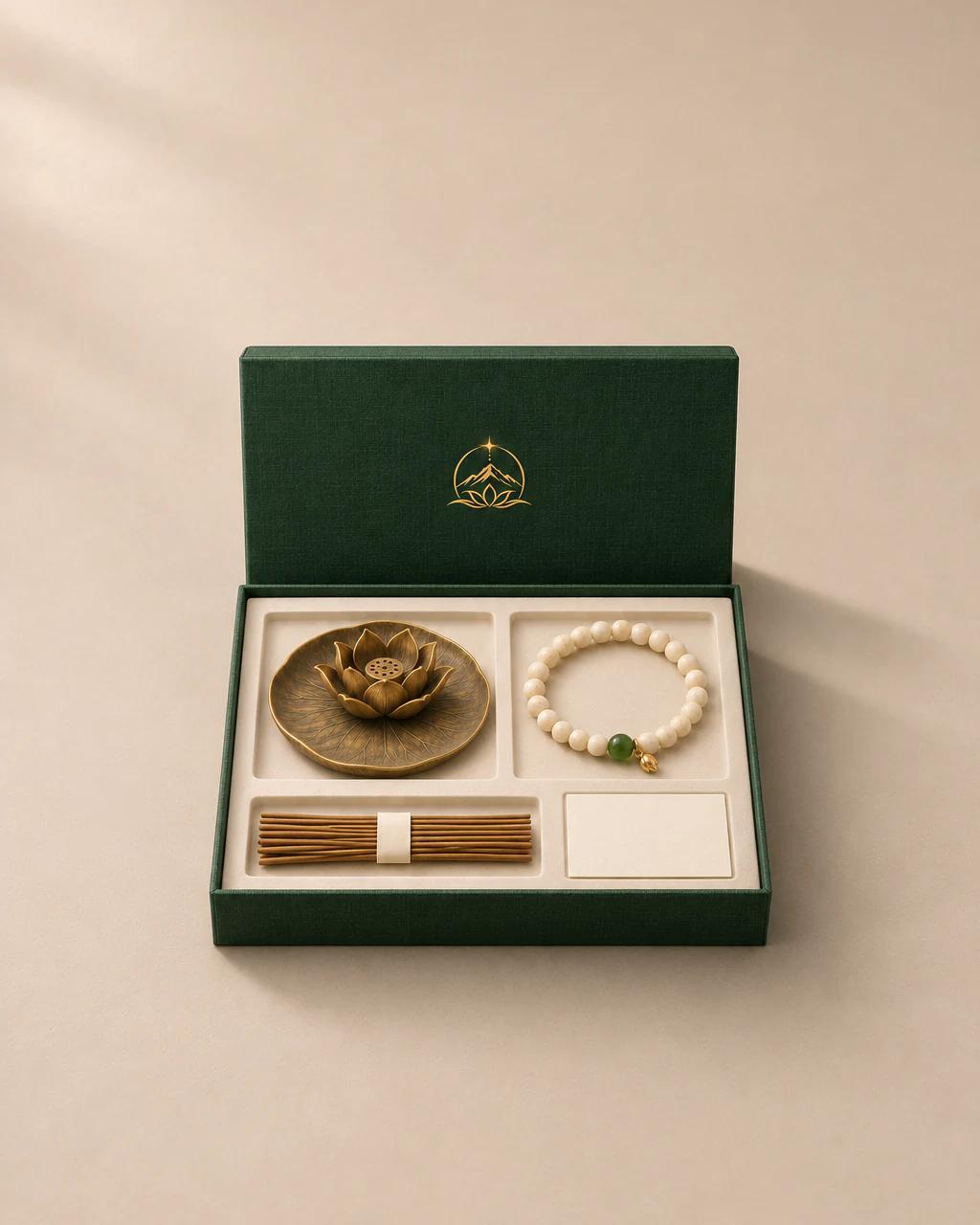
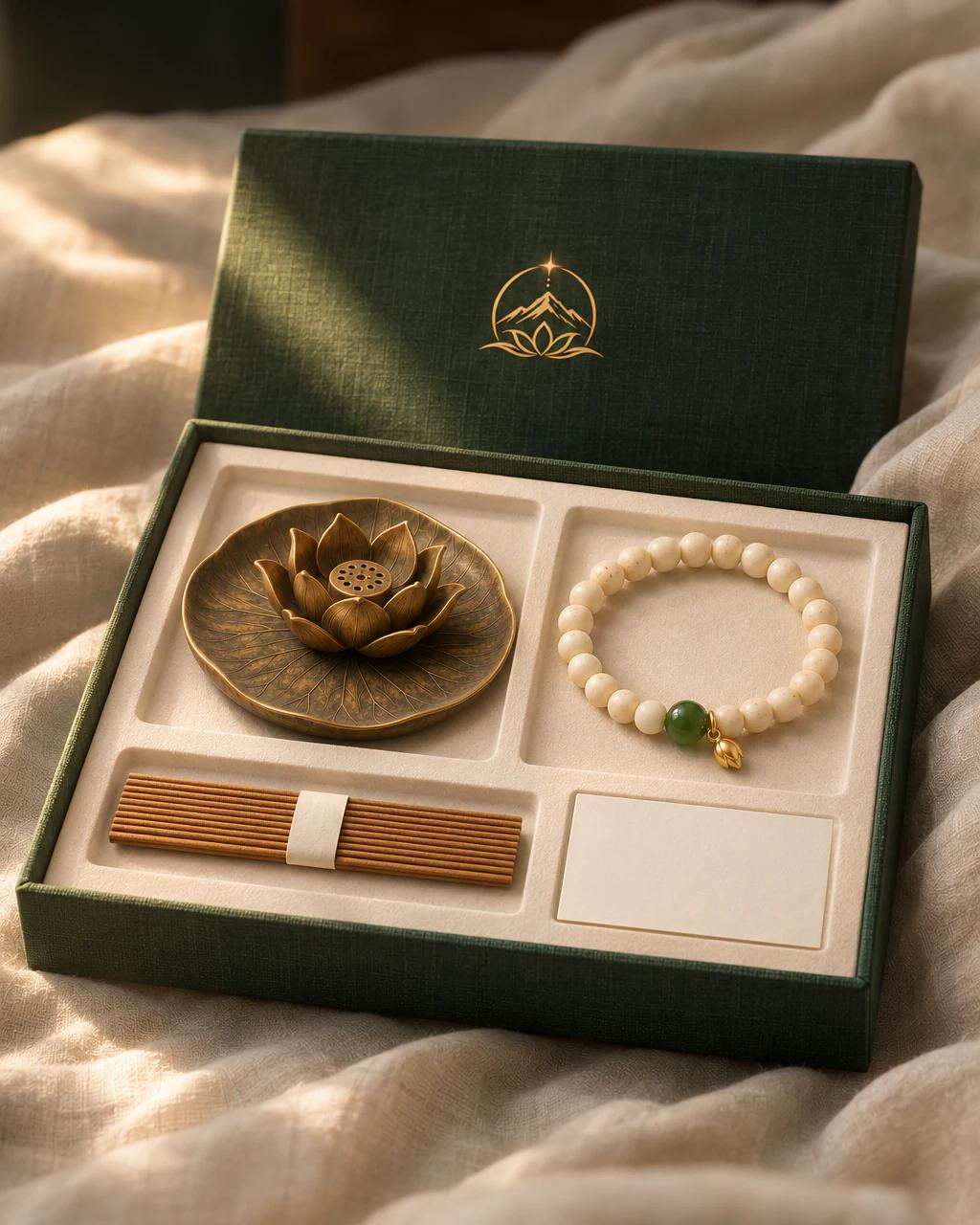
Our 108 Bodhi Mala is hand-knotted in white bodhi seed, with jade marker beads, a jade guru bead and a silk tassel. The Bodhi Seed Bracelet is the wrist form, with a small gold bud of the lotus beside the beads.
Also in the shop
You may also like
Signature

New

From the journal
Further reading
The Buddhist tradition