No. 09 / 18
píng’ān kòu
the clasp of peace
Chinese tradition
Ping An Kou
Peace · Safe passage · Wholeness
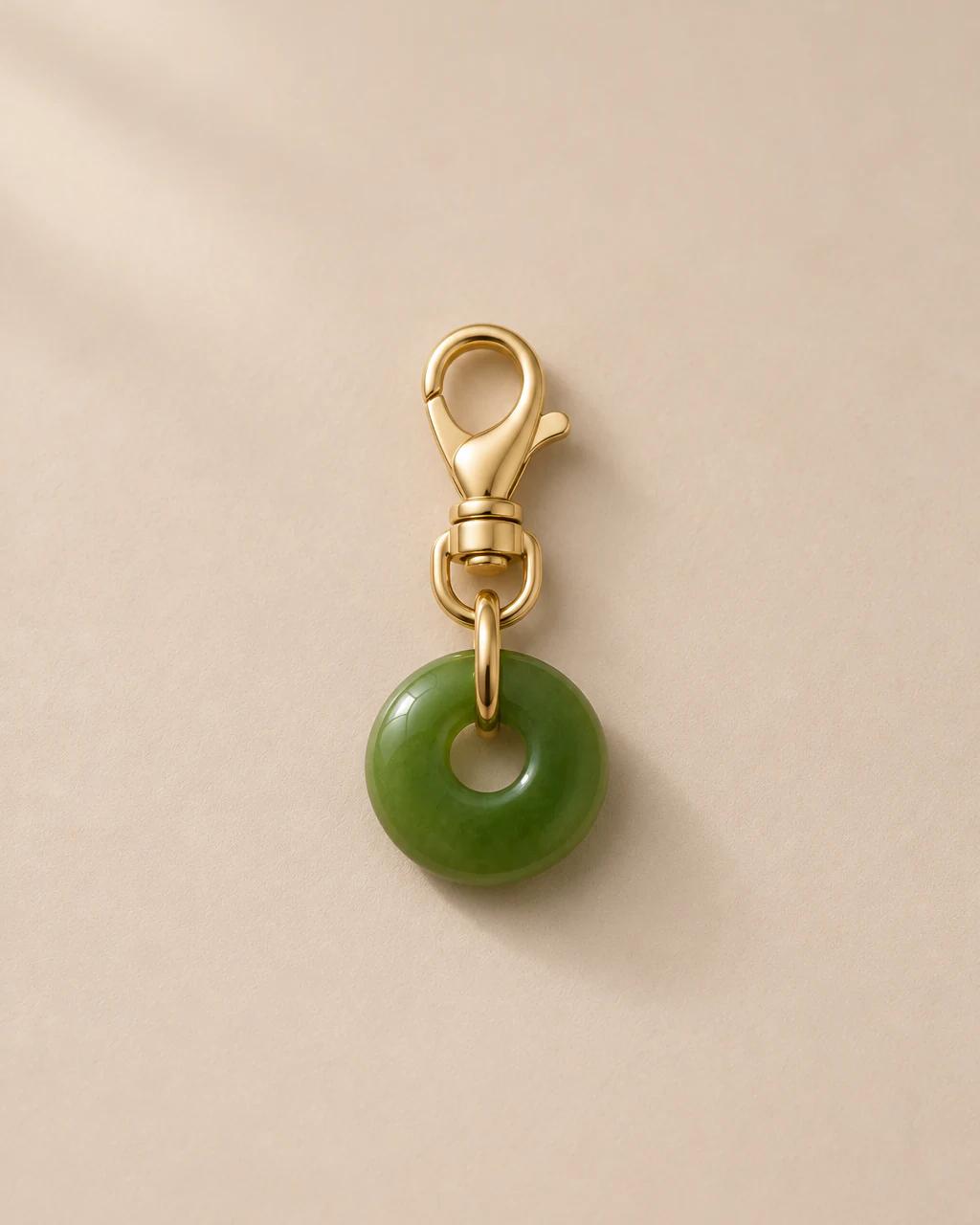
A smooth ring of jade, round without and open within, traditionally given as a wish for someone's safety wherever they go.
Signature
Meaning and tradition
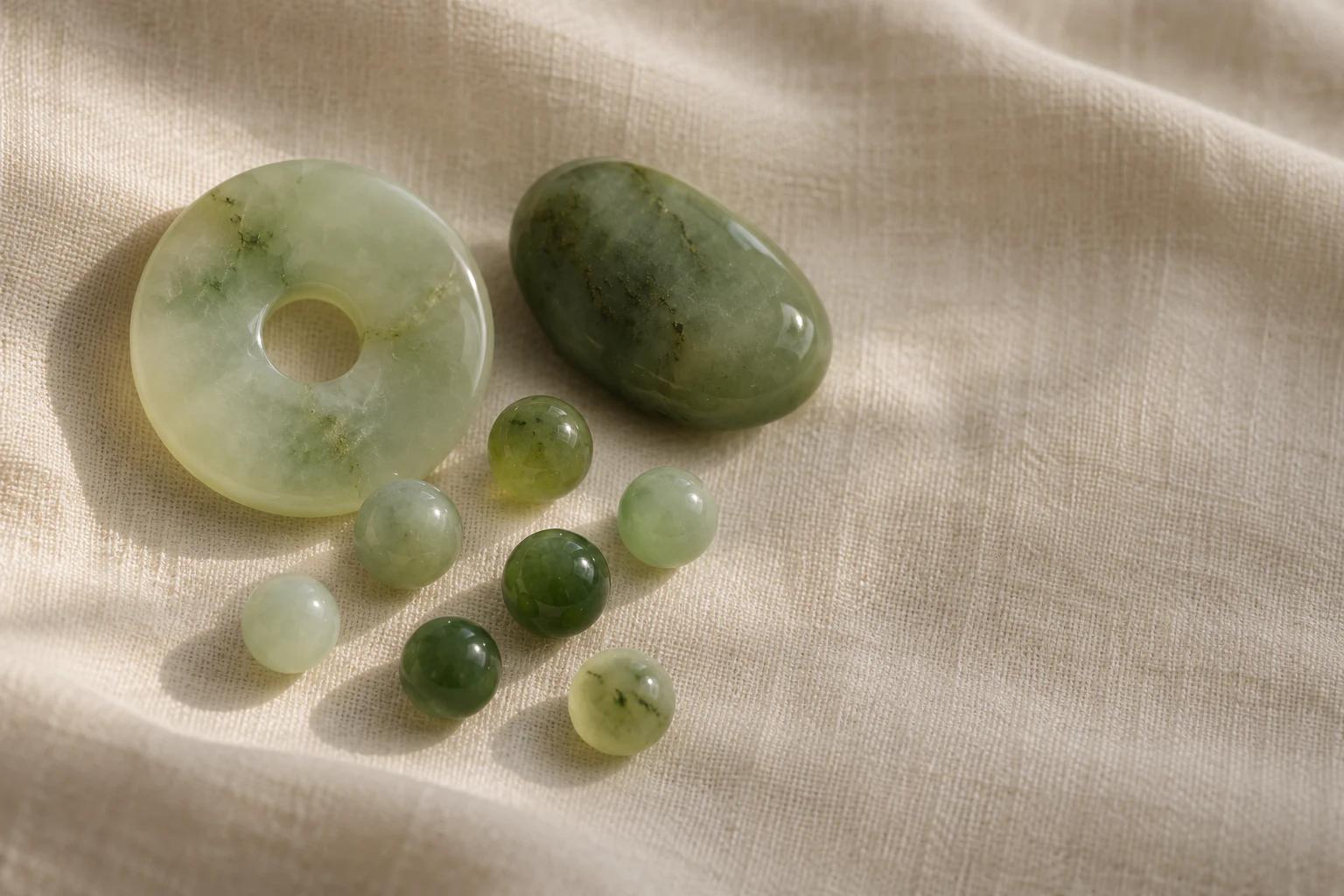
A ping an kou is a small flat ring of jade with a round hole at its center and no carving at all. The name joins píng'ān, peace and safety, to the word for a button or clasp. In form it descends from the bì, the jade disc found in Neolithic burials in China and named in the Rites of Zhou as the offering made to heaven. The ping an kou is the bi made small and brought into everyday life.
The meaning is read from the shape. The outer circle is the round of heaven, and in Chinese roundness, yuán, also means completeness and reunion. The open center is read as room left in the middle: a mind not crowded, a way through. There are no corners and no edges, nothing to catch, which is taken as a wish for smooth passage. The surface is left plain so that the stone itself can be seen.
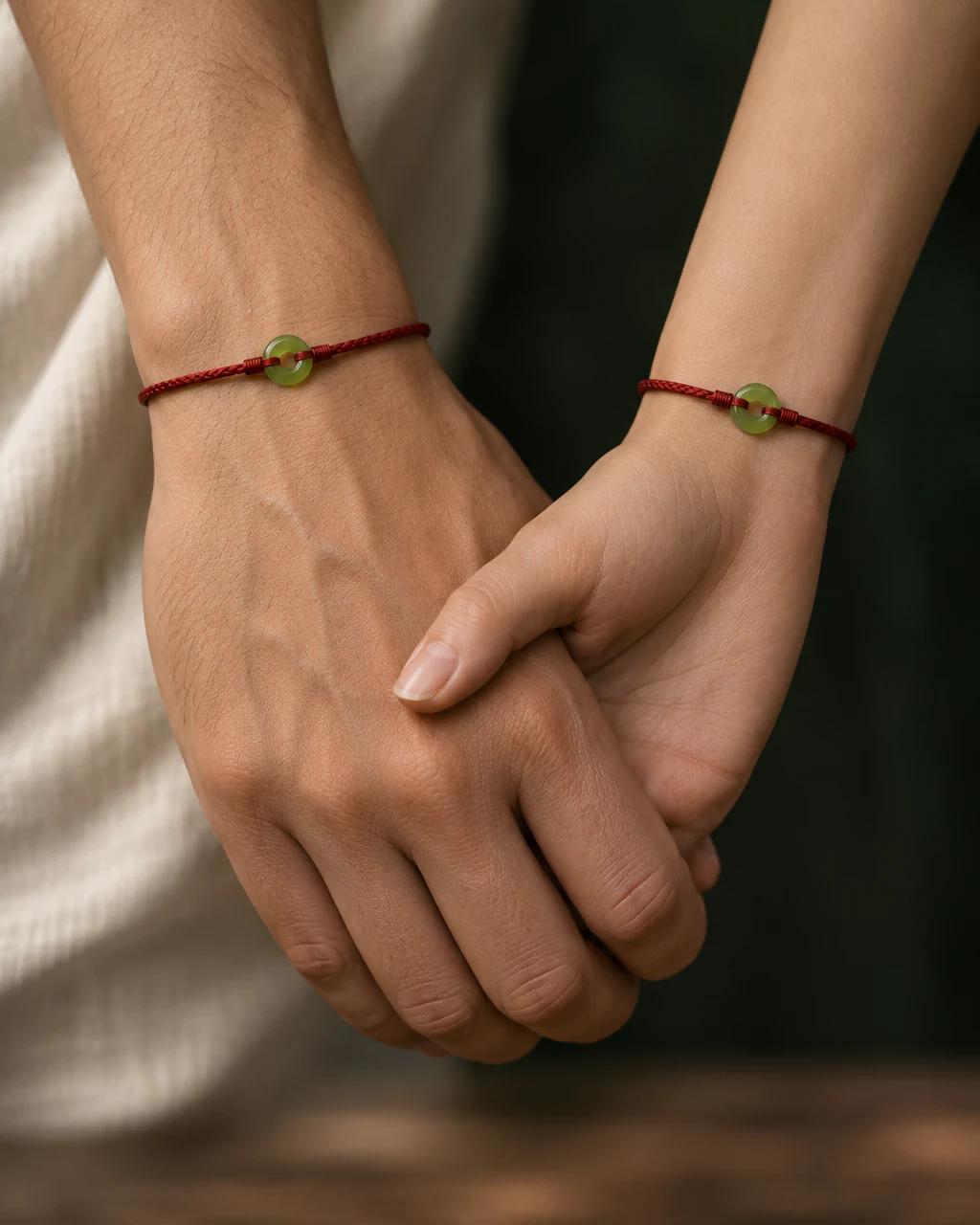
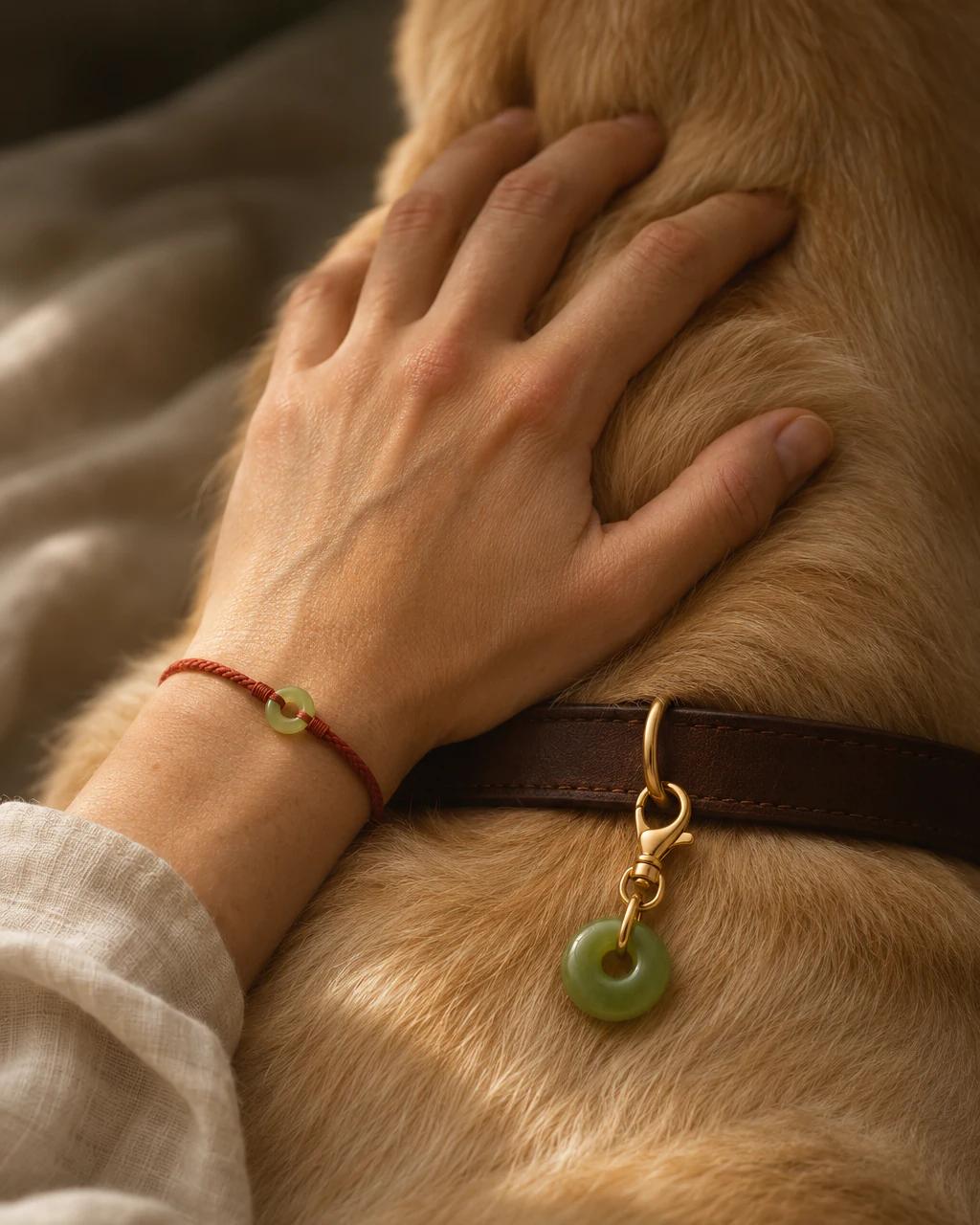
It is among the most commonly given pieces of jade. Parents and grandparents give one to a newborn, to a child leaving for school, to anyone setting out on a long trip or starting again somewhere new. By custom it is threaded on a cord and worn at the neck or wrist, against the skin, and kept on instead of being saved for occasions.
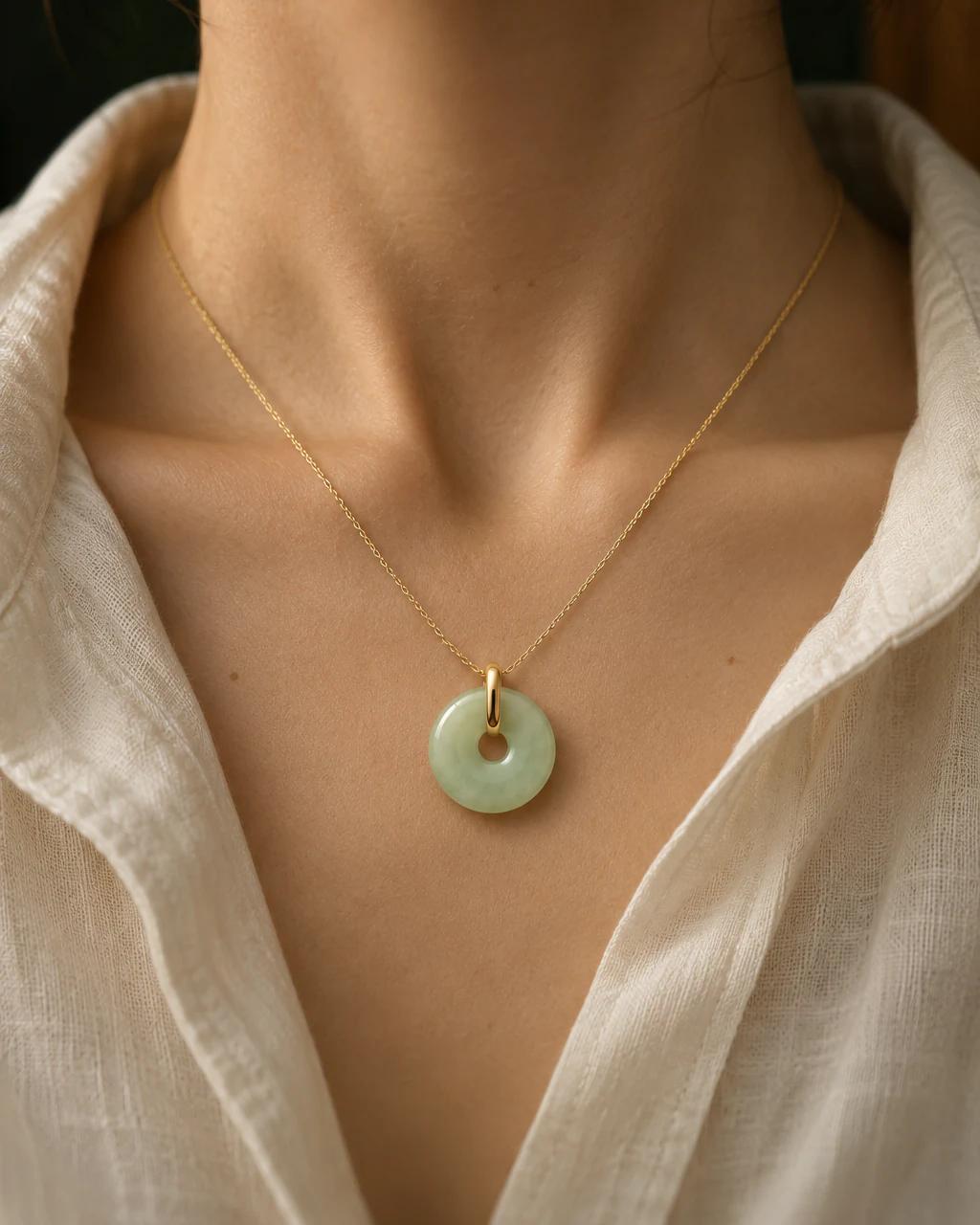
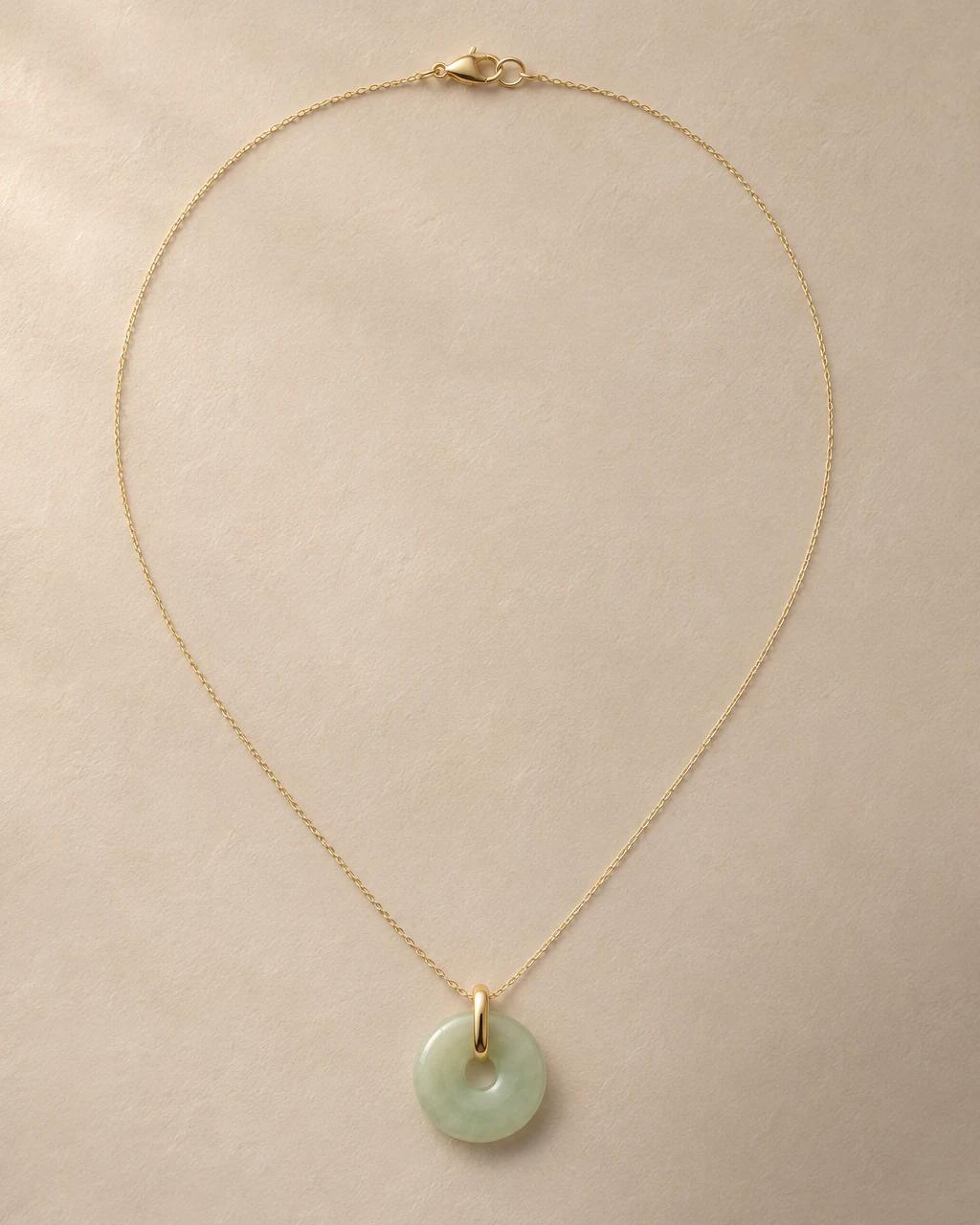
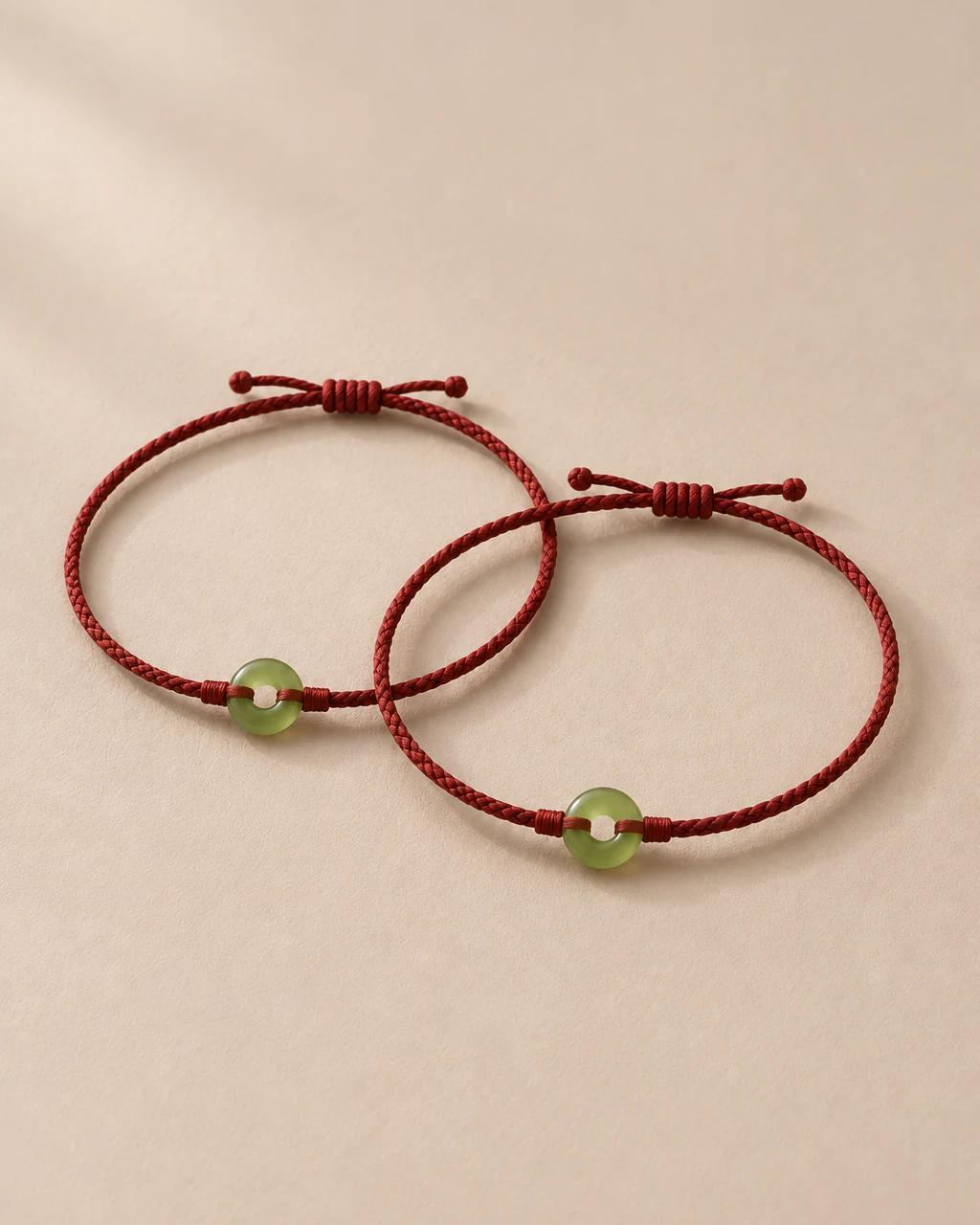
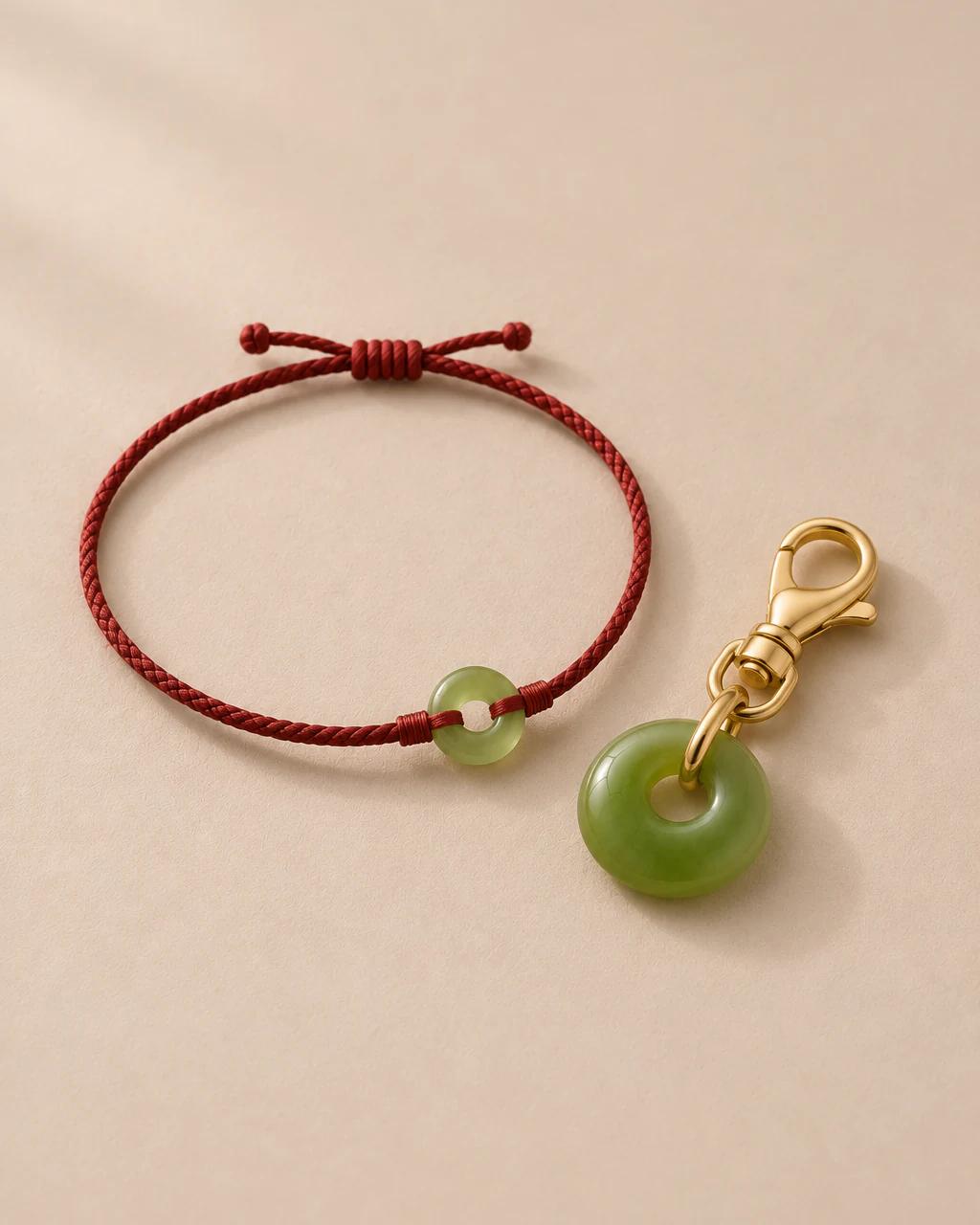
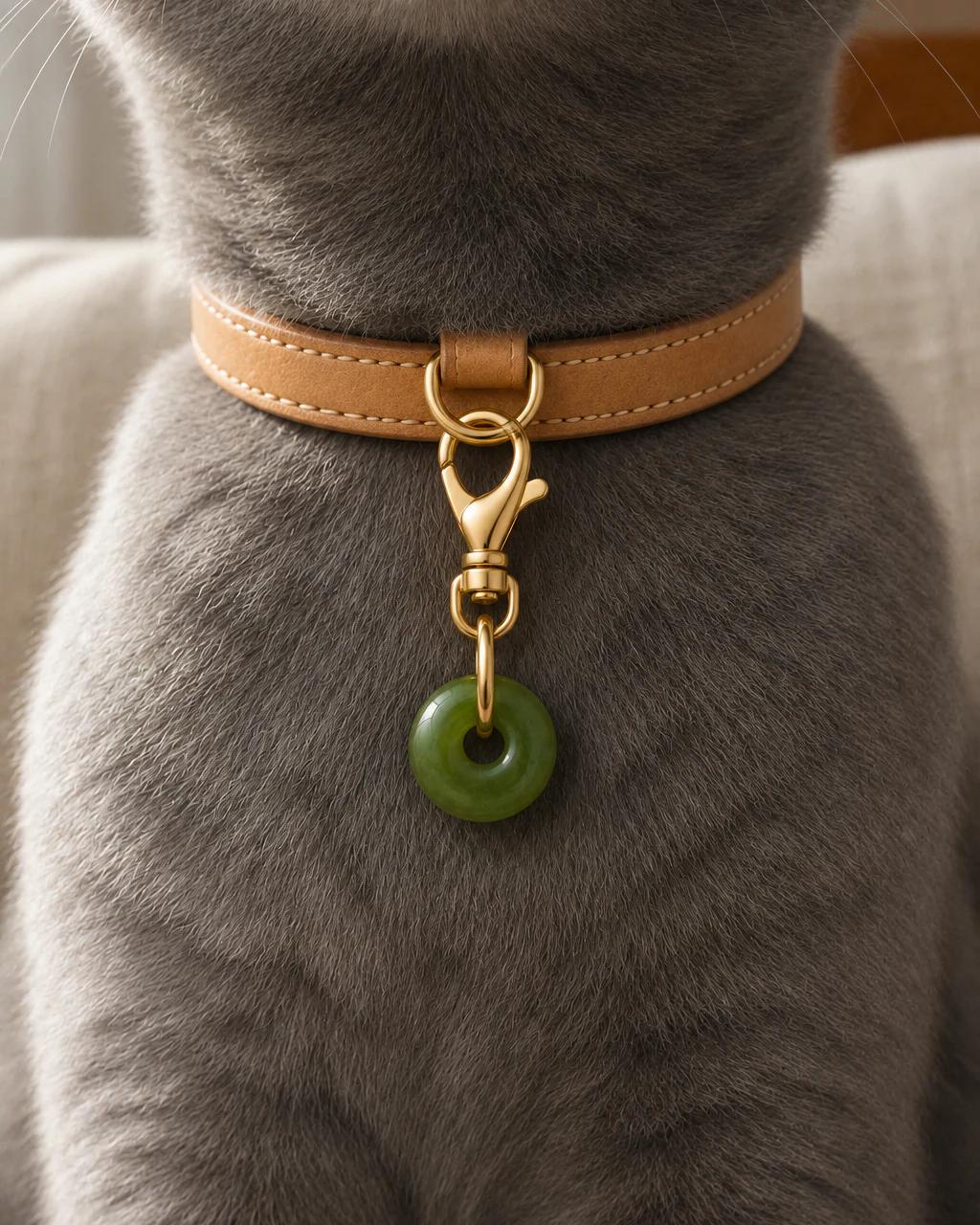
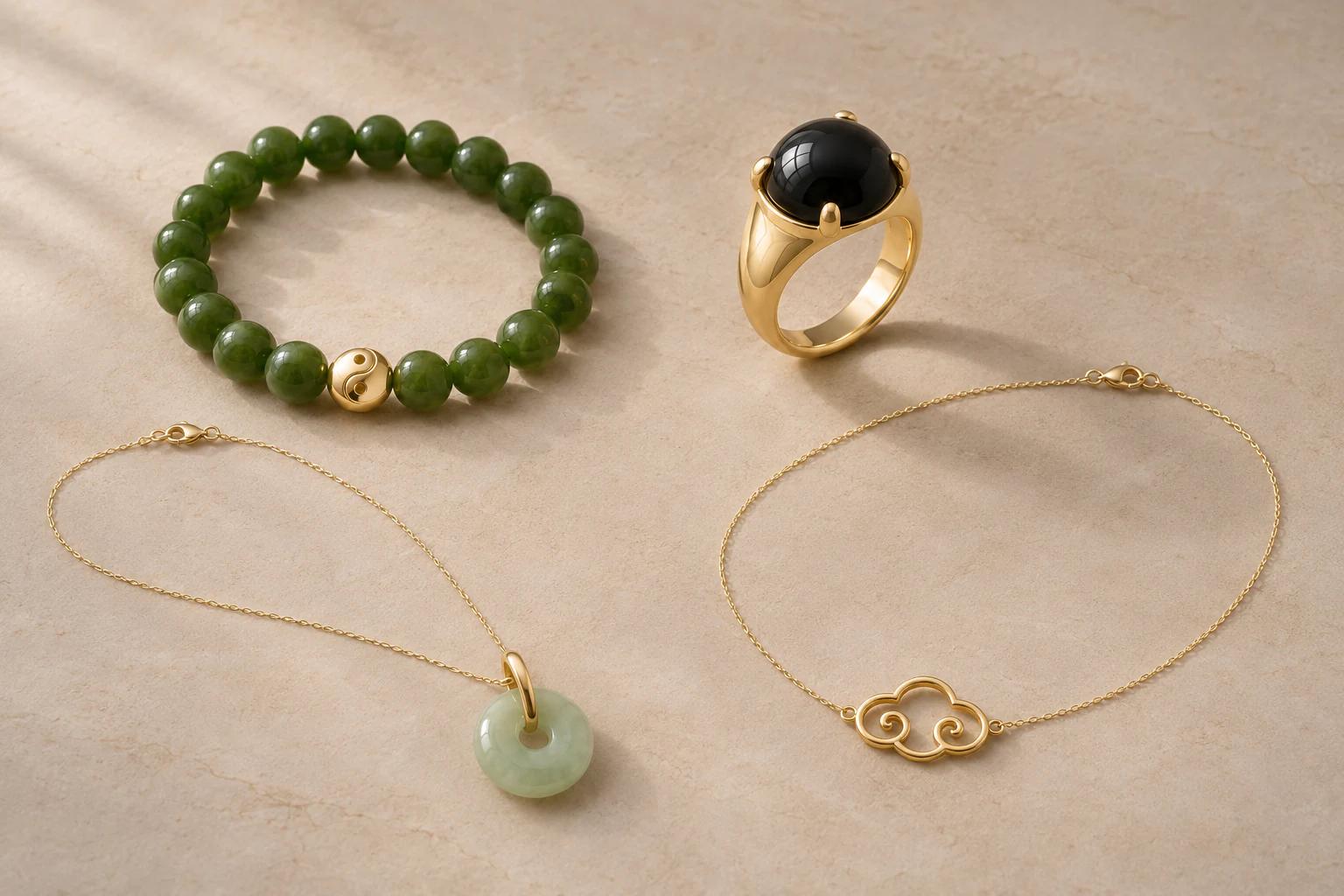
Our Ping An Kou Pendant hangs an apple-green ring of jade from a plain gold bail. The same form, smaller, sits at the center of each of the Red Thread Pair Bracelets, where it meets the red thread.
Also in the shop
You may also like
From the journal
Further reading
- Materials · 6 min readThe stone of heaven: why jade mattersJade has been worked in China for at least eight thousand years. What the stone is, what it has stood for, and why it is still given at births and partings.
- Guides · 6 min readHow to choose a piece by intentionSeven intentions, the symbols and stones that tradition attaches to each, and a piece or two to start with. A plain guide to choosing jewelry for what it stands for.
The Chinese tradition tradition