No. 17 / 18
Sacred Mountain
Sacred nature
Sacred Mountain
Stillness · Pilgrimage · Perspective
The unclimbed peak at the center of the world, circled by pilgrims of four faiths — and the root of our name.
Limited edition
Also in the shop
You may also like
Pieces that sit well beside them.
Signature
Signature
Meaning and tradition
Many cultures treat high mountains as places where earth meets heaven. China has its Five Great Mountains, where emperors made offerings. The mountain we mean above all is Kailash, a peak of about 6,600 meters in far western Tibet, north of the main Himalayan range. Four great rivers, the Indus, the Sutlej, the Brahmaputra and the Karnali, rise near it.
Kailash is sacred to four religions. For Hindus it is the home of Shiva. Tibetan Buddhists call it Gang Rinpoche, “precious jewel of snow”, and hold it to be the seat of the deity Demchok. Jains revere it as the place where their first teacher, Rishabha, is said to have reached liberation. For Bön, Tibet's other religion, it is where the founder Tonpa Shenrab is said to have come down from the sky. Many identify it with Meru, the mountain at the center of the world.
The mountain is circled, not climbed. There is no recorded ascent, and climbing is not permitted. Pilgrims walk the kora, a circuit of about fifty-two kilometers that crosses a pass above 5,600 meters. Buddhists and Hindus go clockwise, followers of Bön the other way, and some measure the whole route in full-length prostrations. A single circuit is said to clear the wrongs of a lifetime.
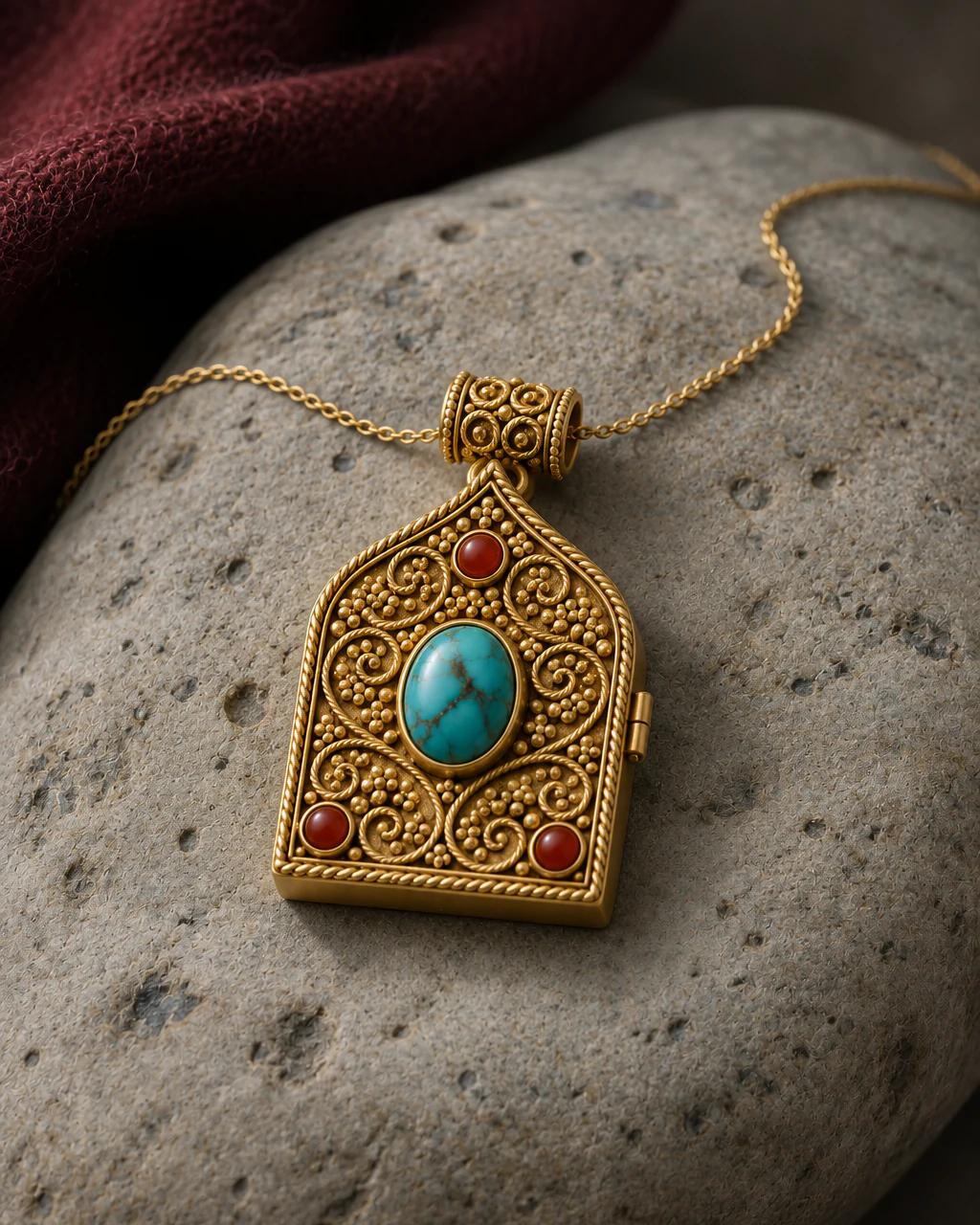
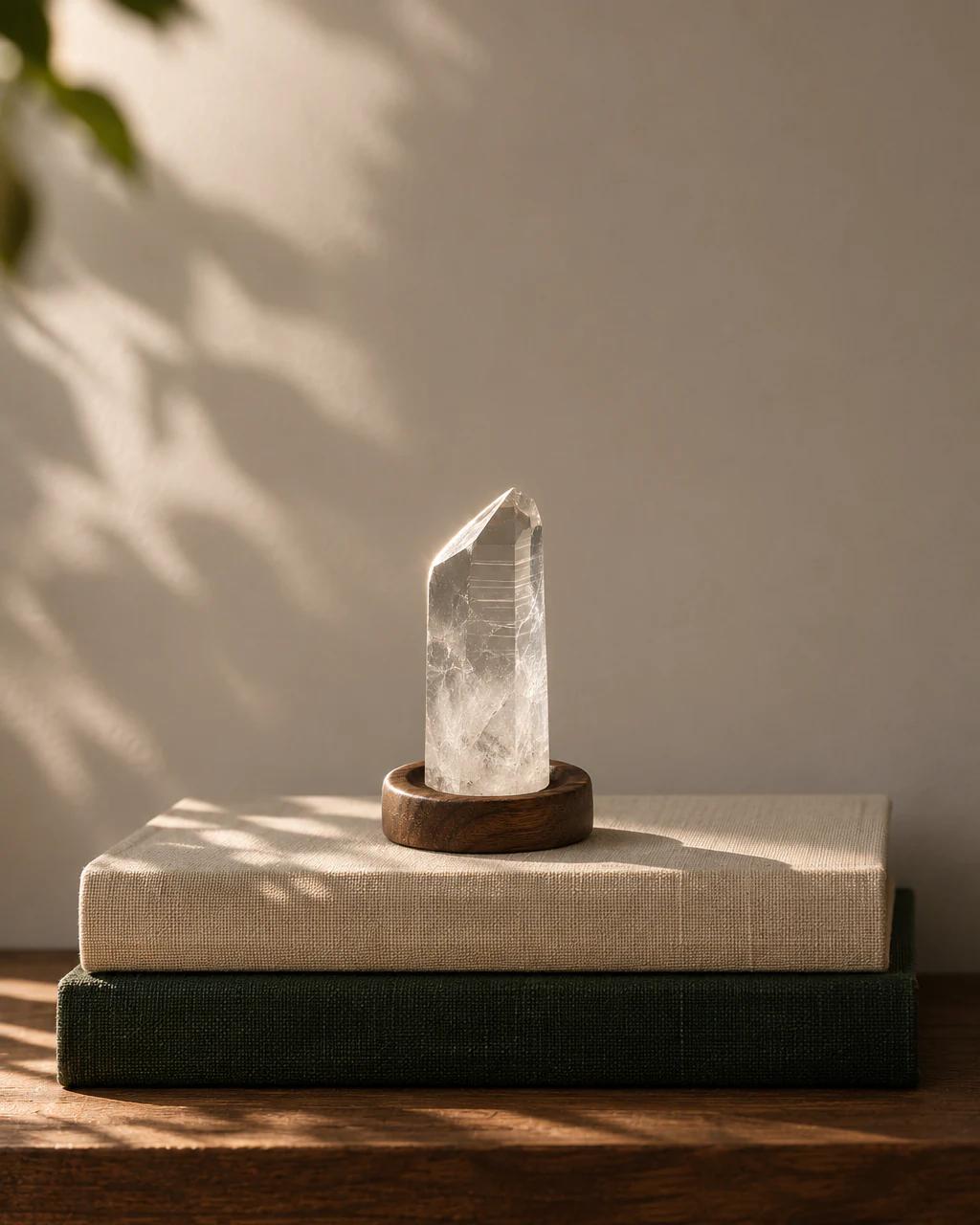
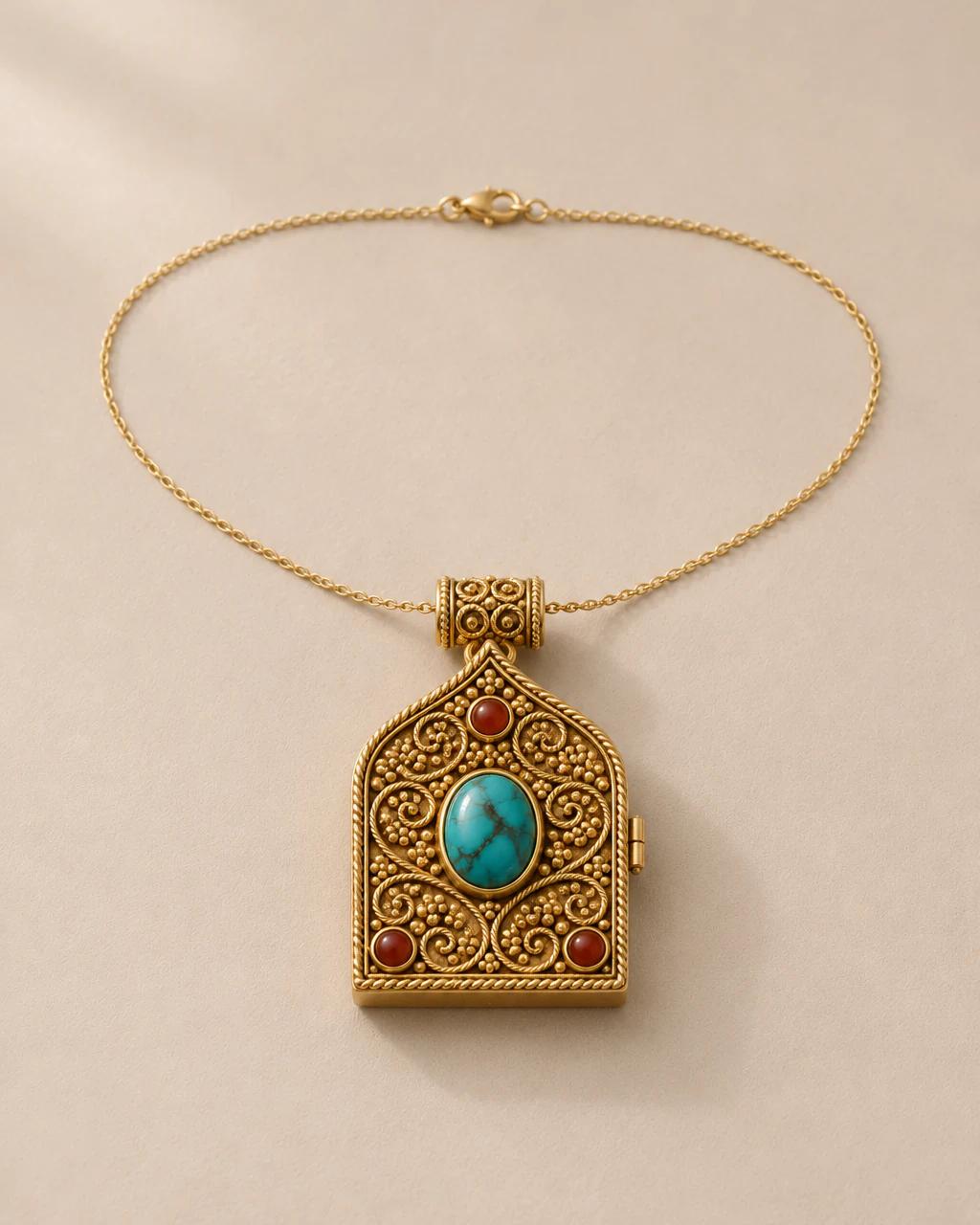
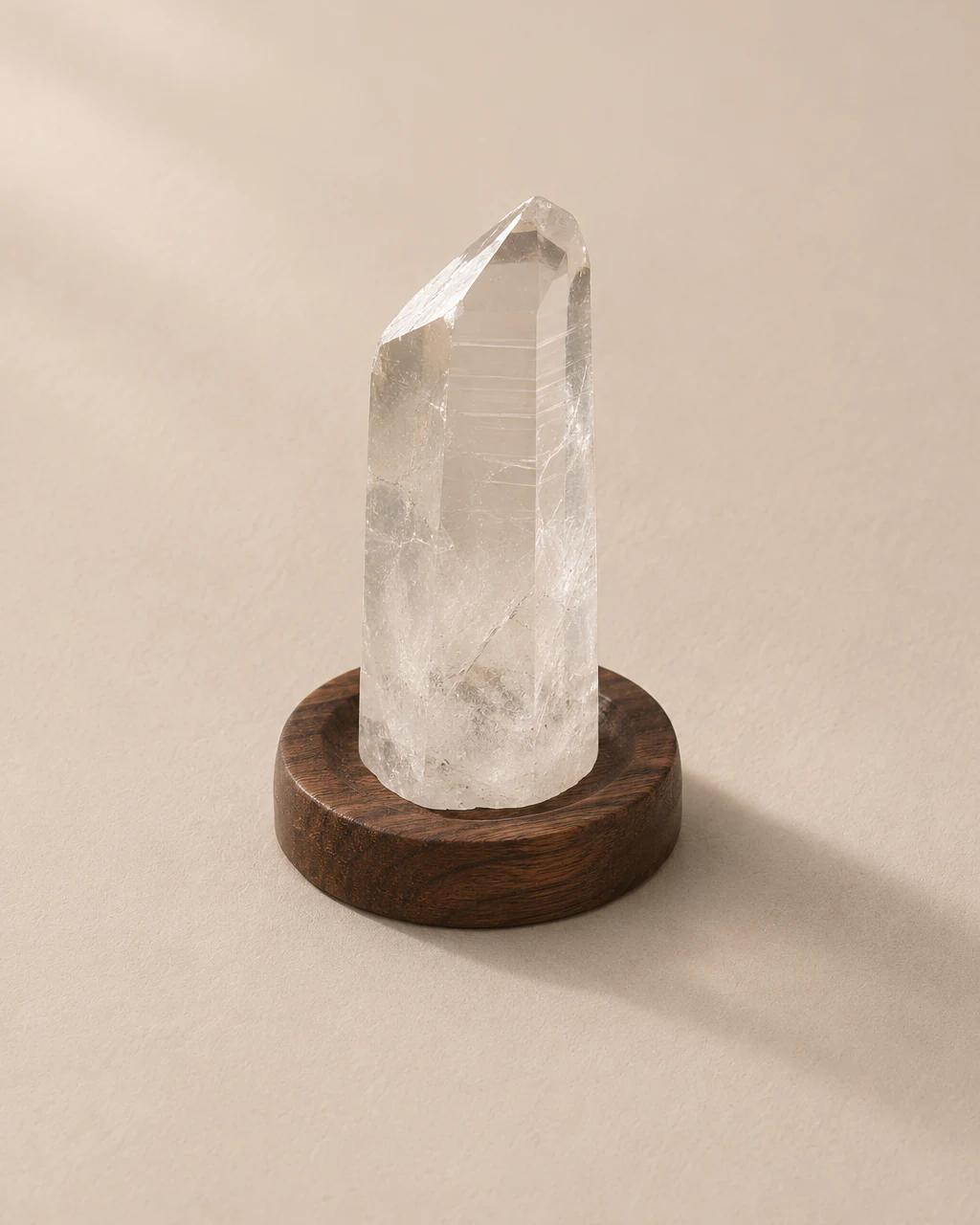
Kailash is the root of our name, and the mountain appears in our pieces indirectly. The Turquoise Gau Locket takes the form of the portable shrine that Tibetan travelers and pilgrims wear on the road. The Himalayan Quartz Point is a peak in miniature, a single natural point of clear crystal.
Also in the shop
You may also like
Signature
Signature
New
The Sacred nature tradition