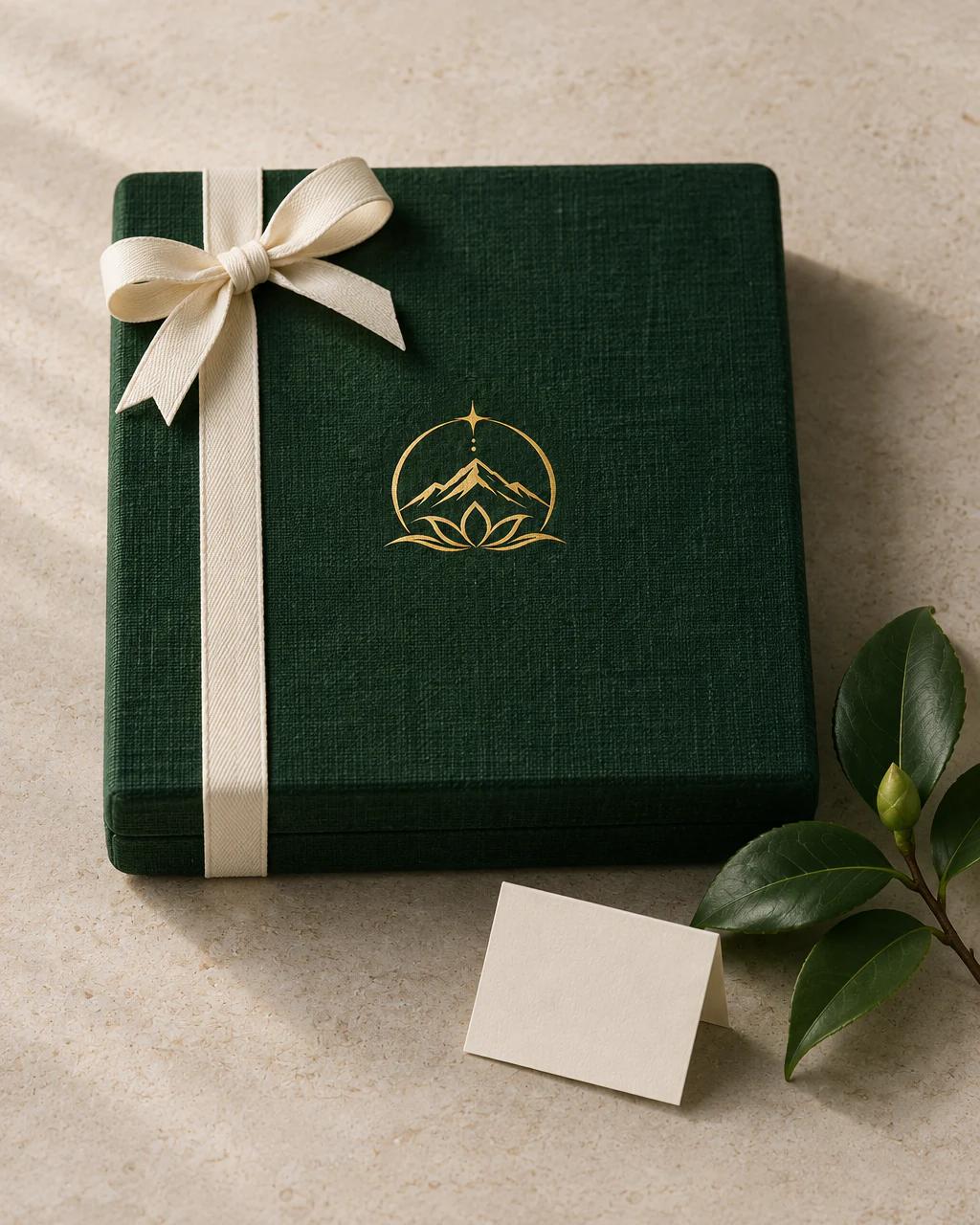
How it arrivesGift-boxed, with its story
How it arrives
Gift-boxed, with its story
Every piece is packed in a linen-wrapped gift box with a blessing card that tells the story of its symbol.
Himalayan collection
Endless Knot Ring
palbeu — Tibetan: the endless knot
$98
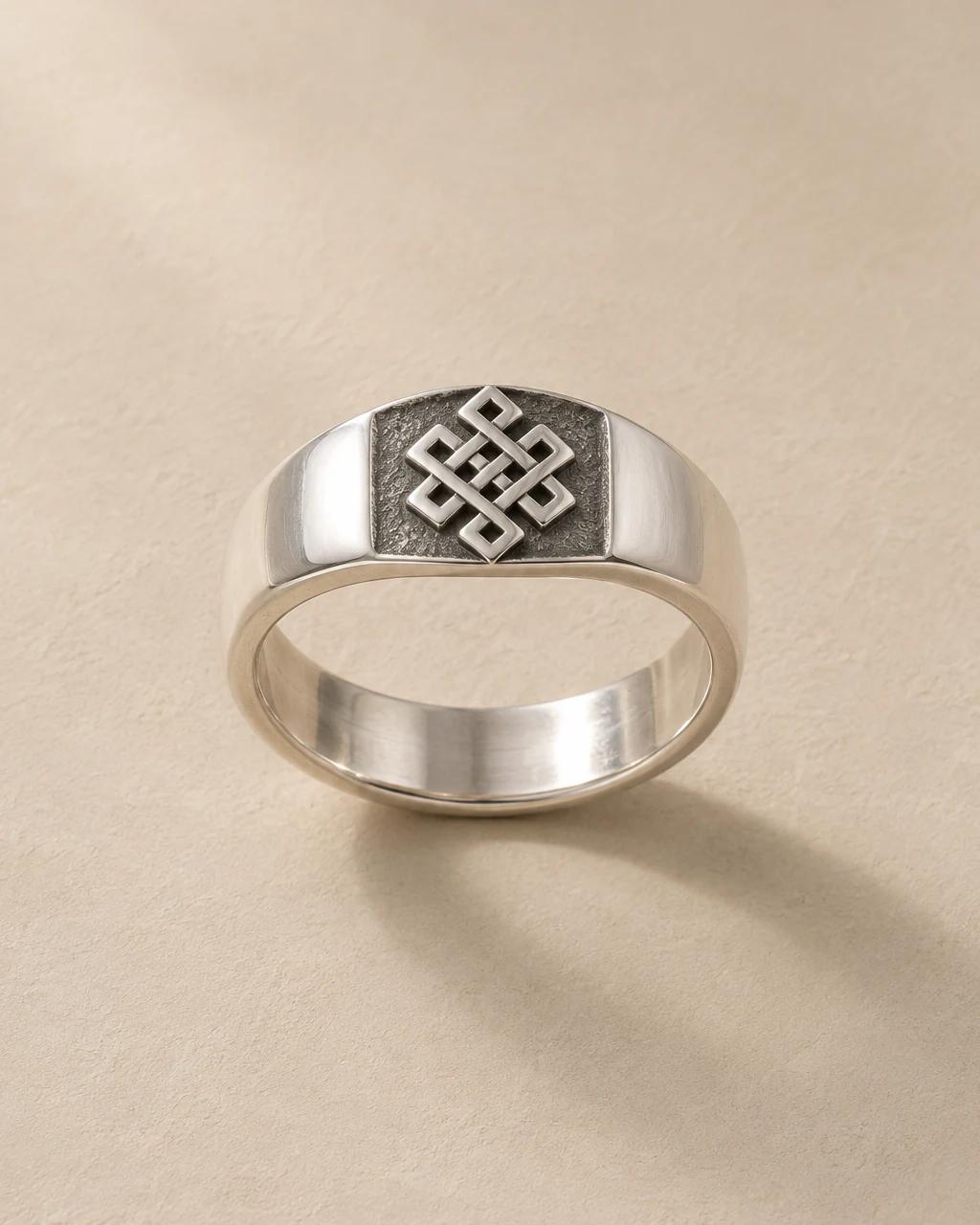
A sterling silver ring with the endless knot raised on a darkened ground: one line with no beginning or end, traditionally a sign of lasting connection.
- Made of
- Sterling silver
- For
- Love & Connection, Balance & Harmony
- Arrives gift-boxed, with a card that tells the story of its symbol
- No two are quite alike: color and markings vary from piece to piece
- Checkout is opening soon. Your bag is kept on this device until then.
Description
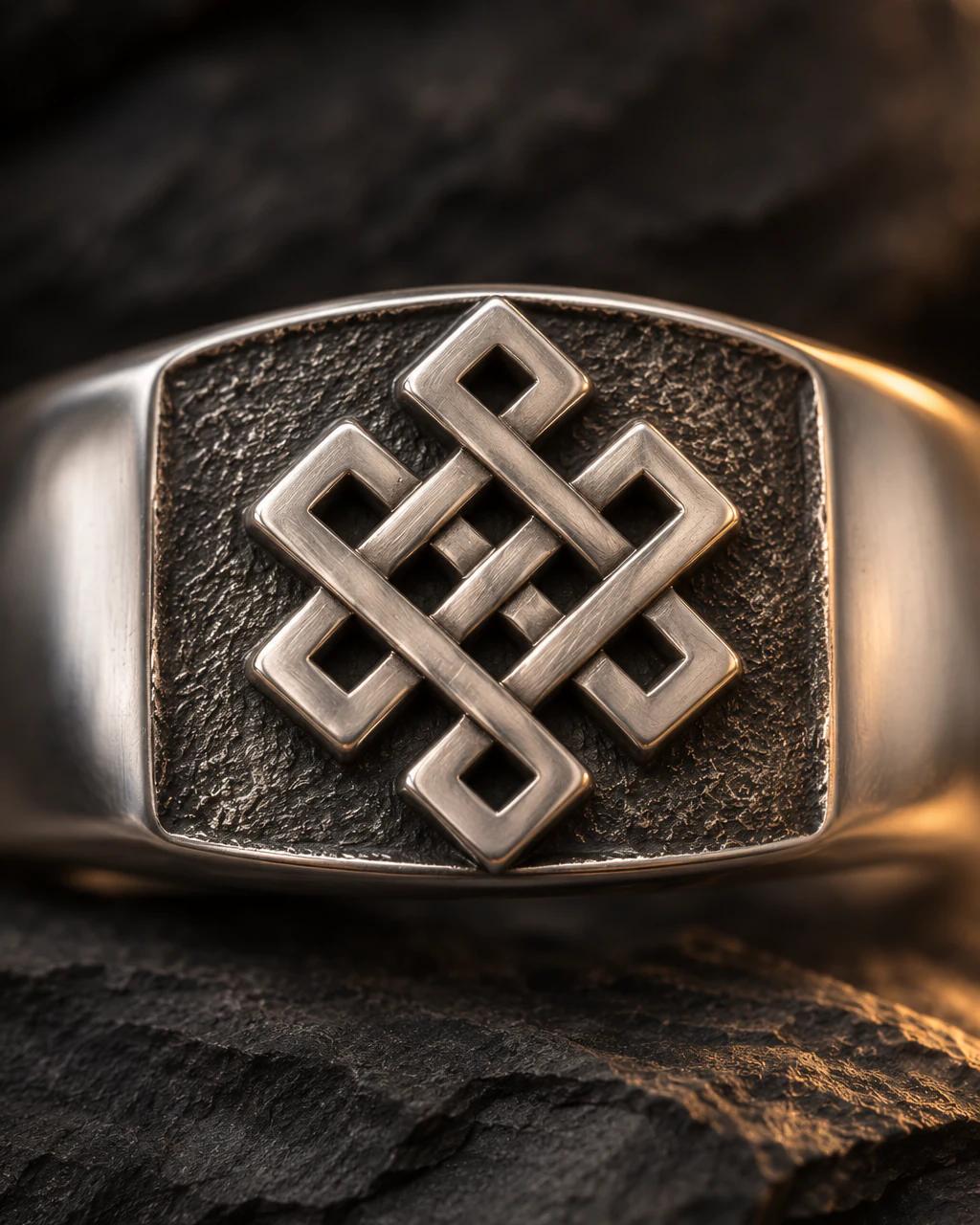
A band ring in 925 sterling silver with a flat rectangular face. The face carries one endless knot in raised relief: a single line that turns at right angles and weaves over and under itself in a diamond, six square loops around a woven center.
The ring is cast in sterling silver. The face is then oxidised to darken its recessed, lightly grained ground, and the knot, shoulders and edges are polished back to bright metal, so the line can be followed all the way around.
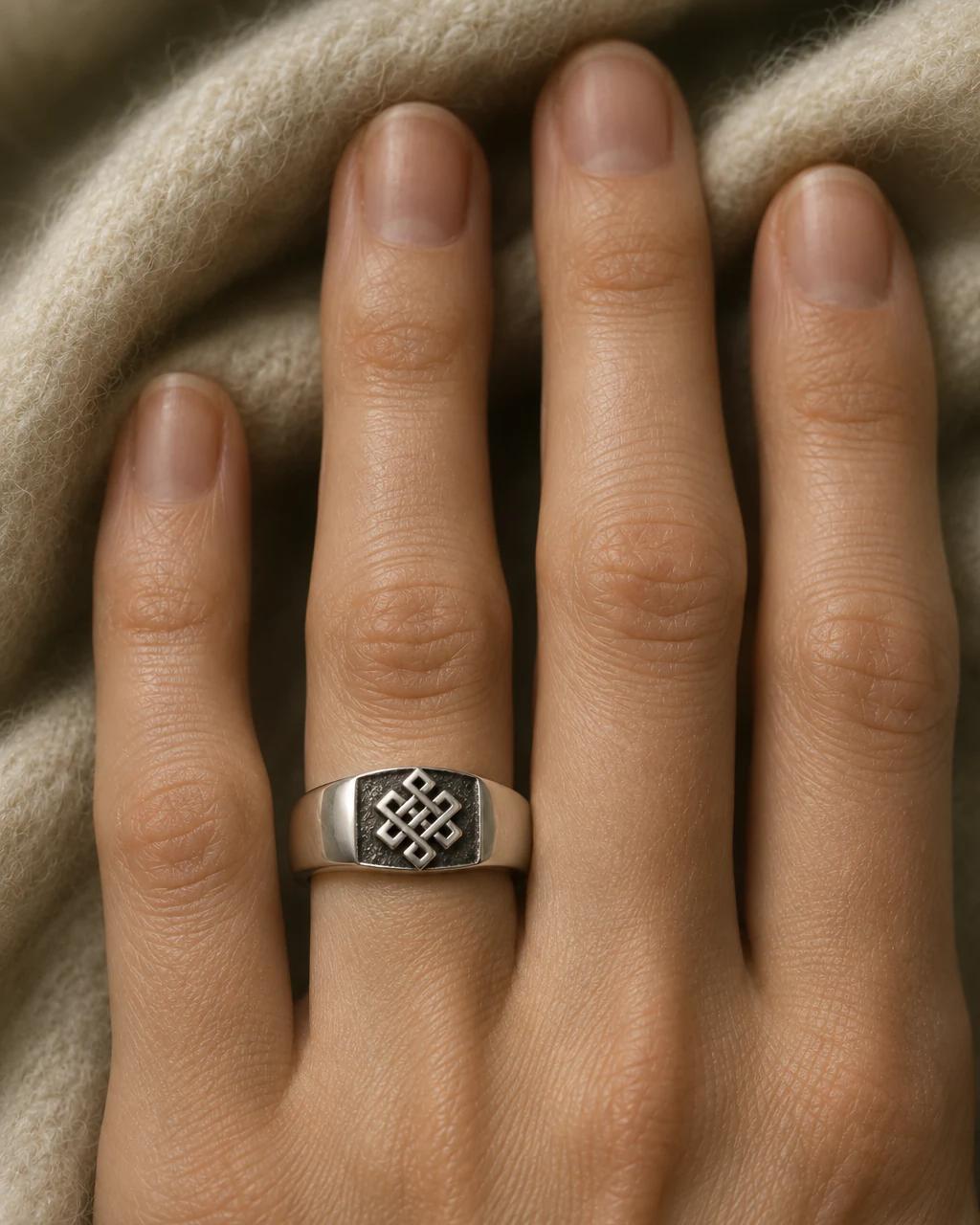
The band is about 6 mm wide at the back of the finger and widens to 9 mm at the face, which lies flat and low. A wide band fits closer than a slim one; the size guide explains how to measure.
The meaning
One line, without beginning or end
The endless knot is a closed pattern drawn with one line. It turns at right angles, passes over and under itself, and returns to where it began. It is one of the Eight Auspicious Symbols of Buddhism, a set that traveled from India to Tibet, where the knot is called palbeu. In Chinese it is known as “the auspicious knot”.
Materials & dimensions
Materials
- 925 sterling silver throughout: band, face and knot
- Face in oxidised sterling silver, its recessed ground darkened and lightly grained behind the relief
- Knot, shoulders and edges polished bright
- The depth of the darkening varies slightly from ring to ring
- Arrives in a linen-wrapped box with a blessing card that tells the story of its symbol
Dimensions
- Band: about 6 mm wide at the back of the finger, widening to about 9 mm at the face
- Face: about 10 × 8 mm; the knot is about 7 mm across
- Band thickness: about 1.8 mm
- Whole US sizes 5 to 10
How to wear it
Tradition assigns the knot no particular hand or finger; wear it where it sits well. Because its line has no end, it is often chosen as a gift between partners, relatives and old friends.
Care
- Sterling silver darkens in air and stays brighter when worn often. Between wearings, keep the ring dry in its box or in a small sealed bag.
- Polish the band and the raised knot with a soft silver cloth. Do not use silver dip or liquid tarnish remover: both strip the darkened ground behind the knot.
- Take it off to swim, bathe and clean. Chlorine, bleach and hot-spring water blacken silver unevenly.
- Silver is a soft metal, and the polished shoulders will gather fine scratches with wear. Remove the ring for gym work and heavy lifting.
Sizing
Size
- US 5
- US 6
- US 7
- US 8
- US 9
- US 10
Between sizes? Choose the larger.
You may also like
The Himalayan collection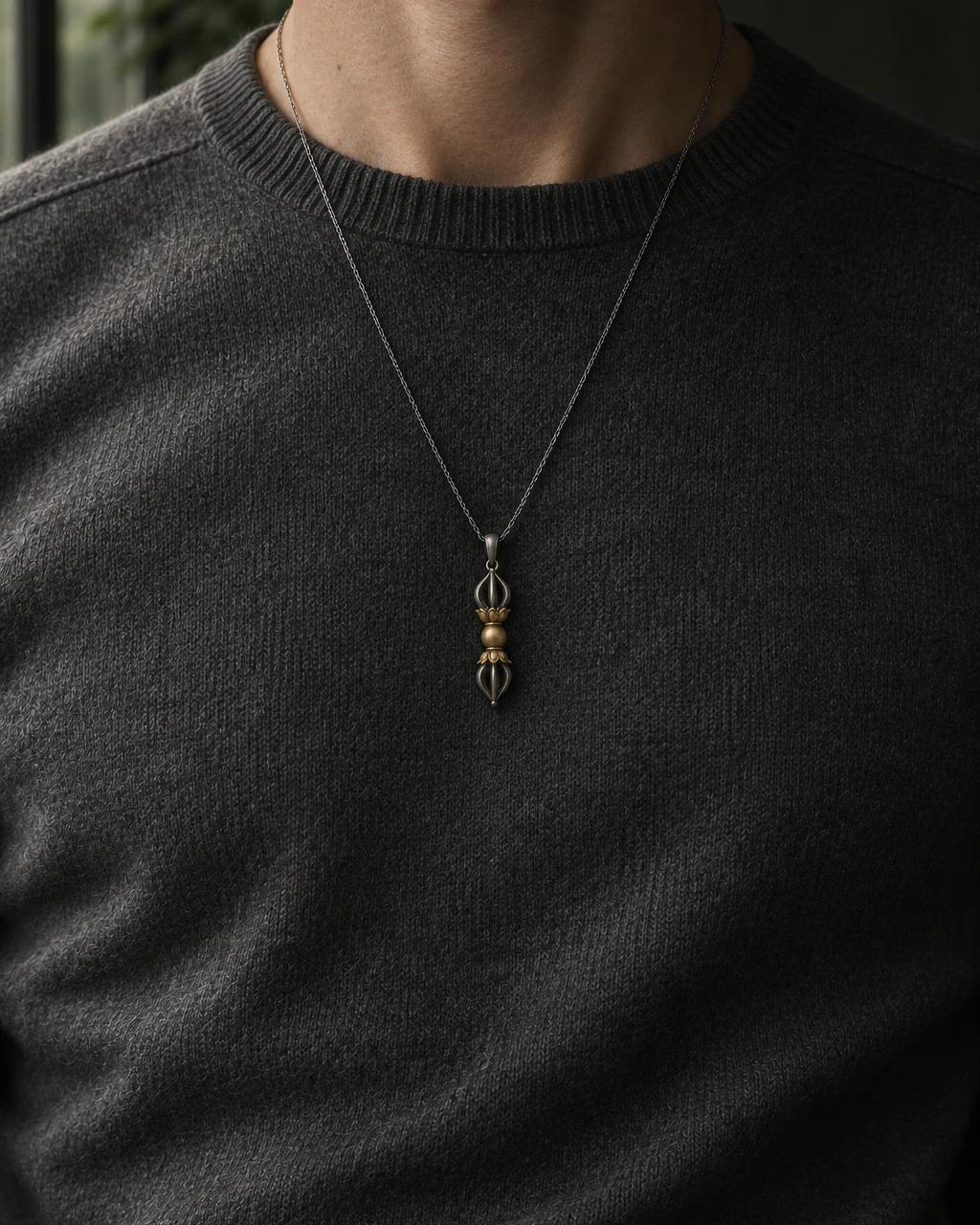
The meaning
One line, without beginning or end
palbeu — Tibetan: the endless knot
The endless knot is a closed pattern drawn with one line. It turns at right angles, passes over and under itself, and returns to where it began. It is one of the Eight Auspicious Symbols of Buddhism, a set that traveled from India to Tibet, where the knot is called palbeu. In Chinese it is known as “the auspicious knot”.
The commonest reading is interdependence: each crossing is held in place by the others, so nothing in the pattern stands alone. Because the line has no end, it is also said to stand for the unbroken wisdom of the Buddha. One tradition reads the two directions of the weave as wisdom and compassion, bound together.
In everyday use the knot is a sign of long life and lasting affection. Across the Himalaya it is sewn onto door curtains and drawn on gifts, where it is understood to tie giver and receiver in a fortunate connection. Many wear it as a reminder of a bond they mean to keep.
The particulars
- Collection
- 02Himalayan
- Type
- Rings
- Intentions
- Love & Connection, Balance & Harmony
- Materials
- 925 sterling silver throughout: band, face and knot
- Face in oxidised sterling silver, its recessed ground darkened and lightly grained behind the relief
- Knot, shoulders and edges polished bright
- The depth of the darkening varies slightly from ring to ring
- Arrives in a linen-wrapped box with a blessing card that tells the story of its symbol
- Dimensions
- Band: about 6 mm wide at the back of the finger, widening to about 9 mm at the face
- Face: about 10 × 8 mm; the knot is about 7 mm across
- Band thickness: about 1.8 mm
- Whole US sizes 5 to 10
- Symbol
- Endless Knot
- Reference
- KLY-HIM-03
Collection 02
The Himalayan collection
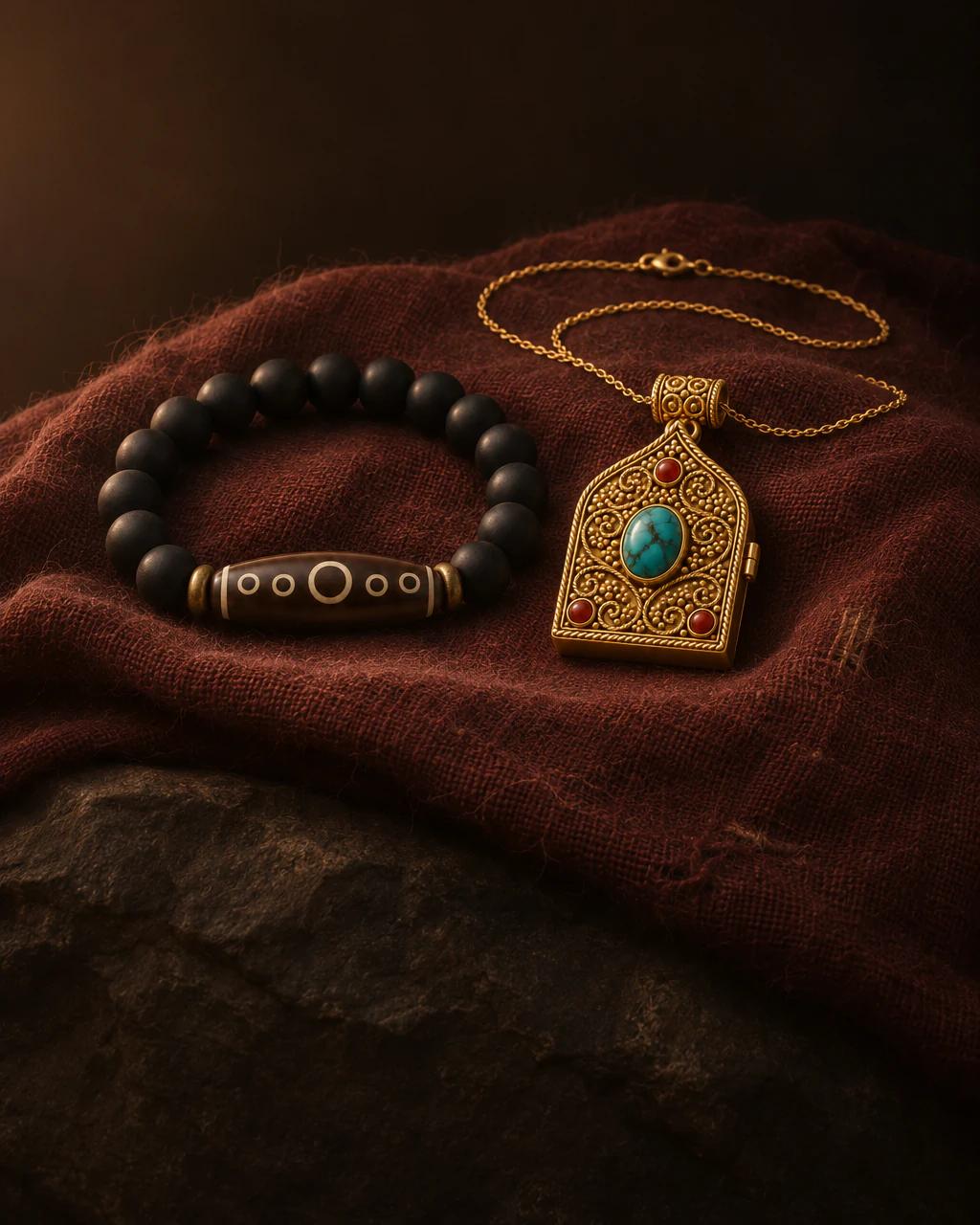
Dzi beads, turquoise and the diamond sceptre.
The talismans of the high Himalaya — dzi beads, turquoise, the dorje and the endless knot — in etched agate, silver and bronze.
ProtectionSacred wisdomBlessings