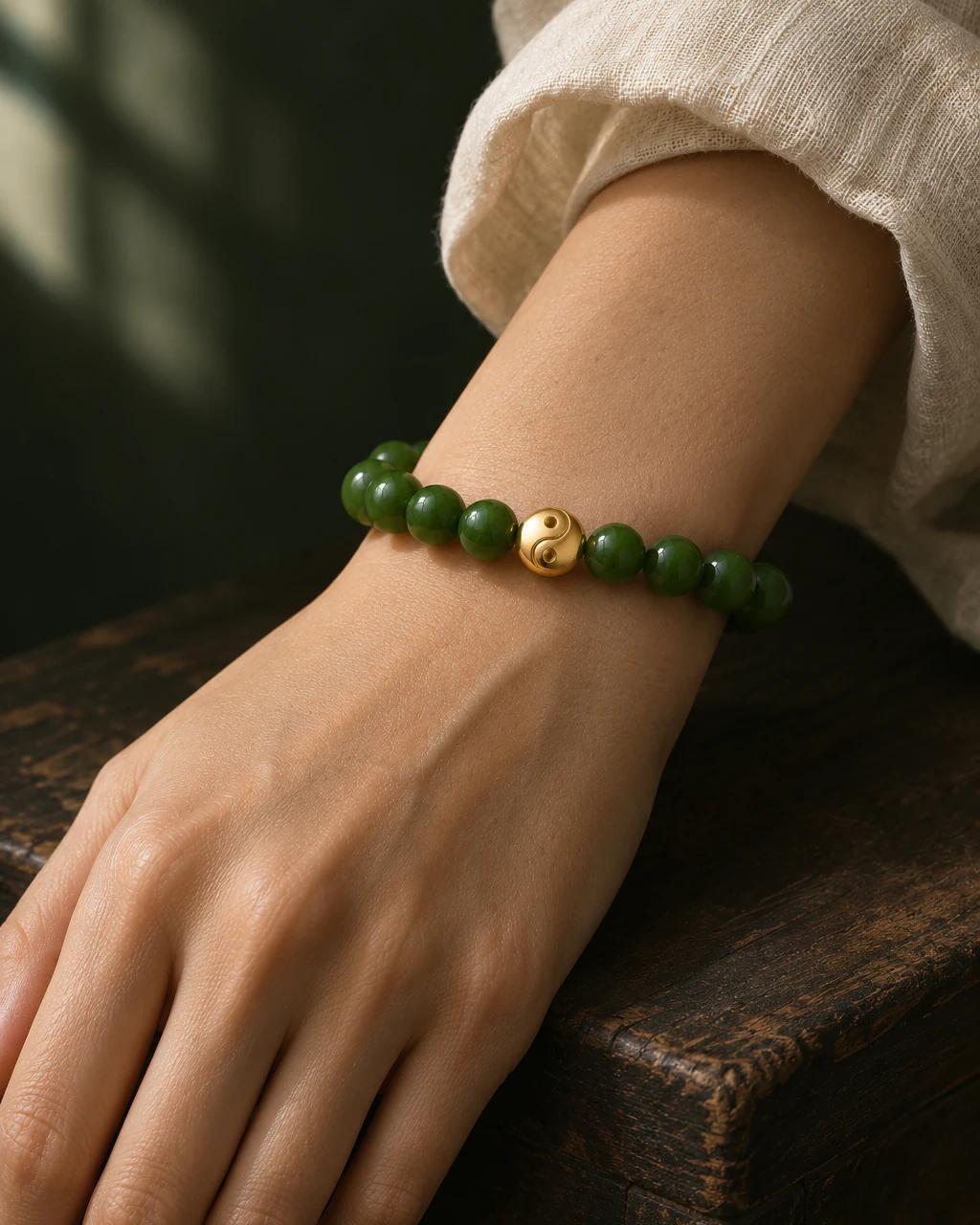
Signature
How it arrivesGift-boxed, with its story
How it arrives
Gift-boxed, with its story
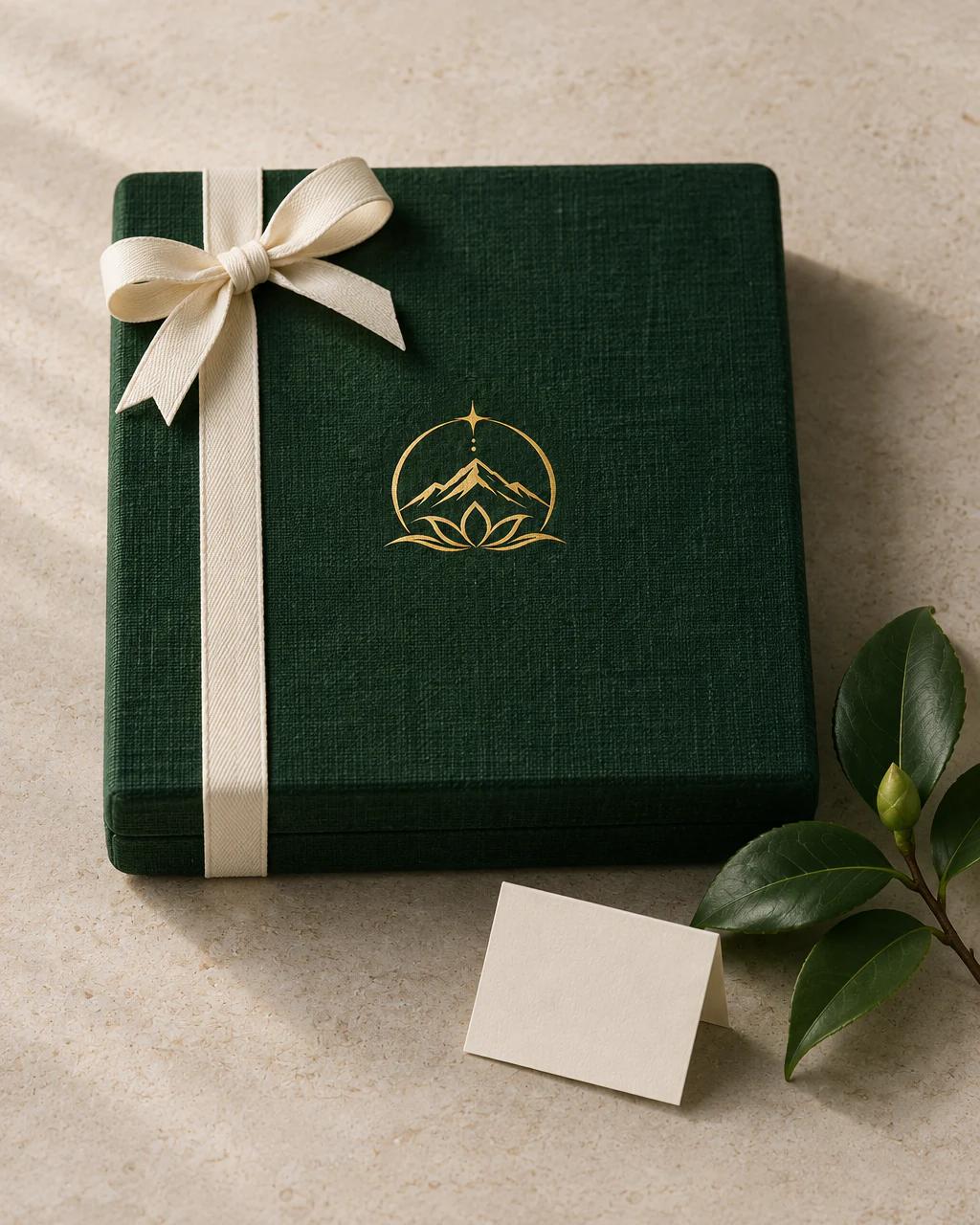
Every piece is packed in a linen-wrapped gift box with a blessing card that tells the story of its symbol.
wǔxíng — the five phases
$78
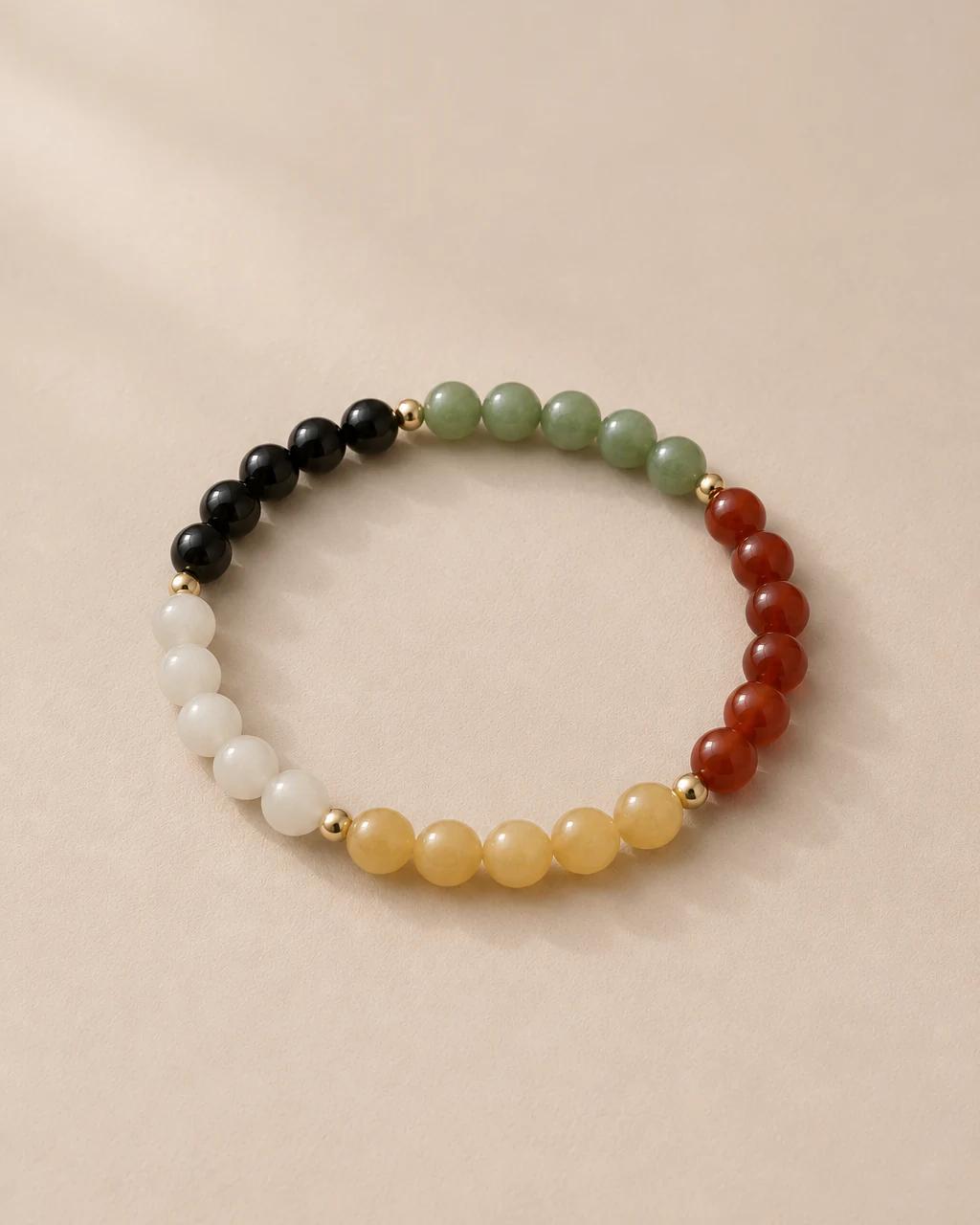
A slim bracelet of five stones in the colors of the five phases, strung in the order in which each is said to feed the next.
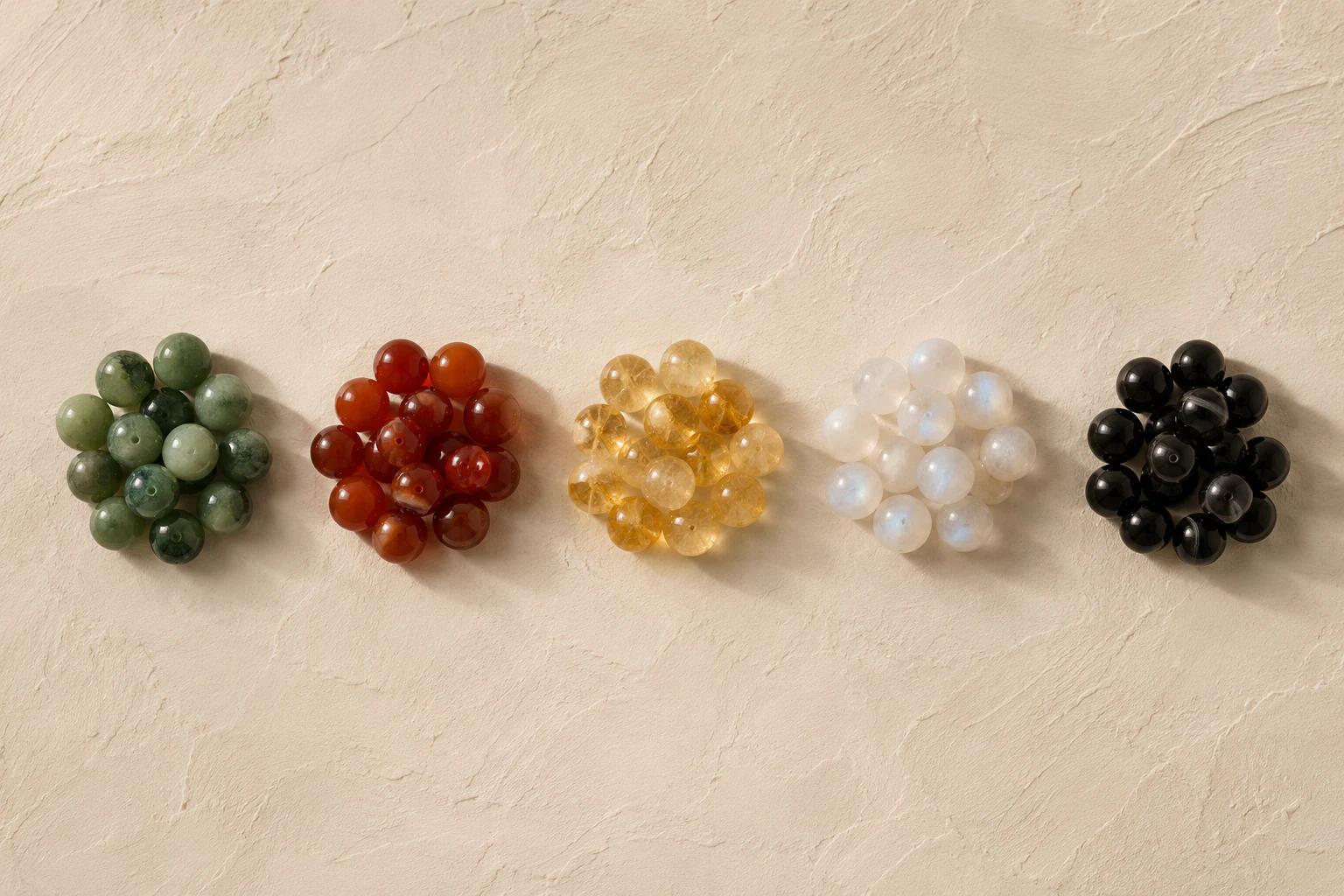
A slim strand of 6 mm stone beads in five groups, one for each phase: sage-green aventurine for wood, deep red carnelian for fire, natural nephrite jade in honey yellow for earth and milky white for metal, black obsidian for water. The tones are muted, not bright.
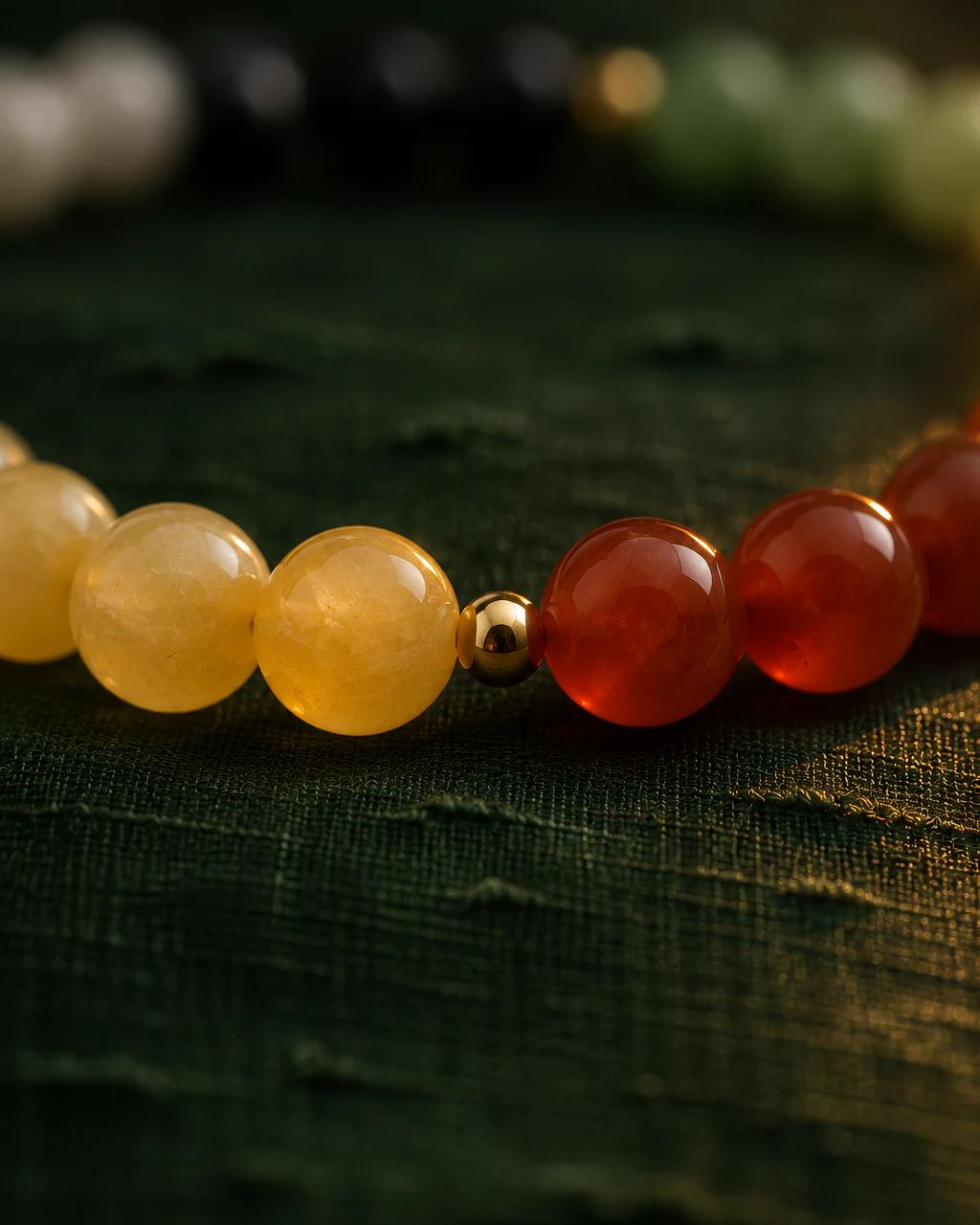
The beads are polished and strung on doubled jeweller's elastic in the generating order, so each stone sits beside the one it is said to feed. A plain 3 mm bead in 18k gold vermeil over sterling silver marks each change of color. There is no clasp.
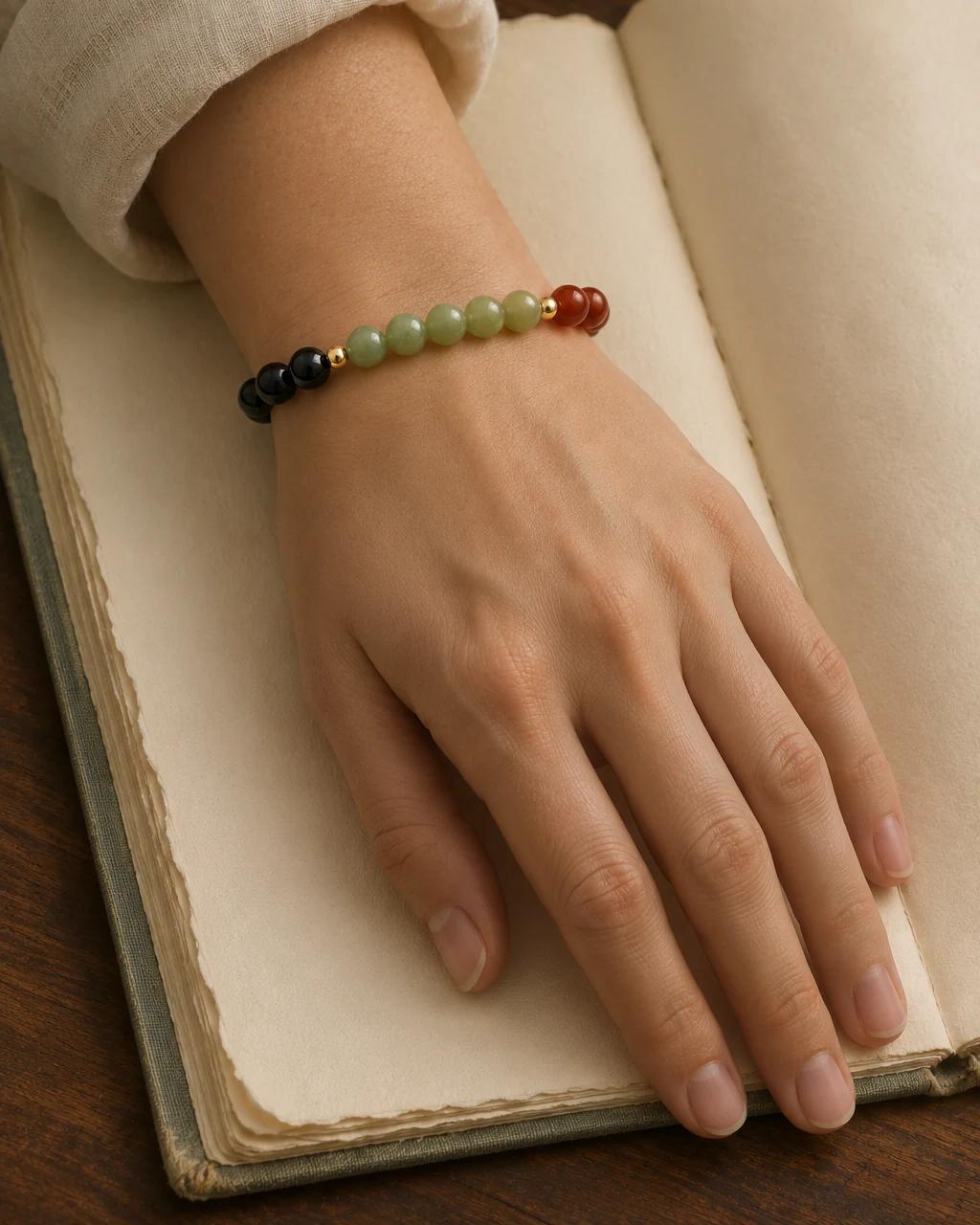
It rolls on over the hand and sits close and light at the wrist, slim enough to wear beside a watch. Color and pattern vary from piece to piece.
Each one feeds the next
Wu xing, wǔxíng, is usually translated “the five elements,” but its second syllable means to walk or to move, and many scholars prefer “five phases.” Wood, fire, earth, metal and water are listed in the Book of Documents, one of the oldest Chinese classics. By the Han dynasty each had been given a color, a season and a direction.
Materials
Dimensions
There is no fixed rule for wearing it: either wrist, any stone uppermost. It suits the start of something, a new year or a new home, when the wish is for things to come in their right order.
Size
Measure your wrist, then add 1 cm for a close fit or 2 cm for a relaxed one.
Signature
New
The meaning
wǔxíng — the five phases
Wu xing, wǔxíng, is usually translated “the five elements,” but its second syllable means to walk or to move, and many scholars prefer “five phases.” Wood, fire, earth, metal and water are listed in the Book of Documents, one of the oldest Chinese classics. By the Han dynasty each had been given a color, a season and a direction.
The bracelet follows the order of the generating cycle. Wood feeds fire. Fire leaves ash, which becomes earth. Earth bears metal. Metal gives rise to water, and water nourishes wood. Green stands for wood and spring, red for fire and summer, yellow for earth and the center, white for metal and autumn, black for water and winter.
The old correspondence is with color, not with any species of stone; the five here were chosen for their hue. The scheme runs through Taoist thought, the old calendar and feng shui, and it has no strongest member. Many wear the five together as a sign of balance, or to mark a beginning. The journal has a plain guide to wu xing.
Wisdom6 min read
Wood, fire, earth, metal and water are less five substances than five ways of changing. A plain guide to the cycles, the colors and the stones matched to them.